
Customer Account Profile Analysis Framework: How to Score, Segment, and Prioritize Your Accounts
Business growth depends on focusing resources where they create the greatest impact. A customer account profile analysis framework brings customer data, account health, and growth indicators together to support better account decisions. Read on.
Customer data is everywhere. Businesses generate customer data from every interaction, but that information is often distributed across multiple systems. Without a unified view, identifying the accounts that deserve the greatest investment becomes a significant challenge.
Without a structured way to evaluate accounts, sales and marketing teams often rely on intuition instead of evidence. That can lead to missed expansion opportunities, overlooked churn risks, and resources spent on accounts that are unlikely to deliver long-term value.
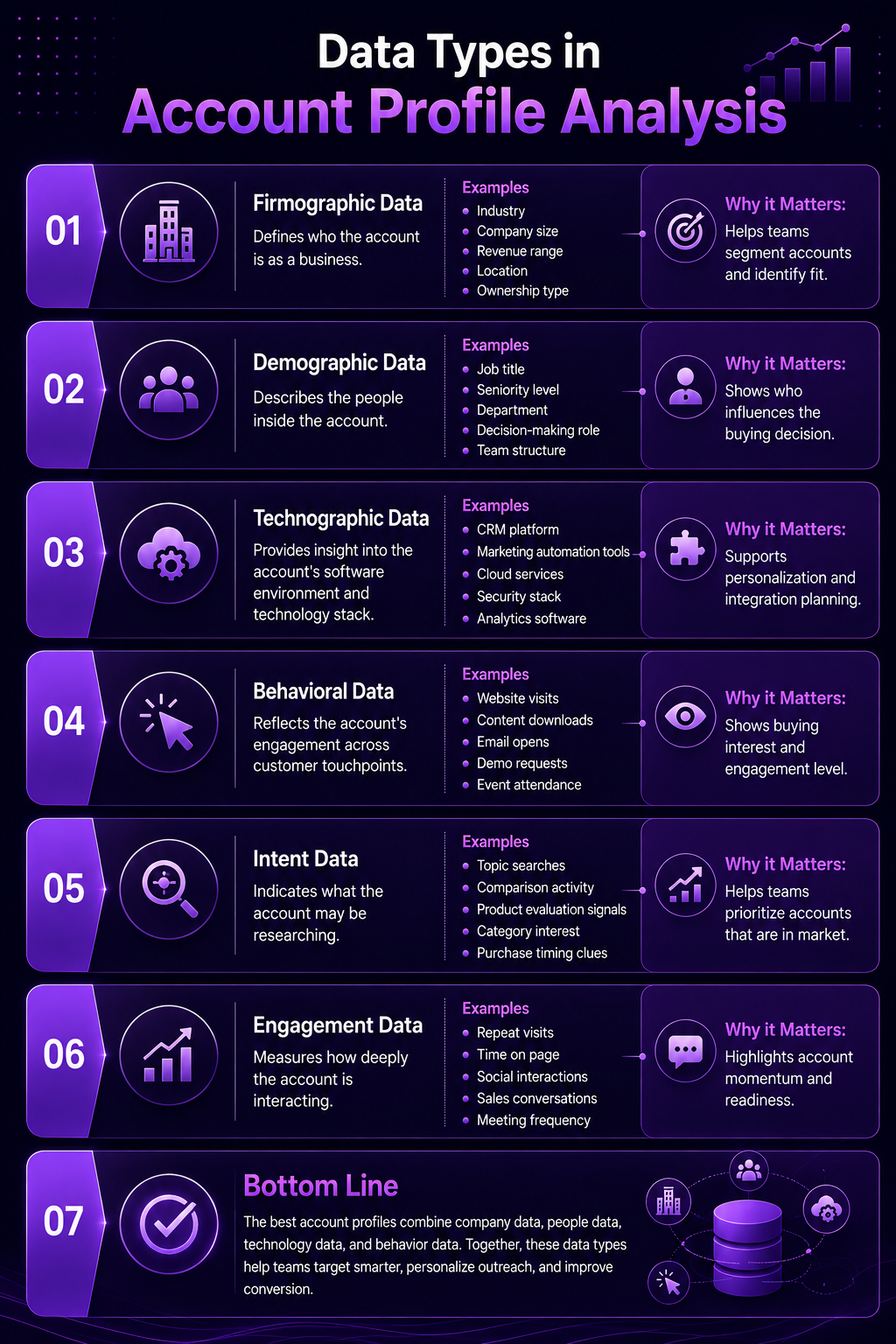
A customer account profile analysis framework solves this problem by bringing customer data into a consistent decision-making process. A structured framework evaluates accounts using firmographic, behavioral, and transactional data alongside metrics such as Customer Lifetime Value (CLV), Revenue Potential, and Customer Health Score to create a more complete account assessment.
The result is a clearer picture of where revenue is growing, where risks are emerging, and where teams should focus next.
Key Takeaways
- Combining firmographic, behavioral, and transactional data creates a clearer view of account performance, growth opportunities, and potential risks.
- Metrics like Customer Lifetime Value (CLV), Revenue Potential, and Customer Health Score help teams prioritize accounts with greater accuracy.
- Account scoring and segmentation enable sales, marketing, and customer success teams to focus resources where they can create the most impact.
- A successful framework requires regular updates because customer behavior, business needs, and account potential can change over time.
What is a Customer Account Profile Analysis Framework?
A customer account profile analysis framework is a structured approach for evaluating existing customer accounts using multiple data sources and standardized business metrics. It enables organizations to score, segment, and prioritize accounts based on their current value, future potential, and overall health.
Instead of relying on a single metric, the framework brings together different categories of customer information to support consistent decision-making across revenue teams.
Why Businesses Need a Customer Account Profile Analysis Framework?
A structured account profile analysis helps businesses make consistent, data-driven decisions about existing customer accounts. Instead of treating every account equally, it identifies where to focus sales efforts, customer success resources, and marketing investments based on measurable business value.
Customer priorities change over time. An account that generated modest revenue last year may become a strong expansion opportunity, while a long-standing customer may show early signs of declining engagement.
A customer account profile analysis framework enables businesses to:
- Identify expansion opportunities by tracking product adoption, account growth, and customer engagement.
- Detect churn risks early using customer health indicators and behavioral trends.
- Allocate resources effectively by directing sales, marketing, and customer success teams toward accounts with the greatest business impact.
The framework also improves alignment across revenue teams. Sales can prioritize accounts with the highest expansion potential, marketing can build more targeted account-based campaigns, and customer success can focus on strengthening relationships before issues affect renewals.
Pro Tip : As customer portfolios grow, relying on manual reviews or individual experience becomes increasingly difficult. A structured analysis framework creates a repeatable process that scales with the business while supporting more informed decisions across every stage of the customer lifecycle.
Key Metrics in the Framework: Customer Lifetime Value (CLV), Revenue Potential, and Customer Health Score
Together, these metrics help businesses measure an account’s current contribution, future growth opportunity, and overall relationship health before making sales, marketing, or customer success decisions.
Customer Lifetime Value (CLV)
Customer Lifetime Value (CLV) estimates the total revenue an account is expected to generate throughout its relationship with the business.
Businesses use CLV to:
- Prioritize high-value customer accounts.
- Compare customer value against acquisition costs.
- Allocate resources based on long-term return.
- Identify accounts that justify additional investment.
Revenue Potential
Revenue Potential estimates how much additional business an existing account can generate.
Businesses typically assess Revenue Potential using:
- Upsell opportunities.
- Cross-sell opportunities.
- Product adoption trends.
- Business growth.
- Expansion across teams, departments, or regions.
Customer Health Score
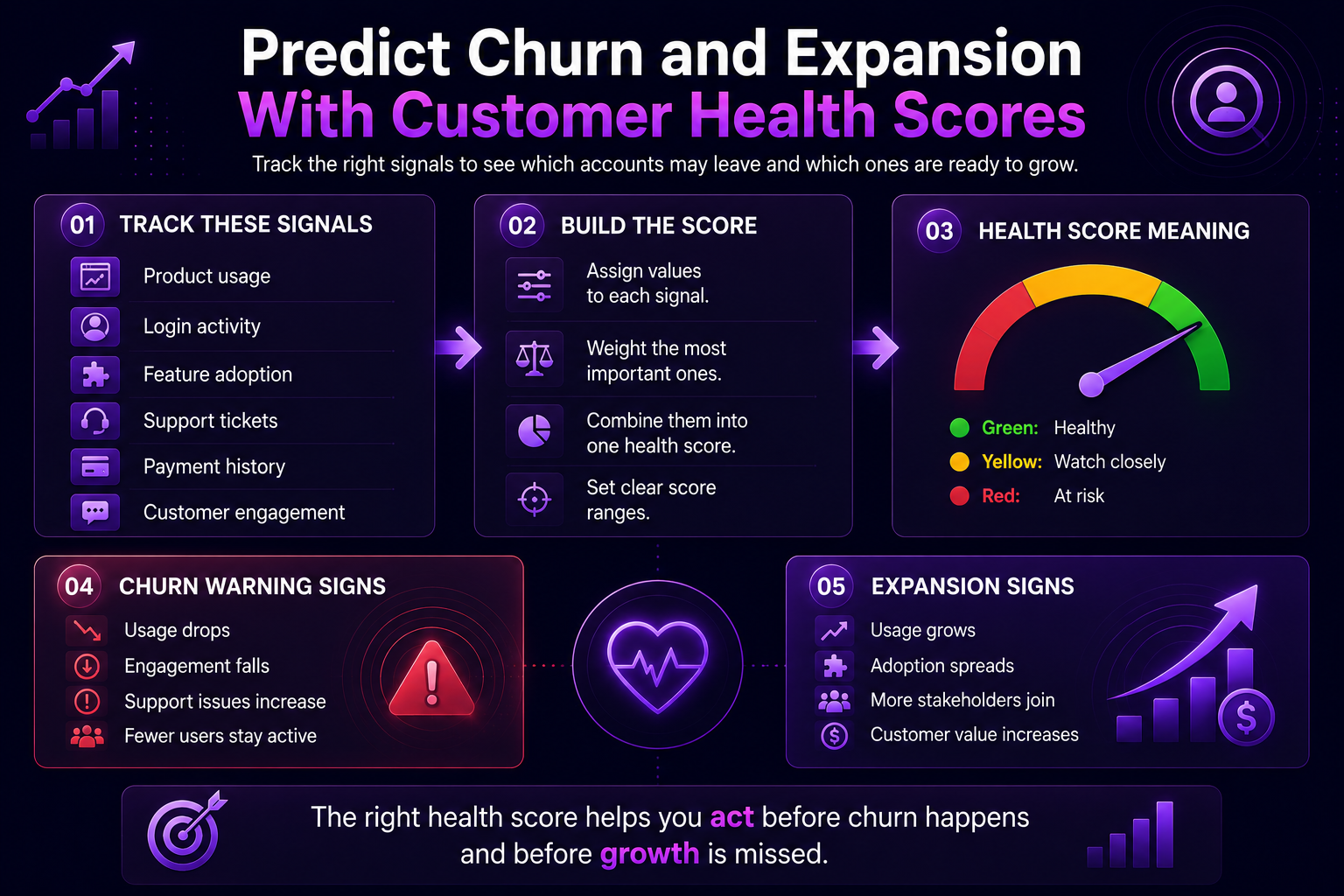
A Customer Health Score measures the overall strength of a customer relationship by combining multiple performance and engagement indicators into a single score. Each organization defines the calculation based on its business objectives and customer journey.
Common inputs include:
- Product usage.
- Feature adoption.
- Renewal history.
- Customer support activity.
- Customer feedback.
- Account engagement.
How These Metrics Support Better Decisions
Although each metric serves a different purpose, they are most effective when used together.
| Metric | Primary Business Question | Supports Decisions Such As |
|---|---|---|
| Customer Lifetime Value (CLV) | How valuable is this customer over time? | Resource allocation, customer investment, retention strategies |
| Revenue Potential | How much can this account grow? | Upselling, cross-selling, account expansion |
| Customer Health Score | How healthy is the customer relationship? | Churn prevention, renewals, customer success planning |
A balanced account evaluation considers all three metrics instead of relying solely on current revenue. This approach improves account prioritization and enables more informed business decisions.
Quick Checklist: Are You Measuring the Right Account Metrics?
Before using your framework to prioritize accounts, confirm that it:
- Measures long-term customer value, not just current revenue.
- Evaluates future growth opportunities.
- Monitors customer engagement and relationship health.
- Uses consistent metrics across all customer accounts.
- Reviews account scores regularly as customer behavior changes.
A framework that meets these criteria gives revenue teams a stronger foundation for prioritizing accounts and planning the next best action.
How to Build a Customer Account Profile Analysis Framework
Building a customer account profile analysis framework starts with defining a clear objective, selecting the right data sources, and establishing consistent evaluation criteria. A well-designed framework should produce the same account insights regardless of who reviews the data.
Step 1: Define the Business Objective
Start by identifying what the framework should achieve. A clear objective determines which data, metrics, and scoring criteria deserve the most attention.
Common objectives include:
- Prioritizing strategic accounts.
- Increasing expansion revenue.
- Reducing customer churn.
- Improving account segmentation.
- Supporting account-based marketing initiatives.
Without a defined objective, the framework can become overly complex and difficult to apply consistently.
Step 2: Consolidate Customer Data
Bring customer information together from the systems your teams already use. The goal is to create a unified account view rather than maintaining separate datasets across departments.
Typical data sources include:
- CRM platforms.
- Marketing automation tools.
- Customer success platforms.
- Billing and subscription systems.
- Customer support platforms.
- Product analytics tools.
Combining these sources reduces data silos and creates a more accurate foundation for account analysis.
Step 3: Standardize Customer Attributes
Standardization ensures every account is evaluated using the same criteria. Before assigning scores, define consistent rules for customer attributes such as industry, company size, engagement levels, contract value, and renewal status.
Using standardized attributes improves reporting accuracy and makes account comparisons more meaningful.
Step 4: Define the Evaluation Metrics
Select the metrics that align with your business objective. Most frameworks include Customer Lifetime Value (CLV), Revenue Potential, and Customer Health Score, along with additional metrics that reflect business priorities.
Avoid tracking every available metric. Focus on the measurements that directly influence business decisions.
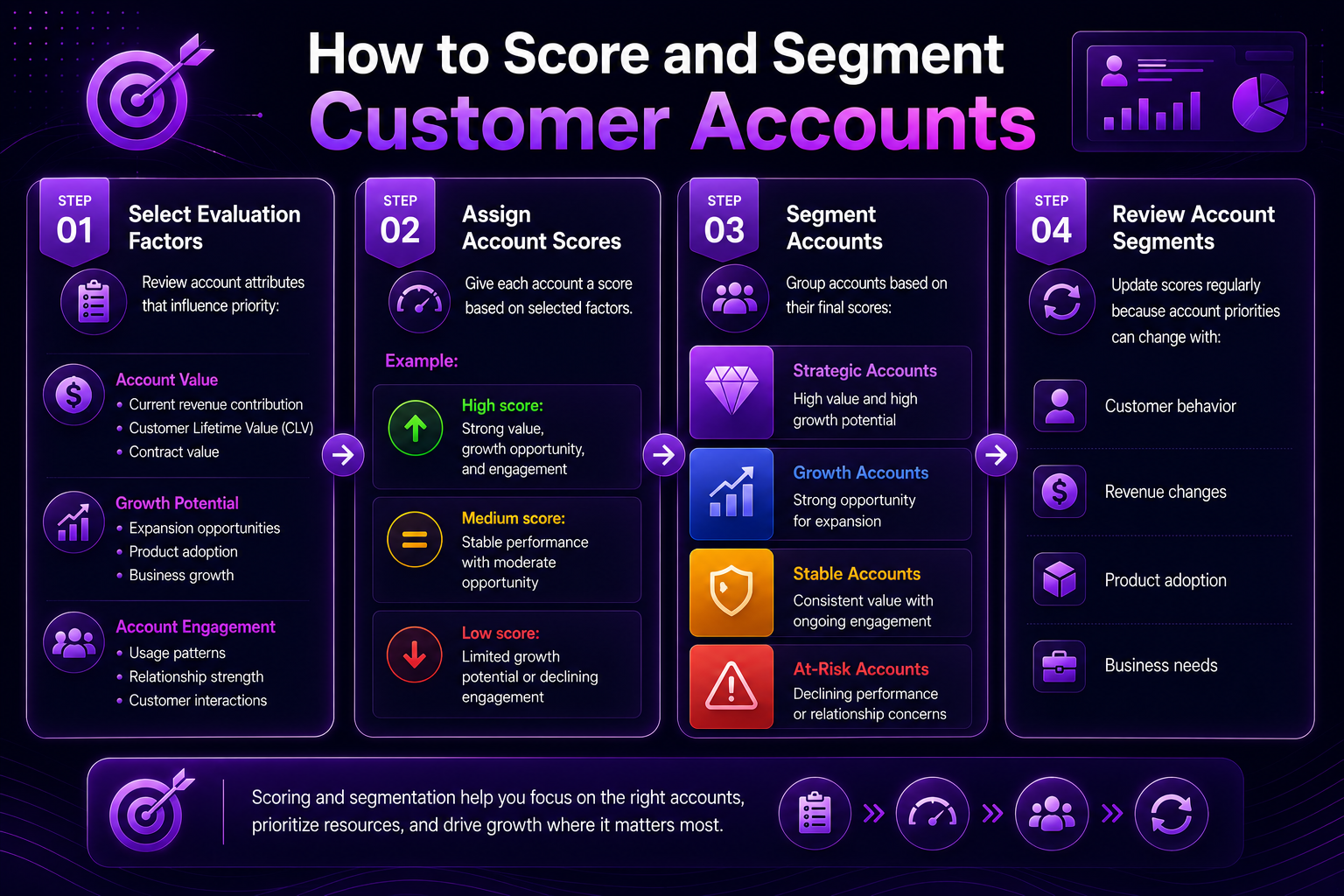
Step 5: Build a Weighted Scoring Model
Some metrics have a greater impact on account evaluation than others. Assign weights based on the business impact of each factor.
For example, a company focused on customer retention may assign greater weight to Customer Health Score, while a business pursuing expansion may prioritize Revenue Potential.
Document the scoring logic so every team applies the framework consistently.
Step 6: Test and Refine the Framework
Validate the framework before rolling it out across the business. Compare account scores with actual customer outcomes to identify gaps or inconsistencies.
If high-performing accounts receive unexpectedly low scores, or high-risk accounts appear healthy, adjust the scoring criteria until the framework accurately reflects customer performance.
Turning Account Profile Analysis Into Sales and Marketing Action
Account profile analysis helps revenue teams decide where to focus their efforts and how to engage different customer accounts. The insights from the framework can guide sales, marketing, and customer success activities.
Teams can use account analysis to:
- Prioritize Sales Efforts: Focus outreach on accounts with strong business value, growth opportunities, or changing engagement patterns.
- Personalize Marketing Campaigns: Create targeted messaging based on account characteristics, behaviors, and business needs.
- Improve Customer Success Planning: Identify accounts that need additional support, adoption guidance, or relationship-building efforts.
- Align Revenue Teams: Give sales, marketing, and customer success teams a shared understanding of account priorities.
The goal is to turn account data into practical decisions. A well-structured analysis framework helps teams spend resources where they can create the greatest customer and business impact.
Customer Account Profile Analysis Examples
Customer account profile analysis becomes more actionable when teams can see how different types of businesses are evaluated.
Example 1: Accounting Firm Customer Account Profile Analysis
Company: Mid-Sized Accounting Firm
Account Overview
- Industry: Professional Services
- Company Size: 300 employees
- Customer Segment: Enterprise
- Annual Contract Value: $180,000
- Customer Relationship Duration: 3 years
Account Signals
Positive Indicators
- Uses the platform regularly across finance and operations teams
- Increased adoption of reporting features
- Maintains consistent communication with account managers
Risk Indicators
- Fewer users are accessing advanced features
- Response time from key stakeholders has slowed
Account Analysis
The account shows strong retention potential because the firm relies on the platform for daily operations. Reduced engagement from some users indicates a need to improve feature adoption before renewal discussions.
Recommended Action
- Conduct user training sessions
- Identify additional use cases within the firm
- Schedule a renewal planning meeting
Example 2: E-commerce Customer Account Profile Analysis
Company: Online Retail Brand
Account Overview
- Industry: E-commerce
- Company Size: 500 employees
- Monthly Orders: 150,000+
- Customer Segment: Growth Account
- Annual Contract Value: $95,000
Account Signals
Positive Indicators
- Increased platform usage during seasonal sales periods
- Expanded adoption across marketing and customer support teams
- Growing transaction volume
Risk Indicators
- Lower engagement after peak sales periods
- Rising number of support requests
Account Analysis
The account has strong expansion opportunities due to business growth and increasing platform usage. The increase in support issues suggests the need for proactive assistance to maintain customer satisfaction.
Recommended Action
- Review support challenges
- Recommend features that support scaling
- Explore opportunities for account expansion
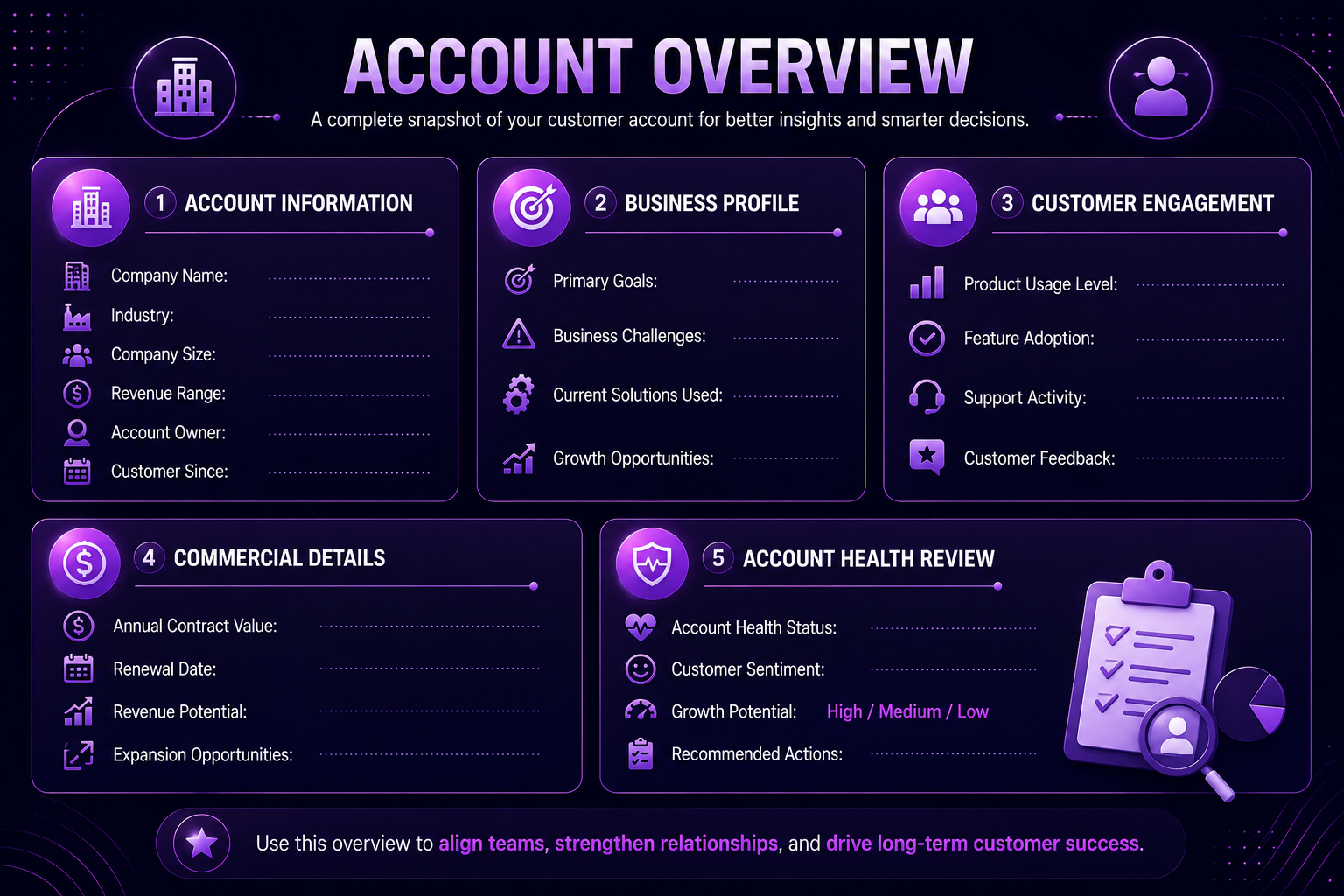
Customer Account Profile Analysis Template
Use this template to organize account details, identify important signals, and define the next steps for account management.
Common Mistakes to Avoid in Account Profile Analysis
Account profile analysis only creates value when businesses use customer information to make better decisions. Many organizations collect extensive account data but still struggle to prioritize customers because of gaps in how they interpret and apply that information.
Ignoring Changes in Customer Behavior
Customer accounts are not static. A customer that appears valuable today may show declining engagement later, while a smaller account may develop into a strong growth opportunity.
Businesses need to review account patterns regularly instead of depending on outdated customer information.
Creating Account Groups
Account segments should support business decisions. Grouping customers into categories without defining how teams should respond creates additional reporting without improving outcomes.
Each segment should connect to a specific business objective, such as retention, expansion, engagement, or resource allocation.
Keeping Account Insights Limited
Customer insights become more valuable when different departments use them together. If sales, marketing, and customer success teams work with separate account views, businesses may miss important signals.
A shared account analysis approach creates better coordination and helps teams respond consistently to customer needs.
A successful account profile analysis framework is not defined by the amount of data it contains. It is defined by how effectively teams use customer insights to make timely business decisions.
Conclusion
Customer accounts are constantly changing, and the way businesses evaluate them should evolve too. A structured approach helps teams move beyond scattered customer information and make decisions based on signals that actually matter.
The objective is to turn account insights into meaningful business decisions, not simply produce more reports. It is to build a clearer understanding of customer relationships and help teams respond with better timing, focus, and strategy.
Build a smarter customer growth strategy with DiGGrowth. Connect with us at info@diggrowth.com.
Ready to get started?
Increase your marketing ROI by 30% with custom dashboards & reports that present a clear picture of marketing effectiveness
Start Free Trial
Experience Premium Marketing Analytics At Budget-Friendly Pricing.

Learn how you can accurately measure return on marketing investment.

How Predictive AI Will Transform Paid Media Strategy in 2026
Paid media isn’t a channel game anymore, it’s a chessboard. Search, social, programmatic, video, influencer, native,...
Read full post post
Don’t Let AI Break Your Brand: What Every CMO Should Know
AI isn’t just another marketing tool. It’s changing how we connect with customers, personalize content, and...
Read full post post
From Demos to Deployment: Why MCP Is the Foundation of Agentic AI
A quiet revolution is unfolding in AI. And it’s not happening inside research labs. For decades,...
Read full post postFAQ's
A customer account profile analysis framework is a structured method for evaluating customer accounts using data such as firmographics, behavior, transactions, and business metrics. It helps teams score, segment, and prioritize accounts based on value, opportunity, and risk.
A customer account profile analysis should include metrics such as Customer Lifetime Value (CLV), Revenue Potential, Customer Health Score, revenue contribution, engagement levels, product adoption, renewal trends, and expansion opportunities.
Customer Lifetime Value (CLV) is typically calculated by multiplying the average customer revenue, purchase frequency, and expected customer lifespan. Businesses may adjust the calculation based on their pricing model, retention rate, and account profitability.
Businesses measure a Customer Health Score by evaluating indicators such as product adoption, customer engagement, support interactions, feedback, and renewal trends. These signals are combined into a single score that reflects the overall health of a customer account.
Customer account profile analysis should be performed on a regular schedule to keep account insights accurate. Many businesses review strategic accounts monthly and evaluate the broader customer portfolio every quarter, although the frequency should align with business objectives and customer activity.