
The Role of Dashboard Reporting Tool in Enhancing Business Intelligence
Dashboard reporting tools turn complex data into actionable insights with visual clarity. They enhance decision-making through real-time data, customization, and collaboration, helping businesses adapt swiftly and make data-driven decisions effectively. Explore how these tools can transform your data into strategic intelligence.
Businesses are struggling with clarity. Reports pile up, spreadsheets multiply, and critical numbers remain buried in disconnected systems. Without a structured way to interpret this information, decision-making becomes reactive instead of strategic.
This is where a dashboard reporting tool reshapes how organizations operate. Instead of presenting raw figures, it translates complex datasets into visual insights that leadership teams can interpret instantly. Within the broader framework of business intelligence, dashboards function as the analytical control center, bringing together performance metrics, market trends, and operational data into one cohesive view.
As industries grow more competitive and data volumes expand, relying on static reports is no longer sufficient. A well-implemented dashboard reporting tool enables real-time visibility, faster responses to change, and smarter strategic planning. It does not simply present information. It empowers organizations to act on it with confidence.
Key Takeaways
- Dashboard reporting tools turn complex data into actionable visual formats, enabling faster, informed decision-making through clear and impactful data storytelling.
- With real-time data access, businesses can adapt dynamically to market changes, detect anomalies, and optimize operations for better outcomes.
- Tailoring dashboards to individual roles ensures users receive relevant insights, driving more effective strategies and fostering data-driven decision-making.
- Seamless integration with data sources and robust collaboration features transform dashboards into a central hub for collective business intelligence, ensuring cohesive and informed decision-making across teams.
Making Business Intelligence Visual And Actionable Through Data Visualization
Data visualization elevates the utility of a dashboard reporting tool by transforming complex datasets into understandable and actionable visual formats. When users can interpret data at a glance, faster and more informed decisions follow. Visuals like graphs, charts, and heat maps communicate patterns and outliers with the immediacy that raw data cannot match.
Power of Visual Representation Through Dashboard Reporting
Visual elements within dashboard reporting tools do more than just present information; they reveal relationships, trends, and insights. By mapping data graphically, these tools highlight correlations and fluctuations that might go unnoticed in text-based reports. Each type of visualization adds a layer of understanding that underpins strategic decisions.
Tools and Features That Enhance Data Visualization
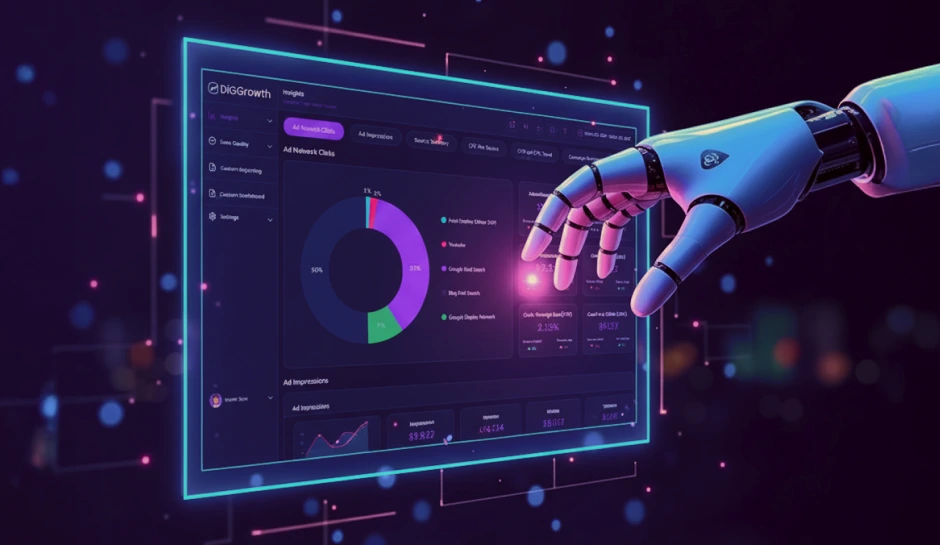
1. DiGGrowth: DiGGrowth is a versatile dashboard reporting tool designed to help businesses consolidate data, create interactive visualizations, and make data-driven decisions. Its focus on customization and real-time reporting allows organizations to tailor dashboards to different roles while maintaining clarity and performance.
Key Features:
- Custom Dashboards: Tailor dashboards for executives, managers, and frontline employees.
- Interactive Visualizations: Drill down, filter, and explore data subsets dynamically.
- Real-Time Reporting: Access live data for up-to-the-minute insights.
- Data Source Integration: Connects seamlessly with databases, spreadsheets, cloud services, and APIs.
- Collaboration Tools: Share dashboards, annotate data, and enable team-driven analysis.
- Performance Optimization: Scalable architecture and fast query handling for large datasets.
2. Tableau: Tableau is a leading data visualization platform that transforms raw data into interactive and shareable dashboards. It is widely used for its ability to handle large datasets and uncover insights quickly.
Key Features:
- Interactive Dashboards: Filter, drill down, and explore trends with intuitive controls.
- Visualization Library: Bar charts, line graphs, heat maps, scatter plots, and geographic maps.
- Data Blending: Combine multiple data sources in a single view.
- Predictive Analytics: Integrates machine learning for trend forecasting.
3. Microsoft Power BI: Power BI provides a robust business analytics service that enables users to visualize and share insights across an organization. It is known for its ease of use and seamless integration with Microsoft tools.
Key Features:
- Customizable Dashboards: Role-based dashboards for relevant insights.
- Real-Time Data: Connects to live databases and cloud services.
- AI-Powered Insights: Suggests trends, anomalies, and patterns automatically.
- Drag-and-Drop Interface: Easy dashboard creation without coding.
4. Looker: Looker, a Google Cloud platform, enables businesses to model, analyze, and visualize data from multiple sources, helping organizations make data-driven decisions.
Key Features:
- Data Modeling: Establishes a single source of truth for metrics.
- Embedded Analytics: Integrate dashboards into other applications.
- Interactive Filters: Drill into specific data subsets for deeper analysis.
- Collaboration Features: Commenting, sharing, and scheduled reports for teams.
5. Qlik Sense: Qlik Sense is an analytics platform known for its associative data model, which allows users to explore relationships across datasets intuitively.
Key Features:
- Associative Data Model: Explore patterns across multiple datasets.
- Self-Service Visualizations: Users create charts and dashboards without IT support.
- Smart Search: Quickly locate key insights across large datasets.
- Alerts & Notifications: Highlight anomalies or threshold breaches in real time.
6. Sisense: Sisense is a scalable analytics and business intelligence platform that simplifies complex data analysis through AI-powered dashboards and customizable visualizations.
Key Features:
- Data Mashups: Combine diverse datasets into a unified dashboard.
- AI-Powered Insights: Predict trends and respond to queries in natural language.
- Interactive Widgets: Drill-down charts, KPI indicators, and filters for granular analysis.
- Scalability: Handles large volumes of data without compromising performance.
Real-Time Reporting: Keeping Pace with Business
Dashboard reporting tools equipped with real-time data access transform decision-making processes within organizations. By facilitating the immediate availability of information, stakeholders can operate with an up-to-date view of business operations, financial performance, and customer behavior.
The Advantage of Having Access to Real-Time Data
With such access, professionals can detect anomalies, capitalize on opportunities swiftly, and adjust strategies dynamically to market changes. The gap between data acquisition and action narrows significantly, fostering an environment where every second can mean the difference between profit and loss or customer retention and churn.
Impact of Real-Time Reporting on Marketing and Business Strategies
Marketers leverage real-time reporting to track campaign performance, enabling adjustments to be made on the fly based on consumer responses. Business strategies likewise evolve from reactive to proactive. Operations managers align production schedules instantly in response to supply chain alerts, while executives reallocate resources in deference to the latest financial forecasts.
Customization and Personalization: Tailoring Data Stories
Dashboard customization bridges the gap between raw data and actionable insights by tailoring information to specific audiences. Executives, managers, and front-line employees require varied data points to inform decision-making. A dashboard reporting tool adapts to these diverse needs, ensuring relevance and clarity in reporting.
The Significance of Dashboard Customization for Different Audiences
A sales manager may need a dashboard highlighting revenue streams, conversion rates, and territory performance metrics. Contrastingly, a marketing director’s dashboard may prioritize campaign performance analytics, customer engagement statistics, and lead generation data. Customization ensures users receive focused and pertinent insights, streamlining strategies and optimizing performance.
Methods for Personalizing Reports to Meet User Needs
Personalization involves adapting a dashboard to user roles, preferences, and objectives. It may involve selecting specific KPIs for display, applying filters to restrict data views, or setting alert thresholds. Users can typically drag and drop elements to design a layout that suits their workflow while color-coding and branding elements maintain consistency and enhance visual appeal.
How Personalization Adds Value to Business Intelligence
When users engage with data that resonates with their specific context, valuable insights are likely uncovered. This level of personalization fosters a culture of data-driven decision-making. Personalized dashboards enable users to monitor the metrics that align with their roles and responsibilities, thereby augmenting their strategic contributions to the business.
- Personalized reports highlight trends and outliers relevant to the user’s domain, enabling swift identification of opportunities and risks.
- Custom alerts and notifications prompt immediate action when performance indicators hit critical thresholds.
- Individualized data views eliminate noise, drawing attention to the information that matters most to the user.
Pro Tip- Leverage user roles and permissions to automatically tailor dashboard views, ensuring each stakeholder sees the most relevant data without manual customization. It streamlines access to critical insights and enhances decision-making efficiency.
Seamless Data Narratives: Integration with Data Sources
Successful dashboard reporting hinges on comprehensive integration with varied data sources. A dashboard reporting tool’s strength is consolidating information from databases, spreadsheets, cloud services, and other repositories into a cohesive narrative. This confluence of data turns diverse data points into actionable intelligence.
The Importance of Integrating Various Data Sources
Different data sources offer unique insights, producing a complete picture when combined. Without integration, each siloed datum remains a piece of a puzzle, indecipherable on its own. Integration is the process by which these pieces come together, revealing trends and patterns that would otherwise remain hidden.
Challenges and Solutions for Data Source Integration
Navigating the integration of disparate data sources can present technical hurdles. Formats may not match, standards may vary, and consistency can be hard to achieve. To address these issues, dashboard reporting tools now embody intelligent mapping capabilities that can automatically parse and harmonize data formats. They simplify the transformation process, translating different data dialects into a single, fluent language of insights.
Software Tools that Offer Robust Integration Features
Selecting software that offers robust integration features guarantees a dashboard will perform optimally. Advanced reporting tools provide connectors to popular databases, APIs for custom sources, and prebuilt algorithms to ensure data integrity. The benefit of these tools is their ability to facilitate seamless data flows, providing organizations with a reliable, unified view of their metrics and performance indicators.
- Connectors enable straightforward pairing with common databases such as SQL, Oracle, or MongoDB.
- APIs allow for bespoke integrations, catering to the unique requirements of specialized data sources.
- Advanced algorithms safeguard against data corruption, preserving the quality and reliability of the information presented.
With these capabilities embedded, a dashboard reporting tool transforms into a potent data collection hub and reveals the narrative within the numbers. Users gain the capacity to leverage information across their organization’s breadth, easily translating complex datasets into strategic insights.
Pro Tip- Choose a dashboard reporting tool with built-in connectors for your most critical data sources to streamline integration, reduce manual work, and ensure real-time access to unified insights across your organization.
Performance Tuning: Optimization Strategies
| Aspect | Optimization Strategies |
|---|---|
| Optimization Techniques |
– Use aggregations to reduce the volume of data processed during queries. – Optimize extraction, transformation, and loading (ETL) processes to ensure efficient data cleaning and consolidation before reaching the dashboard. |
| User Experience & Reporting Accuracy |
– Ensure dashboards load swiftly and provide immediate interactive feedback to enhance user engagement. – Avoid slow responses that may cause user frustration and errors. – Maintain accurate reporting by enabling dashboards to manage and refresh data quickly, reflecting current metrics. |
| Sustaining Performance with Growing Data |
– Employ scalable architectures to handle increasing data volumes without sacrificing performance. – Regularly audit data and queries to isolate inefficiencies. – Implement caching strategies to prevent performance degradation. – Invest in high-performance databases that respond well to complex queries and large datasets. – Introduce load balancing to distribute requests across servers effectively. – Utilize scalable data warehousing solutions. – Regularly review and clean data to eliminate irrelevant or redundant information. |
With these strategies, businesses can ensure their dashboard reporting tools remain robust and responsive, providing the insights necessary to propel the enterprise forward.
Interaction at Your Fingertips: Interactive Dashboards
Interactive dashboards transform static data into dynamic assets. Users can manipulate and interrogate information, extracting actionable insights hands-on. Rather than passively consuming compiled data, interactive features encourage users to delve into the nuances of the data, uncovering trends and patterns that may otherwise remain hidden.
Defining Interactive Dashboards and Their Benefits
A dashboard reporting tool with interactive capabilities enables users to alter the data set displayed by changing variables, updating time frames, or drilling down into more granular information. This level of engagement fosters a deeper understanding of the data, empowering users to make well-informed decisions quickly. Interactive dashboards facilitate an exploratory approach to data analysis, highlighting their utility in situations requiring agility and precision.
Enhancing Data Exploration and Insight Discovery
The introduction of interactivity into dashboards enhances data exploration. Users can click, hover, drill down, or filter to modify what data they see and how it’s presented. Such interactions pave the way for the discovery of insights that are tailored to specific queries or hypotheses. Real-time data manipulation allows for comparisons, trend spotting, and pattern recognition at a moment’s notice.
Incorporating Interactive Features Without Compromising Simplicity
Intuitive design balances interactivity and simplicity. Even with sophisticated interactive capabilities, the dashboard remains approachable. The user interface design prioritizes ease of use to ensure the functionality is accessible to users of all skill levels. By maintaining simplicity, the dashboard remains a powerful tool for data analysis without overwhelming its users.
- Drill-down features enable users to view details from high-level data.
- Data filtering tools allow customization of the data sets on display.
- Toggle switches and sliders offer control over the representation of time-sensitive data.
Pro Tip- When designing interactive dashboards, prioritize user-friendly controls like sliders and filters that allow users to customize their data views intuitively. It ensures they can uncover insights effortlessly without sacrificing simplicity.
Power in Collaboration: Collaboration Features
Dashboard reporting tools transform individual insights into collective intelligence. These tools, which can share reports and visualizations, benefit users across an organization. Teams become entities that consume data and contribute to its enrichment.
The Role of Collaboration in Effective Data-Driven Cultures
By encouraging users to share insights, businesses create environments where information is available and actively utilized to inform decisions. Teams can comment on, annotate, and question data directly within the dashboard, which deepens understanding and fosters a proactive approach to data. Moreover, stakeholders can access and interact with the same information, eliminating data silos that often hinder productivity and innovation.
Tools and Features That Foster Collaboration Within Dashboard Reporting
Diverse features, such as built-in messaging systems, the ability for multiple users to edit dashboards concurrently, and control access permissions, ensure that collaboration is fluid and secure. Additionally, version control mechanisms prevent conflicts and preserve the integrity of reports as they evolve through collaborative input. Web-based platforms optimize this collaborative effort by providing a single, centralized location for all dashboard interactions.
Sharing Insights and Reports to Enable Collective Business Intelligence
Sharing capabilities range from simple exporting options to sophisticated rights management. Users can distribute static reports or dynamic dashboards through direct in-app links, scheduled email distributions, or embedded reports in third-party applications. Effective dashboard reporting tools are designed with the understanding that actionable insights should reach the right people at the right time, driving collective knowledge and strategic action.
Pro Tip- Leverage built-in collaboration tools like commenting, annotation, and real-time editing to turn dashboard reporting into a team-driven process, ensuring that collective insights are captured and acted upon swiftly.
Discover the Ultimate Dashboard Reporting Tool for Your Business
Selecting a dashboard reporting tool transforms raw data into actionable insights. This tool anchors effective decision-making by harnessing business intelligence and visualizing critical data points. The discussion has woven through various features, including real-time reporting, user accessibility, automated reporting, security standards, and the unmissable boon of mobile accessibility.
A robust dashboard tool empowers businesses with deep analytics and customization options, catering to unique business requirements. Integration with data sources, interactive dashboards, and collaborative features create a cohesive environment where decision-makers can converge to steer business growth.
Reflect on the dashboard tool in use or the necessity for one. Evaluate its proficiency in customization, security, and mobile accessibility. These facets are paramount in the rapidly evolving business terrain.
DigGrowth is one of the most preferred dashboard reporting tools due to its powerful integration capabilities, seamless collaboration features, and intuitive interactive dashboards. It empowers businesses to tailor data stories for different audiences while providing advanced performance optimization strategies to ensure swift and accurate insights. With its scalable architecture and robust data source integration, DigGrowth ensures that organizations can transform raw data into actionable intelligence, making it an essential tool for driving growth and informed decision-making.
Want to learn more about the benefits of dashboard reporting tools in business intelligence?
Just write to us at info@diggrowth.com to get a personalized consultation and demonstration.
Ready to get started?
Increase your marketing ROI by 30% with custom dashboards & reports that present a clear picture of marketing effectiveness
Start Free Trial
Experience Premium Marketing Analytics At Budget-Friendly Pricing.

Learn how you can accurately measure return on marketing investment.
How Predictive AI Will Transform Paid Media Strategy in 2026
Paid media isn’t a channel game anymore, it’s a chessboard. Search, social, programmatic, video, influencer, native,...
Read full post post
Don’t Let AI Break Your Brand: What Every CMO Should Know
AI isn’t just another marketing tool. It’s changing how we connect with customers, personalize content, and...
Read full post post
From Demos to Deployment: Why MCP Is the Foundation of Agentic AI
A quiet revolution is unfolding in AI. And it’s not happening inside research labs. For decades,...
Read full post postFAQ's
A dashboard reporting tool centralizes and visualizes data from multiple sources, transforming raw data into actionable insights and facilitating informed decision-making.
Data visualization makes complex datasets understandable at a glance, highlighting trends and patterns that aid in quick and accurate decision-making.
Real-time reporting provides up-to-date information, allowing businesses to respond swiftly to changes, detect issues promptly, and adjust strategies dynamically.
Customization ensures that dashboards display relevant metrics tailored to specific roles, enhancing user engagement and improving the relevance and effectiveness of insights.