
Marketing Analytics Tools Comparison: Unpacking Data Power, Insights, and Real-Time ROI Tracking
Discover how leading marketing analytics tools, from DiGGrowth’s predictive dashboards to GA4’s tracking power, help teams measure, optimize, and scale ROI in real time.
The digital marketing landscape demands more than gut feeling and siloed stats. Marketing analytics tools have evolved into multi-functional platforms that do far more than just monitor traffic or conversions. They pull raw data from email campaigns, social media platforms, websites, CRMs, and ad networks, then process, integrate, and structure that data to ensure actionable visibility across every touchpoint.
At the heart of this process lies a tool’s ability to aggregate and clean diverse data streams. Some platforms excel at orchestrating complex ETL pipelines, while others rely on native integrations to simplify ingestion. Once your data is centralized, the focus shifts to analysis: predictive models, attribution tracking, customer segmentation, and performance benchmarks elevate decision-making from reactive to strategic.
Cross-channel performance tracking is non-negotiable. Whether you’re monitoring ROAS from Meta Ads, click-through rates from Google Search, or engagement metrics on LinkedIn, a top-tier tool synchronizes KPIs into one unified dashboard. Need to present results to execs or pivot mid-campaign? Real-time dashboards reveal campaign strengths, budget-draining areas, and optimization opportunities without delay.
So, how do leading platforms stack up in terms of capability, flexibility, and output? Let’s break down the differences.
Key Takeaways
- The true power of marketing analytics lies in unifying fragmented data sources into a single, actionable dataset. DiGGrowth’s built-in ETL pipelines and native connectors eliminate silos for a 360° customer view.
- Real-time metrics empower mid-campaign optimization. With DiGGrowth, teams can monitor CAC, ROAS, and engagement instantly, transforming reporting into performance management.
- Ease of use determines adoption. DiGGrowth’s intuitive dashboards and AI-powered insights enable non-technical users to explore data confidently.
- Advanced benchmarking and predictive modeling make DiGGrowth a leader in connecting marketing performance to measurable business outcomes.
Unifying Marketing Intelligence: Data Integration Capabilities Compared
Marketing analytics tools stand or fall on their ability to connect with other systems. A platform that can’t seamlessly ingest data from disparate sources becomes a bottleneck rather than a catalyst. From CRM systems and advertising networks to website tracking and social media APIs, true value lies in what a tool can unify.
Compatibility With Varied Data Sources (CRMs, Social Platforms, Ad Networks)
The breadth of a tool’s data compatibility determines whether marketing teams can see the full picture or just fragmented snapshots. Leading platforms like DiGGrowth, Google Analytics 4, HubSpot, and Salesforce Marketing Cloud offer built-in connections to major sources:
- CRMs: Salesforce, HubSpot CRM, Zoho CRM, Microsoft Dynamics 365
- Ad Networks: Google Ads, Meta Ads Manager, LinkedIn Ads, TikTok for Business
- Social Media: Facebook, Instagram, LinkedIn, YouTube Data API
- Email Platforms: Mailchimp, Marketo, ActiveCampaign, Constant Contact
- Web Analytics: Google Analytics, Adobe Analytics, Matomo
Unlike many point tools, DiGGrowth brings together marketing, CRM, and revenue data in one place, allowing performance, spend, and pipeline impact to be measured in real time. With its flexible integration layer and automated connectors, teams can unify campaign, attribution, and engagement data without engineering overhead.
ETL Processes for Clean, Unified Analysis
Extract, Transform, Load (ETL) capabilities mark the difference between raw data imports and actionable insights. Platforms that embed ETL workflows, such as DiGGrowth, Datorama, and Improvado, enable marketers to:
- Extract data from multiple platforms in real time or on a scheduled basis
- Transform fields by normalizing metrics (e.g., CPC across ad platforms)
- Load refined data sets into dashboards, warehouses, or modeling tools
DiGGrowth’s automated ETL engine eliminates the dependency on third-party services like Segment or Fivetran, cutting cost and latency. Its AI-driven normalization ensures consistent definitions across campaigns, so “leads,” “spend,” and “conversion” always mean the same thing in every report.
Unified Data: The Engine Behind Customer Journey Mapping
No customer journey unfolds on one channel. A buyer might discover a product on Instagram, research it via Google, and convert through an email campaign. Tools such as DiGGrowth, Adobe Experience Platform, and Segment Personas consolidate cross-channel touchpoints into coherent, user-level timelines.
By integrating behavioral, transactional, and demographic data through identity resolution techniques, DiGGrowth links scattered interactions and attributes them to distinct customer profiles. The result: granular journey analysis, cohort segmentation, and predictive triggers grounded in complete attribution chains rather than siloed data.
Effective marketing analytics tools don’t just pull data; they translate disconnected inputs into a singular, actionable narrative. DiGGrowth excels at turning fragmented customer signals into insights that guide smarter spend and stronger engagement.
Pro Tip : Choose tools that auto-normalize metrics across sources. With platforms like DiGGrowth, consistent definitions for “spend,” “leads,” and “conversions” ensure dashboards stay accurate and attribution stays reliable, no manual cleanup required.
How Intuitive Are Today’s Marketing Analytics Tools?
Dashboard Intuitiveness and User-Friendly Navigation
Some analytics platforms offer elegantly organized dashboards with clear hierarchy, while others display cluttered interfaces that hinder insight. DiGGrowth combines enterprise-level analytics depth with an intuitive, CRM-like UI. Its clean layout, dynamic widgets, and customizable modules make insight exploration effortless for marketing and revenue teams alike.
Google Analytics 4 structures data with cards and segments; Adobe Analytics offers deep modularity but a steeper learning curve. In contrast, DiGGrowth delivers both complexity and simplicity, letting users pivot between summary dashboards and deep-dive reports without friction.
Visualizations and Customizable Views
Strong visual design translates raw metrics into discernible patterns. DiGGrowth, Tableau, and Looker lead in this area with drag-and-drop chart builders and real-time visualizations that adapt instantly to filters or timeframes.
DiGGrowth’s visualization suite lets users design dashboards by persona, executive, campaign manager, or performance analyst, so each stakeholder sees data aligned to their goals. Templates for paid media ROI, funnel efficiency, and lead quality reduce setup time and promote consistency.
Accessibility for Non-Technical Users
UI inclusiveness drives platform adoption across departments. DiGGrowth, HubSpot Marketing Hub, and Power BI prioritize self-service analytics. Users can query data in plain language, create visual reports without SQL, and set automated alerts for KPIs crossing thresholds.
DiGGrowth’s AI Query Assistant interprets natural-language questions, like “show ROAS by platform for last quarter”, and generates visual insights instantly, empowering non-technical users to uncover trends without waiting on analysts.
When non-specialists can self-serve insights, teams shift from passive dashboards to proactive decision-making. DiGGrowth accelerates this transformation through a balance of intelligence and usability.
Pro Tip : Prioritize tools that let every stakeholder, technical or not, build and explore insights independently. Platforms like DiGGrowth, with natural-language querying and customizable dashboards, reduce analyst dependence and speed up decision-making across teams.
Pricing and Subscription Models: What Drives the True Cost of Marketing Analytics Tools?
Common Pricing Structures Across the Market
Most marketing analytics tools follow one of three primary pricing models, freemium, tiered, or pay-as-you-go. While freemium models like Google Analytics 4 attract users with limited features, tools such as DiGGrowth and HubSpot employ flexible tier-based pricing aligned with data volume, users, and integrations.
DiGGrowth’s modular model ensures teams only pay for what they need, scaling from startups to enterprise without hitting hidden paywalls. Advanced features, predictive modeling, ROI benchmarking, or API automation, are available as add-ons, keeping cost proportional to usage.
Hidden Costs You’ll Want to Uncover First
Many cloud analytics platforms introduce add-ons for data storage, connectors, or security features. DiGGrowth simplifies this by bundling ETL, visualization, and predictive analytics into a single platform, reducing the need for multiple tools and unpredictable monthly charges.
Unlike standalone dashboards that rely on external warehouses, DiGGrowth handles ingestion, transformation, and reporting internally, minimizing vendor sprawl and total cost of ownership.
How Size and Scale Drive Cost Structure
Smaller businesses benefit from modular plans, while enterprise organizations require customization. DiGGrowth caters to both: startups gain access to affordable intelligence modules, while global teams leverage advanced automation, governance, and SLA-backed support.
For growing businesses, this flexibility ensures that as marketing operations expand, DiGGrowth scales seamlessly, both in data volume and analytical sophistication.
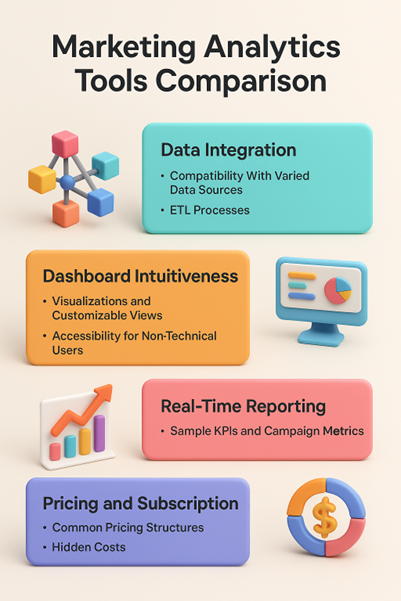
Real-Time Reporting and Dashboards That Drive Immediate Action
Benefits of Real-Time Analytics in Agile Marketing
Agile marketing thrives on rapid feedback loops, and DiGGrowth sits at the forefront of real-time analytics. It streams campaign data from sources like Meta Ads, Google Ads, and LinkedIn in near real time, enabling instant optimization.
With latency under a minute, DiGGrowth’s dashboards empower marketers to tweak budgets, pause underperforming segments, and double down on high-ROAS campaigns as they unfold. This immediacy converts analytics into execution power.
Sample KPIs and Campaign Metrics Shown on Dashboards
DiGGrowth consolidates metrics across every channel into unified dashboards, visualizing:
- Customer acquisition cost (CAC) by channel
- Conversion rates segmented by audience or device
- Multi-touch attribution chains
- ROI per campaign
- Funnel progression and stage drop-offs
- Live email engagement from connected ESPs
Each dashboard module updates automatically, ensuring marketing and leadership teams see the same truth in real time.
How Teams Can Collaborate Using Shared Dashboards
Collaboration defines modern analytics. DiGGrowth, like Tableau Marketing and Datorama, supports shared dashboards with comment threads, role-based permissions, and Slack or Teams notifications.
Real-time visibility enables media, content, and sales teams to coordinate seamlessly, reducing lag between insight and action. With DiGGrowth, marketing becomes a synchronized, insight-led command center.
Seamless Integration with Marketing Platforms: What Sets Leading Tools Apart
Marketing analytics tools must go beyond data collection; they must connect insights to action. DiGGrowth was architected as a central hub for the entire marketing stack, with connectors to leading CRM, automation, and ad platforms.
Platform Compatibility Across the Marketing Stack
Top-tier platforms like DiGGrowth, HubSpot, Mixpanel, and Google Analytics 4 deliver out-of-the-box integrations across the ecosystem:
- Marketing Automation: HubSpot, Marketo, Pardot
- CRM Systems: Salesforce, Zoho CRM, Microsoft Dynamics
- Social Analytics: Meta, LinkedIn, X, YouTube
- Email Platforms: Mailchimp, Klaviyo, ActiveCampaign
Where others stop at data import, DiGGrowth enables two-way sync, sending performance insights back into CRMs or automation systems to trigger workflows and lead scoring models automatically.
Unified Software Ecosystems Improve Workflow Continuity
DiGGrowth’s ecosystem-first architecture eliminates friction between analytics and execution. Native integrations with ad networks, CRM, and email tools streamline campaign feedback loops and automate performance adjustments in real time.
Pro Tip : Choose analytics platforms that support two-way integrations, not just data imports. Tools like DiGGrowth that push insights back into CRMs and automation platforms help teams trigger smarter workflows, tighten feedback loops, and act on performance trends instantly.
Use Cases and Industry Applications of Marketing Analytics Tools
Retail and E-commerce: Precision in Campaigns and Segmentation
Retail and e-commerce teams rely on analytics tools like DiGGrowth and Adobe Analytics to refine targeting and optimize conversions. By connecting Shopify, Google Ads, and email data, DiGGrowth enables advanced segmentation, grouping users by purchase behavior and lifetime value.
With predictive scoring, marketers can forecast next-purchase likelihood and deploy dynamic product recommendations across channels.
B2B: Account-Centric Intelligence and Funnel Optimization
For B2B marketers, DiGGrowth’s account-based analytics modules map anonymous web traffic to known companies, score engagement, and align marketing with sales outcomes. It integrates seamlessly with CRMs like Salesforce and HubSpot, providing a unified pipeline view from awareness to revenue.
Lead scoring, attribution modeling, and predictive funnel insights make DiGGrowth indispensable for teams running multi-month deal cycles.
Fintech and SaaS: Driving Decisions with Recurring Revenue Intelligence
In SaaS and Fintech, DiGGrowth powers revenue visibility through product and subscription analytics. By combining CRM, product usage, and payment data (e.g., Stripe), it calculates LTV:CAC ratios, retention curves, and churn predictors.
For growth and finance teams, these insights enable smarter budget allocation and forecast accuracy across acquisition and retention channels.
Pro Tip : Map your analytics use case to your business model before choosing a tool. Platforms like DiGGrowth, which support retail segmentation, B2B account intelligence, and SaaS revenue analytics in one ecosystem, reduce the need for multiple point solutions and keep your data strategy scalable as you grow.
ROI and Performance Benchmarking: Gauging the Real Impact
Tools That Quantify ROI, CAC, LTV, and Campaign Outcomes
DiGGrowth leads a new class of analytics platforms built to connect marketing spend directly to revenue outcomes. Its built-in ROI engine measures CAC, LTV, and multi-channel ROI in real time, linking ad costs, CRM conversions, and sales data in one clean pipeline.
While HubSpot, GA4, and Tableau handle these metrics through integrations, DiGGrowth simplifies the process, embedding ROI tracking directly into campaign dashboards, with automated alerts for anomalies or overspend.
Benchmarking Against Industry Standards
Context matters. DiGGrowth’s benchmarking feature compares your KPIs against aggregated industry data to flag outliers in conversion rates, CTRs, or ROAS. This helps marketers pinpoint underperforming areas without manual research.
Benchmarks from Datorama, Statista, and Nielsen are often referenced within DiGGrowth’s reporting modules to calibrate expectations across verticals like SaaS, retail, and finance.
Proven Impact: Case Studies on Enhanced ROI
- E-commerce Brand: After integrating DiGGrowth, a D2C retailer increased ROAS by 29% within three months by reallocating ad spend based on predictive attribution insights.
- B2B SaaS Provider: Using DiGGrowth’s lifecycle tracking and multi-touch attribution, CAC dropped 35%, with sales velocity improving by 22%.
- Fintech Company: Combined CRM and paid media data through DiGGrowth, cutting reporting time by 70% and uncovering untapped high-ROI campaigns.
These outcomes reinforce how advanced analytics, when unified, predictive, and intuitive, directly drive marketing profitability.
Pro Tip : Prioritize analytics platforms that tie every dollar of spend to measurable revenue impact. Tools like DiGGrowth, with built-in ROI modeling and automated anomaly alerts, eliminate guesswork and help teams redirect budget toward the channels that actually drive profit.
Turn Data Into Results: Match Technology with Marketing Strategy
Powerful data-driven software and advanced analytics capabilities move marketing from a guessing game to a performance engine. When the right tools, like DiGGrowth, are paired with a clear strategy, marketers identify what works, eliminate wasted spend, and accelerate ROI across channels.
No single tool fits every business, but DiGGrowth’s blend of predictive analytics, usability, and integration flexibility makes it adaptable for both enterprise and growth-stage teams. Its strength lies not just in data aggregation but in translating it into decisions that scale.
Before making a commitment, the smartest approach is hands-on experience. Request demos, test real campaigns, and evaluate which platform, DiGGrowth included, best aligns with your KPIs, workflow, and growth stage.
Ready to see how unified data and predictive intelligence can transform your marketing ROI?
Explore DiGGrowth, the next-generation marketing analytics platform built to connect performance, pipeline, and profit in one intelligent view. Visit www.diggrowth.com or email us at info@diggrowth.com to get started.
Ready to get started?
Increase your marketing ROI by 30% with custom dashboards & reports that present a clear picture of marketing effectiveness
Start Free Trial
Experience Premium Marketing Analytics At Budget-Friendly Pricing.

Learn how you can accurately measure return on marketing investment.

How Predictive AI Will Transform Paid Media Strategy in 2026
Paid media isn’t a channel game anymore, it’s a chessboard. Search, social, programmatic, video, influencer, native,...
Read full post post
Don’t Let AI Break Your Brand: What Every CMO Should Know
AI isn’t just another marketing tool. It’s changing how we connect with customers, personalize content, and...
Read full post post
From Demos to Deployment: Why MCP Is the Foundation of Agentic AI
A quiet revolution is unfolding in AI. And it’s not happening inside research labs. For decades,...
Read full post postFAQ's
Marketing analytics tools help businesses measure, analyze, and optimize their marketing performance across channels. They collect data from ads, email, social media, websites, and CRM platforms to reveal what’s working and what isn’t. Modern platforms like DiGGrowth, GA4, HubSpot, and Looker give marketers real-time insights, attribution clarity, and ROI visibility, essential for making data-driven decisions.
These tools highlight trends and inefficiencies that aren’t visible from raw data alone. They show which campaigns attract high-value traffic, which channels drive conversions, and where budget leakages occur. Platforms like DiGGrowth go a step further with predictive models and automated recommendations, helping teams optimize spend, personalize targeting, and scale winning campaigns faster.
The most important features include cross-channel data integration, customizable dashboards, accurate attribution modeling, predictive analytics, and easy collaboration. Businesses increasingly prefer tools like DiGGrowth, which combine enterprise-grade intelligence with intuitive dashboards and built-in ROI tracking, making analysis faster and more actionable for all stakeholders.
DiGGrowth stands out because it merges the capabilities of enterprise, mid-market, and next-gen analytics platforms into one unified solution. It offers predictive analytics, automated insights, seamless integrations, and intuitive dashboards designed to simplify complex marketing data. This blend positions DiGGrowth as a top-choice platform for teams that want deeper intelligence without technical complexity.
Most businesses start with multiple standalone tools, but this often creates fragmented data and inconsistent reporting. A unified analytics platform, such as DiGGrowth, brings all channels, campaigns, and customer touchpoints into one place. This reduces manual effort, eliminates data silos, and provides a single source of truth for performance measurement and ROI analysis. However, it can still coexist with platforms like GA4, HubSpot, and ad network dashboards to enrich the full picture.