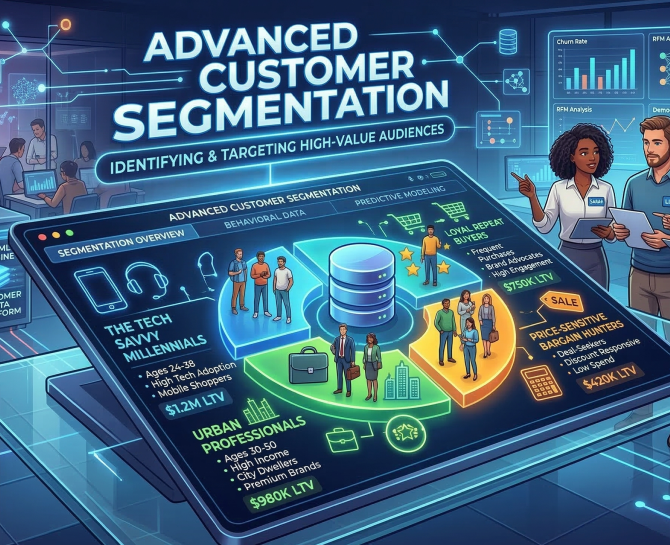
How Advanced Customer Segmentation Improves Customer Retention
Advanced customer segmentation helps businesses identify churn risks, personalize interactions, and improve engagement using behavioral and predictive data. This article explains how segmentation directly supports retention through practical techniques, lifecycle optimization, and data-driven strategies that deliver consistent long-term customer value.
Keeping customers is no longer just about good service or competitive pricing. Many businesses still struggle with retention because their approach treats customers as broad groups rather than individuals with evolving needs.
Traditional segmentation often relies on static data such as age, location, or purchase history. While useful, it does not explain why customers stay, disengage, or leave. As a result, retention strategies built on these insights tend to miss the mark.
By analyzing behavior, intent, and patterns over time, advanced customer segmentation helps businesses understand what truly drives customer decisions. This deeper level of insight makes it easier to identify risks early, personalize interactions, and maintain meaningful engagement.
When segmentation becomes more precise and dynamic, retention is no longer reactive. It becomes a structured and proactive strategy.
Key Takeaways
- Advanced customer segmentation improves retention by focusing on behavior, intent, and real-time signals rather than static data.
- Identifying churn risk early allows businesses to act before disengagement becomes permanent.
- Personalization becomes more effective when it is driven by granular and dynamic customer segments.
- Retention strategies perform better when every touchpoint is aligned with customer behavior and lifecycle stage.
What Makes Customer Segmentation Advanced
Basic segmentation groups customers using static attributes such as age, location, or past purchases. Advanced customer segmentation goes further by focusing on how customers behave, what they intend to do next, and how their interactions evolve over time.
This approach combines multiple data points, including browsing patterns, product usage, engagement frequency, and response to past campaigns. Instead of placing customers into fixed categories, it builds dynamic segments that update as behavior changes.
Another key difference is the use of predictive insights. Advanced customer segmentation identifies patterns that signal future actions, such as reduced engagement or increased likelihood of churn. This allows businesses to act before retention becomes a problem.
The result is a clearer understanding of each customer’s journey. When segmentation reflects real behavior and intent, retention strategies become more relevant, timely, and effective.
Why Traditional Segmentation Falls Short For Retention
Traditional segmentation often depends on static and broad categories such as demographics or past purchases. While these methods provide a basic structure, they lack the depth needed to support retention-focused strategies. They group customers into fixed segments that do not reflect how behavior changes over time.
One of the biggest gaps is the inability to capture evolving customer needs. Preferences, expectations, and engagement levels shift frequently, but static segmentation does not adapt to these changes. As a result, businesses continue targeting customers based on outdated assumptions rather than current behavior.
This disconnect directly impacts retention. When messaging and experiences feel irrelevant, customers are less likely to engage. Over time, this leads to reduced interaction, lower satisfaction, and an increased risk of churn.
Pro Tip : Without a dynamic understanding of customer behavior, retention efforts become reactive. Instead of addressing issues early, businesses often respond after disengagement has already started, making it harder to retain customers.
How Advanced Customer Segmentation Improves Customer Retention
Customer retention improves when decisions are based on data rather than assumptions. Advanced customer segmentation combines behavioral data, transactional history, predictive analytics, and real-time signals to create highly specific customer groups. This allows businesses to anticipate needs, respond proactively, and deliver consistent value across the customer lifecycle.
Identifying High-Risk Customers Early
Detecting churn early is one of the most impactful advantages of advanced segmentation. It allows businesses to act before disengagement becomes permanent.
- Tracking Multi-Dimensional Behavioral Signals: Monitoring metrics such as declining session frequency, reduced time on site, lower email open rates, and fewer repeat purchases to identify early disengagement patterns.
- Using Predictive Churn Scoring Models: Assigning churn probability scores based on historical behavior, purchase gaps, and engagement trends to prioritize high-risk customers.
- Analyzing Cohort-Based Drop-Off Trends: Comparing retention rates across cohorts to identify patterns such as when and why specific groups tend to churn.
- Identifying Product Or Service Friction Points: Detecting areas where customers face difficulty, such as complex onboarding or poor user experience, which contribute to churn.
- Triggering Automated Retention Workflows: Activating personalized campaigns such as win-back emails, exclusive discounts, or customer support outreach when churn risk crosses a threshold.
Early identification reduces reactive firefighting and enables structured retention strategies that improve long-term stability.
Delivering Highly Personalized Experiences
Personalization becomes more effective when it is backed by deep segmentation rather than surface-level grouping.
- Building Granular Customer Profiles: Combining demographic, behavioral, and psychographic data to create detailed customer personas.
- Segmenting Based On Intent And Purchase Readiness: Differentiating between browsing users, comparison shoppers, and ready-to-buy customers to tailor communication.
- Customizing Content Based On User Journey Stage: Delivering educational content to new users and promotional offers to decision-stage customers.
- Personalizing Product Recommendations Using Data Models: Suggesting products based on past purchases, browsing patterns, and similar customer behavior.
- Ensuring Cross-Channel Personalization Consistency: Aligning personalization across websites, emails, apps, and paid campaigns to create a unified experience.
When customers consistently receive relevant interactions, they are more likely to stay engaged and loyal over time.
Optimizing Customer Journey Touchpoints
Advanced segmentation helps refine every interaction by aligning it with customer expectations at different lifecycle stages.
- Defining Clear Lifecycle Segments: Categorizing customers into stages such as acquisition, onboarding, engagement, retention, and reactivation.
- Enhancing First-Time User Experience: Delivering guided onboarding, tutorials, and support to reduce early churn and improve activation rates.
- Improving Conversion Touchpoints: Identifying where users hesitate during the purchase journey and addressing those gaps with targeted messaging or incentives.
- Personalizing Post-Purchase Interactions: Sending follow-ups, usage tips, or complementary product suggestions to strengthen engagement after purchase.
- Reactivating Inactive Users With Precision Campaigns: Designing campaigns based on inactivity duration, past preferences, and previous engagement levels.
- Optimizing Timing Using Engagement Data: Delivering messages when customers are most likely to respond based on historical interaction patterns.
Well-optimized touchpoints reduce friction, improve experience continuity, and increase the likelihood of repeat engagement.
Improving Customer Engagement Strategies
Engagement strategies become more effective when they are driven by behavior rather than assumptions.
- Analyzing Real-Time Interaction Data: Using live data such as clicks, scroll depth, and session activity to understand immediate customer intent.
- Segmenting Based On Engagement Intensity: Grouping customers into highly engaged, moderately engaged, and inactive segments to tailor strategies accordingly.
- Designing Contextual Campaigns Based On Actions: Triggering campaigns based on specific behaviors such as product views, cart additions, or content consumption.
- Optimizing Channel Mix For Each Segment: Identifying the most effective communication channels for different customer groups.
- Maintaining Engagement Through Value-Driven Content: Providing useful content such as guides, updates, or recommendations instead of purely promotional messaging.
- Measuring Engagement Effectiveness Continuously: Tracking metrics such as click-through rates, conversion rates, and retention rates to refine strategies.
Consistent, relevant engagement ensures customers remain connected to the brand, reducing the likelihood of churn.
Enhancing Customer Lifetime Value
Customer lifetime value increases when retention strategies are aligned with customer behavior and preferences.
- Identifying Revenue-Generating Customer Segments: Analyzing which segments contribute the highest revenue and focusing retention efforts on them.
- Driving Repeat Purchases Through Targeted Campaigns: Using purchase history and timing patterns to prompt repeat buying behavior.
- Implementing Tiered Loyalty Programs: Rewarding customers based on their engagement level and purchase frequency to encourage continued interaction.
- Leveraging Upsell And Cross-Sell Opportunities: Recommending higher-value or complementary products based on previous transactions.
- Predicting Future Customer Value: Using predictive analytics to estimate long-term value and allocate resources effectively.
- Continuously Updating Segmentation Models: Refining segments based on new data to ensure strategies remain relevant and effective.
- Aligning Retention Efforts With Profitability Goals: Balancing acquisition costs and retention investments to maximize overall revenue impact.
By focusing on long-term engagement and value creation, advanced segmentation helps businesses build sustainable revenue while strengthening customer relationships.
Key Techniques Used In Advanced Customer Segmentation For Retention
Advanced customer segmentation relies on specific techniques that help businesses understand behavior, predict outcomes, and act with precision. These methods directly support retention by making insights more actionable.
Behavioral Segmentation
This technique focuses on how customers interact with a product, service, or brand. It includes actions such as purchase frequency, browsing activity, and engagement patterns.
By analyzing behavior, businesses can identify active users, declining engagement, and potential churn signals. This makes it easier to adjust retention strategies based on real usage.
Predictive Segmentation
Predictive segmentation uses historical data and models to forecast future behavior. It helps identify customers who are likely to churn, upgrade, or remain loyal.
This forward-looking approach allows businesses to act early, rather than waiting for clear signs of disengagement.
RFM Analysis
It segments customers based on how recently they purchased, how often they engage, and how much they spend.
This technique helps identify high-value customers as well as those who may need re-engagement efforts to improve retention.
Cohort Analysis
Cohort analysis groups customers based on shared characteristics or time-based events, such as sign-up date or first purchase.
It helps track how different groups behave over time, making it easier to understand retention trends and identify where drop-offs occur.
How To Start Using Advanced Customer Segmentation For Retention
Adopting advanced customer segmentation for retention requires a structured approach. The goal is to move from broad assumptions to data-driven actions that directly reduce churn and improve engagement.
Define Clear Retention Objectives
Start by identifying what retention means for your business. This could include reducing churn rate, increasing repeat purchases, or improving customer lifetime value. Clear objectives ensure that segmentation efforts are aligned with measurable outcomes.
Identify Key Customer Behaviors Linked To Churn
Focus on behaviors that indicate disengagement. This may include reduced usage, fewer logins, delayed purchases, or lack of interaction with campaigns. Understanding these signals helps in building segments that highlight at-risk customers early.
Use The Right Tools For Data Collection And Analysis
Advanced customer segmentation depends on accurate and comprehensive data. Use tools that track customer interactions across channels, analyze patterns, and support predictive insights. This creates a strong foundation for reliable segmentation.
Continuously Refine Segments Based On Performance
Customer behavior is not static, so segmentation should not be either. Regularly evaluate how segments perform and update them based on new data. This ensures that retention strategies remain relevant and effective over time.
Conclusion
Retention becomes more consistent when decisions are driven by clarity rather than assumptions. Advanced customer segmentation brings that clarity by turning scattered data into meaningful direction. It allows teams to respond with precision, adjust strategies in real time, and build interactions that feel relevant at every stage of the customer journey.
This shift is not about adding complexity. It is about creating a system where customer behavior directly shapes how businesses engage, support, and retain their audience. When done right, retention stops being a challenge that teams react to and becomes a capability they can rely on.
At DiGGrowth, the focus is on helping businesses make this transition practical and scalable. If you are looking to build retention strategies that are driven by real customer insight and not guesswork, it is time to take a more structured approach.
Your customer data is already telling a story. Are you using it to keep them, or losing them in the noise?
Start the conversation at info@diggrowth.com and turn segmentation into a retention advantage.
Ready to get started?
Increase your marketing ROI by 30% with custom dashboards & reports that present a clear picture of marketing effectiveness
Start Free Trial
Experience Premium Marketing Analytics At Budget-Friendly Pricing.

Learn how you can accurately measure return on marketing investment.
How Predictive AI Will Transform Paid Media Strategy in 2026
Paid media isn’t a channel game anymore, it’s a chessboard. Search, social, programmatic, video, influencer, native,...
Read full post post
Don’t Let AI Break Your Brand: What Every CMO Should Know
AI isn’t just another marketing tool. It’s changing how we connect with customers, personalize content, and...
Read full post post
From Demos to Deployment: Why MCP Is the Foundation of Agentic AI
A quiet revolution is unfolding in AI. And it’s not happening inside research labs. For decades,...
Read full post postFAQ's
Success is measured through reduced churn rate, increased repeat purchases, improved engagement metrics, and higher customer lifetime value. Tracking segment performance over time helps validate the impact of segmentation strategies.
Common challenges include fragmented data sources, lack of real-time insights, limited predictive capabilities, and difficulty aligning segmentation with business goals. Addressing these requires integrated data systems and a clear retention-focused strategy.
Customer segments should be updated continuously or at regular intervals based on data flow. Frequent updates ensure segmentation reflects real-time behavior, allowing timely actions that prevent disengagement and improve retention outcomes.
Yes, it can scale effectively when supported by unified data systems and adaptable models. Regional behavior differences can be incorporated into segmentation to ensure relevance while maintaining consistency across markets.
Technology enables data integration, real-time tracking, and predictive analysis. It helps businesses automate segmentation, identify patterns faster, and execute retention strategies efficiently without relying on manual processes.