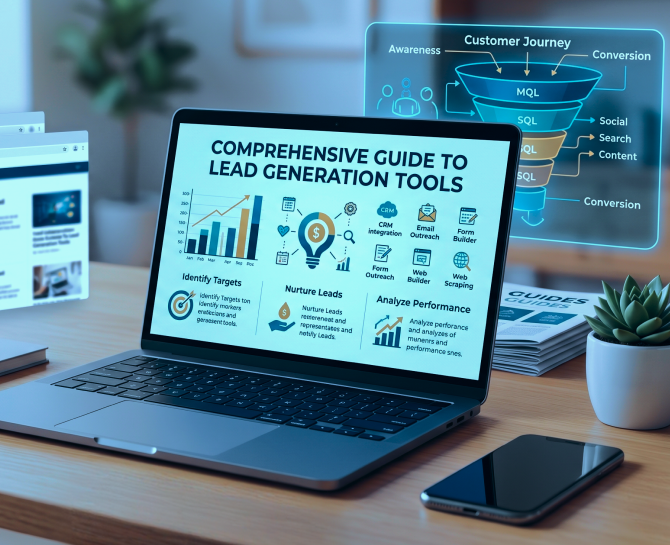
Lead Generation Tools Explained: A Comprehensive Business Guide
Lead generation tools have become essential for connecting marketing efforts with measurable business outcomes. This blog explains the different types of lead generation tools, compares leading platforms, and outlines what businesses should evaluate before making an investment.
Generating qualified leads, understanding which channels influence revenue, and scaling those efforts efficiently across teams is where businesses now compete.
Many organizations invest heavily in paid campaigns, outbound sales, content marketing, and automation platforms, yet leadership teams still struggle to answer important questions:
- Which channels are driving revenue?
- Which campaigns attract high-intent buyers?
- Which tools improve pipeline visibility and operational efficiency?
This is why lead generation tools have evolved beyond simple contact collection systems. Modern platforms now help businesses connect marketing performance with revenue outcomes, sales productivity, attribution visibility, and growth forecasting.
The right lead generation stack can help organizations identify decision-makers faster, automate prospect engagement, improve lead quality, and reduce wasted marketing spend. At the same time, it gives executives clearer visibility into what is actually contributing to business growth.
Key Takeaways
- Lead generation tools deliver greater value when they improve lead quality, revenue visibility, and decision-making rather than simply increasing lead volume.
- Different categories of lead generation tools serve different purposes, making it important to build a technology stack that aligns with business goals.
- Integrating sales, marketing, and attribution data helps organizations identify which channels and campaigns contribute to revenue.
- Data quality, automation, and actionable insights are essential for improving operational efficiency and creating scalable growth strategies.
What Makes A Lead Generation Tool Valuable For Modern Businesses
Modern businesses no longer evaluate lead generation tools based only on lead volume. Leadership teams now prioritize platforms that improve revenue visibility, lead quality, operational efficiency, and customer intelligence. The most valuable tools help organizations identify high-intent prospects, connect marketing efforts with revenue outcomes, automate workflows, and improve pipeline visibility across departments.
As acquisition costs continue to rise, businesses are shifting from disconnected systems to integrated lead generation platforms that support scalable growth and data-driven decision-making.
Types Of Lead Generation Tools Businesses Use Today
Modern businesses use multiple lead generation tools together to improve prospect discovery, lead nurturing, conversion tracking, and revenue visibility. Each category serves a different purpose within the customer acquisition process, helping organizations build a more connected and scalable growth strategy.
CRM-Integrated Lead Platforms
These tools combine customer relationship management with lead capture, pipeline tracking, and automation capabilities. Businesses use them to centralize prospect data, monitor sales activity, and improve visibility across the customer journey.
Sales Intelligence Tools
Sales intelligence platforms help businesses identify decision-makers, access company information, and build targeted prospect lists. They are commonly used by B2B sales teams to improve outbound prospecting and account-based marketing efforts.
Marketing Attribution Platforms
Attribution tools help organizations understand which marketing channels contribute to lead generation and revenue outcomes. These platforms provide visibility into campaign performance, customer journeys, and conversion impact across multiple touchpoints.
Email Prospecting Tools
Email prospecting platforms support outbound lead generation through automated outreach, sequencing, and engagement tracking. Businesses use them to scale prospect communication while improving response management.
Conversational Lead Capture Tools
These tools use chatbots, live chat, and conversational automation to engage website visitors in real time. They help businesses qualify leads faster and reduce delays in prospect engagement.
Landing Page And Funnel Builders
Landing page platforms help marketing teams create conversion-focused pages for campaigns, webinars, product launches, and lead capture initiatives. Many also include A/B testing and conversion optimization capabilities.
Intent Data Platforms
Intent data tools analyze online behavioral signals to identify businesses actively researching specific products or services. Organizations use these insights to prioritize high-intent prospects and improve targeting strategies.
LinkedIn Lead Generation Tools
These platforms help businesses identify professionals, connect with decision-makers, and support B2B prospecting through LinkedIn-based outreach and targeting.
Website Visitor Identification Platforms
Website visitor identification tools help businesses uncover anonymous company traffic visiting their websites. This allows sales and marketing teams to identify potential prospects before direct inquiries are submitted.
Marketing Automation Systems
Marketing automation platforms streamline repetitive marketing activities such as email campaigns, lead nurturing, segmentation, and customer engagement workflows. They help businesses improve operational efficiency and lead management at scale.
1. DiGGrowth
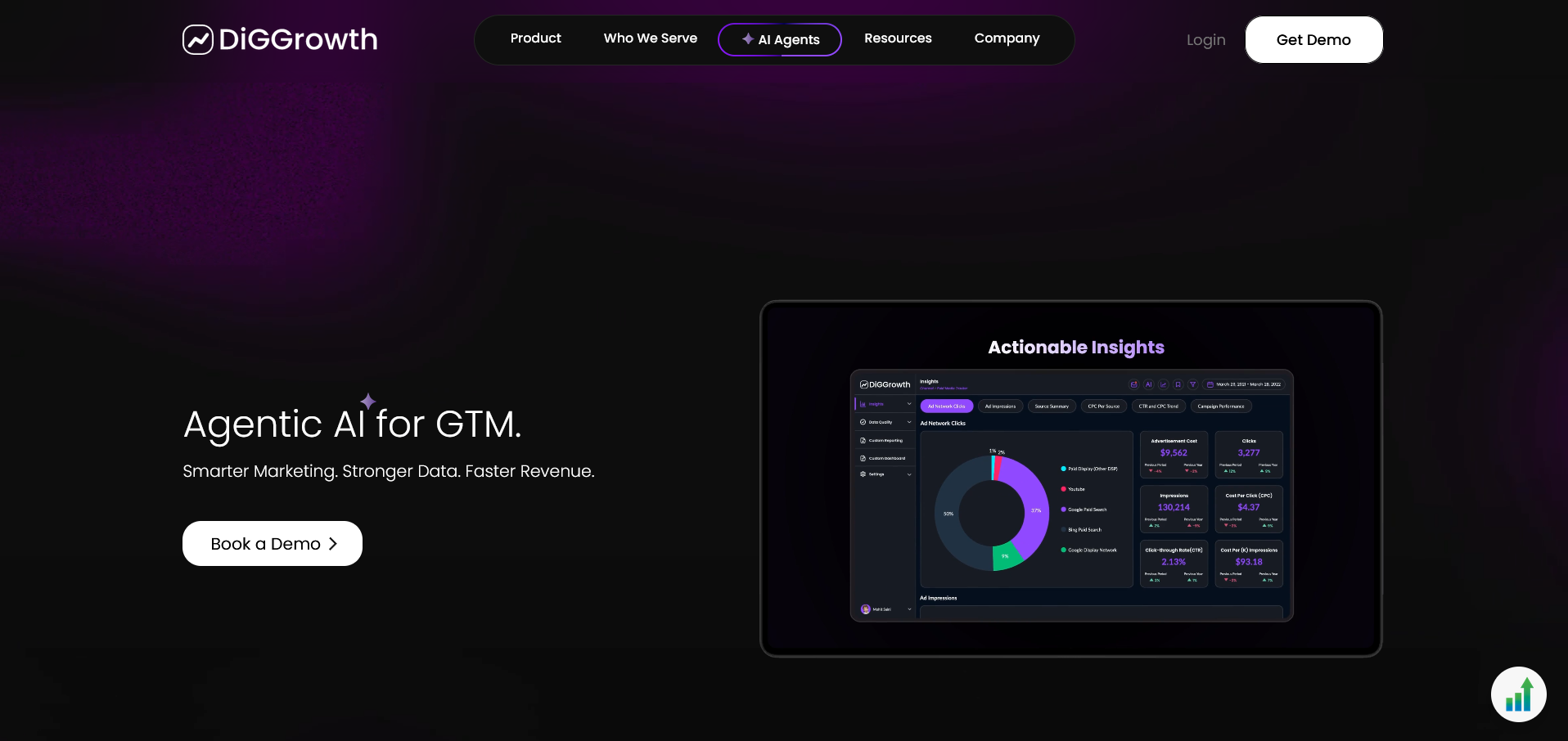
Many businesses generate large volumes of marketing and sales data but still struggle to understand which activities are actually contributing to revenue growth. This is where DiGGrowth positions itself differently from traditional lead generation platforms.
DiGGrowth is a marketing analytics and revenue intelligence platform designed to help organizations improve attribution visibility, campaign measurement, and growth decision-making. Instead of focusing only on lead collection, the platform helps businesses connect marketing performance directly with pipeline and revenue outcomes.
For leadership teams, this level of visibility becomes critical when managing multi-channel campaigns, complex customer journeys, and increasing customer acquisition costs.
Why Businesses Use DiGGrowth
Organizations often use multiple acquisition channels simultaneously, including paid advertising, email campaigns, social media, webinars, SEO, and outbound sales. Without centralized attribution visibility, it becomes difficult to identify which channels are driving qualified opportunities versus low-value traffic.
DiGGrowth helps businesses:
- Analyze cross-channel marketing performance.
- Improve multi-touch attribution visibility.
- Track campaign influence on revenue outcomes.
- Reduce inefficient marketing spend.
- Align marketing and sales reporting.
This allows leadership teams to make more informed investment decisions based on revenue contribution instead of surface-level engagement metrics.
Distinctive Value
One of the platform’s strongest advantages is its focus on revenue intelligence instead of isolated campaign reporting.
Key capabilities include:
- Multi-touch attribution analysis.
- Customer journey visibility.
- Revenue-focused performance tracking.
- Cross-channel analytics integration.
- Executive-level reporting dashboards.
These insights help organizations move beyond lead quantity and focus more on conversion quality, acquisition efficiency, and long-term revenue impact.
Example Use Case
A SaaS company running campaigns across LinkedIn, Google Ads, and email marketing may initially assume paid search is delivering the strongest results due to higher lead volume.
However, after analyzing attribution data through DiGGrowth, the company may discover that LinkedIn campaigns generate fewer leads but significantly higher conversion rates and larger contract values.
This level of visibility helps businesses optimize budget allocation more strategically.
2. HubSpot
HubSpot is a CRM-driven lead generation and marketing automation platform designed to help businesses manage customer acquisition, lead nurturing, sales engagement, and pipeline visibility within a centralized system.
Many organizations use separate tools for email marketing, lead tracking, customer communication, and reporting, which often creates fragmented workflows and inconsistent data visibility. HubSpot helps consolidate these activities into a connected ecosystem, making it easier for businesses to manage the full customer journey from initial engagement to conversion.
Its scalability makes it suitable for both growing businesses and enterprises managing complex marketing and sales operations.
Key Features
CRM And Contact Management
HubSpot centralizes customer and prospect information, allowing teams to track interactions, communication history, deal stages, and engagement activity from a single dashboard.
Marketing Automation
Businesses can automate email campaigns, lead nurturing workflows, follow-ups, and audience segmentation to improve engagement consistency and reduce manual workload.
Sales Pipeline Visibility
Sales teams can monitor deal progress, track prospect activity, manage tasks, and forecast pipeline movement more effectively.
Reporting And Analytics
HubSpot provides reporting dashboards that help businesses analyze campaign performance, lead sources, conversion activity, and sales outcomes across departments.
How It Benefits Organizations
HubSpot helps businesses improve operational alignment between marketing and sales teams while reducing dependency on disconnected systems.
Organizations often use the platform to:
- Improve lead nurturing efficiency.
- Automate repetitive marketing activities.
- Centralize customer acquisition data.
- Strengthen sales and marketing collaboration.
For leadership teams, this creates clearer visibility into customer acquisition performance and revenue growth opportunities.
3. Apollo.io
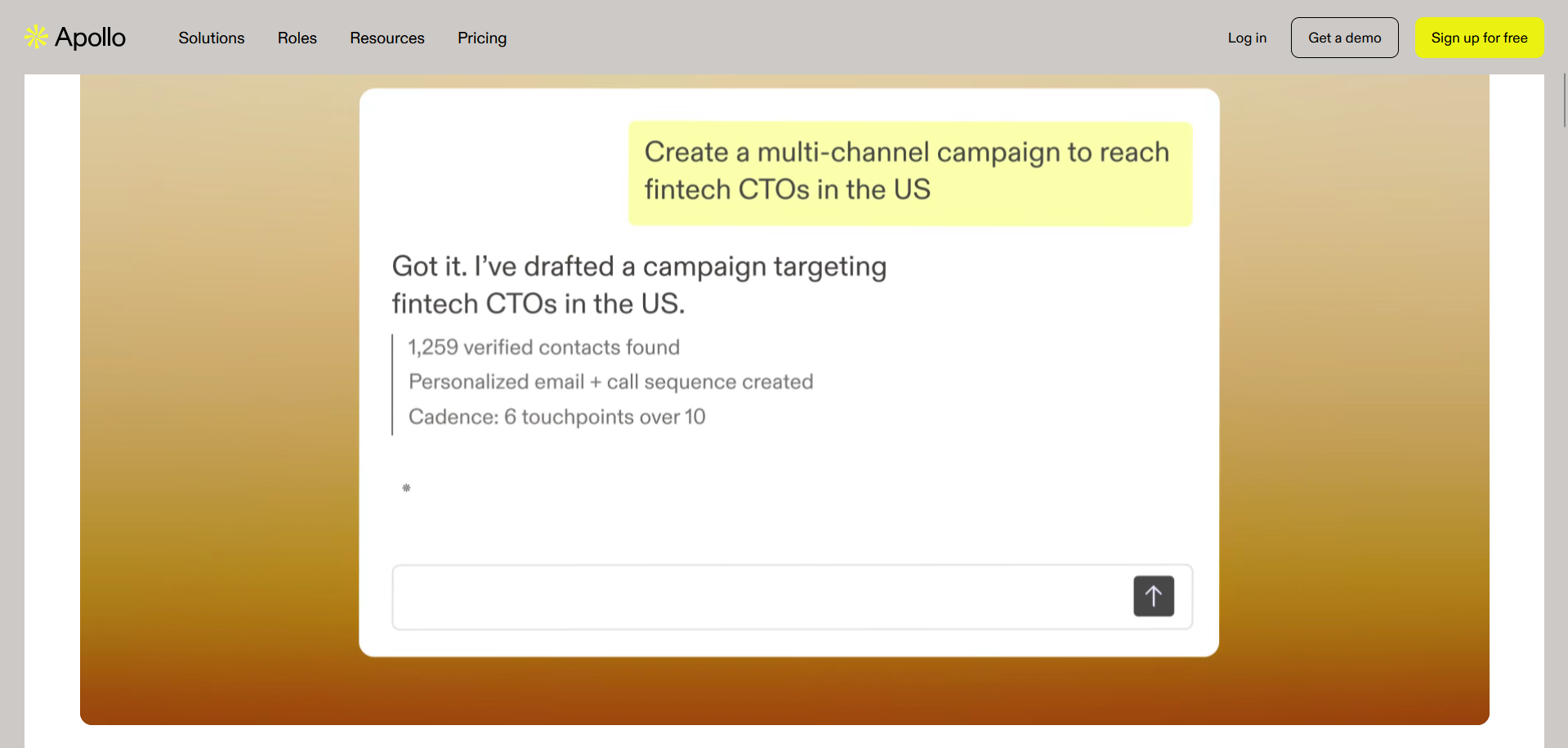
Finding potential customers is rarely the difficult part for modern B2B organizations. The greater challenge is identifying prospects who match the ideal customer profile, have genuine buying intent, and can be reached through reliable contact information. Apollo.io combines prospecting, sales intelligence, and engagement capabilities within a single platform to help businesses build more targeted outbound strategies.
Rather than relying on multiple disconnected databases, Apollo.io allows sales teams to discover companies, identify decision-makers, verify contact details, and launch outreach campaigns from one centralized environment.
Its extensive company database and filtering capabilities make it particularly valuable for businesses focused on outbound sales, account-based marketing, and pipeline generation.
Key Features
Large B2B Contact Database
Provides access to millions of business contacts and company profiles with detailed filtering options based on industry, company size, job title, location, technologies used, and buying signals.
Advanced Prospect Search
Allows teams to create highly targeted prospect lists using demographic, firmographic, and behavioral criteria.
Sales Engagement
Supports email sequencing, task automation, follow-up reminders, and outreach tracking to improve prospect engagement.
CRM Integration
Synchronizes prospect information with major CRM platforms to reduce manual data entry and improve pipeline management.
How It Benefits Organizations
Businesses commonly use Apollo.io to:
- Build targeted prospect lists.
- Improve outbound sales efficiency.
- Reduce time spent researching leads.
- Increase sales team productivity.
- Support account-based marketing initiatives.
For organizations managing high-volume prospecting, Apollo.io helps simplify lead discovery while improving the quality of outbound engagement.
4. ZoomInfo
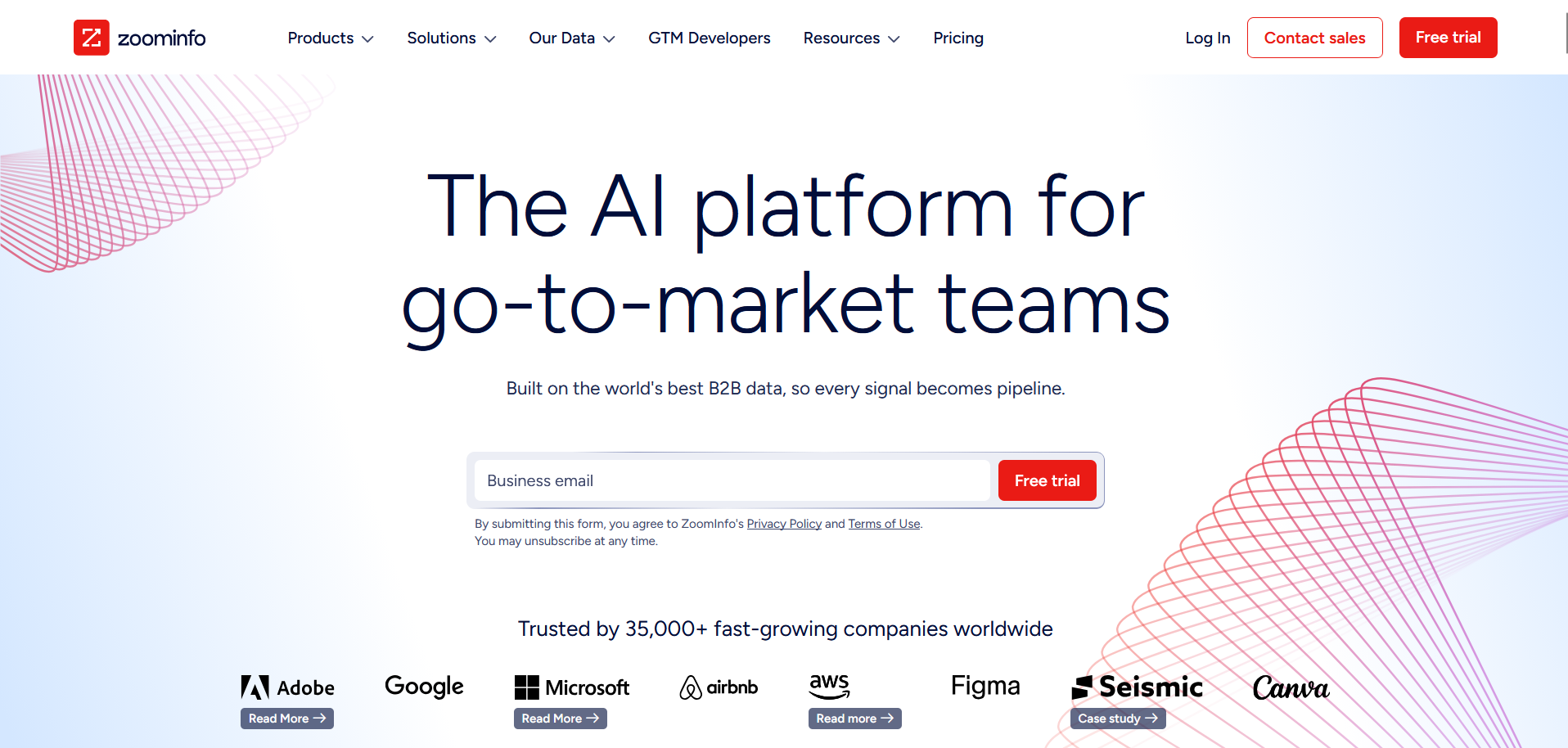
Accurate business intelligence plays a critical role in successful lead generation. Many sales teams waste valuable time pursuing outdated contacts or incomplete company information, resulting in lower conversion rates and inefficient prospecting efforts.
ZoomInfo addresses this challenge by providing extensive B2B data, buyer intelligence, organizational insights, and intent signals that help businesses prioritize prospects with greater confidence.
The platform is widely adopted by enterprise sales and marketing teams seeking more precise targeting and deeper customer intelligence.
Key Features
Comprehensive Business Database
Provides verified company information, employee profiles, organizational structures, and direct contact details.
Intent Data
Identifies organizations actively researching relevant products or services, helping businesses engage prospects earlier in the buying journey.
Organizational Insights
Offers visibility into company hierarchies, decision-makers, hiring trends, technology adoption, and business growth indicators.
Workflow Integrations
Connects with CRM platforms, marketing automation systems, and sales engagement tools to improve operational efficiency.
How It Benefits Organizations
Businesses use ZoomInfo to:
- Improve prospect targeting.
- Identify high-intent buyers.
- Reduce research time.
- Support enterprise sales initiatives.
- Improve account prioritization.
Its combination of business intelligence and buying intent data helps organizations focus resources on opportunities with stronger revenue potential.
5. LinkedIn Sales Navigator
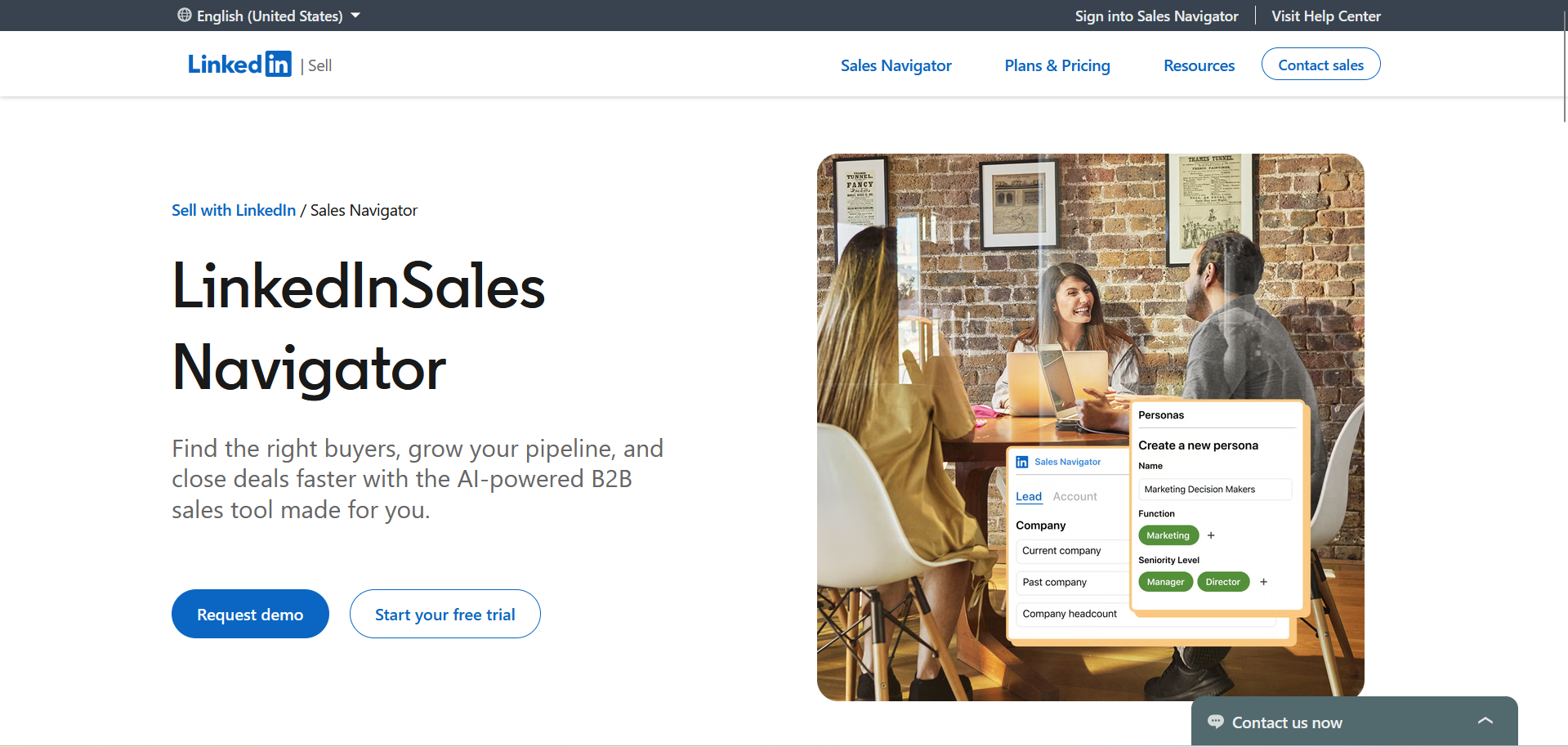
Professional networking continues to play a significant role in B2B lead generation, particularly when businesses need to establish relationships with senior decision-makers. LinkedIn Sales Navigator expands upon the standard LinkedIn experience by providing advanced search capabilities, prospect recommendations, account tracking, and engagement insights.
Rather than relying solely on cold outreach, businesses can build more informed and personalized prospecting strategies based on professional activity and organizational updates.
Key Features
Advanced Lead Search
Enables users to filter prospects using company size, industry, seniority, function, geography, and numerous additional criteria.
Account Monitoring
Tracks company updates, hiring activity, leadership changes, and other signals that may indicate sales opportunities.
Lead Recommendations
Suggests additional prospects based on existing searches and account preferences.
CRM Connectivity
Integrates with CRM platforms to improve workflow consistency and reduce administrative effort.
How It Benefits Organizations
Businesses commonly use Sales Navigator to:
- Identify decision-makers.
- Strengthen account-based marketing.
- Build personalized outreach campaigns.
- Monitor target accounts.
- Improve relationship-driven selling.
Its professional network insights allow organizations to approach prospects with greater context and relevance.
6. Clearbit
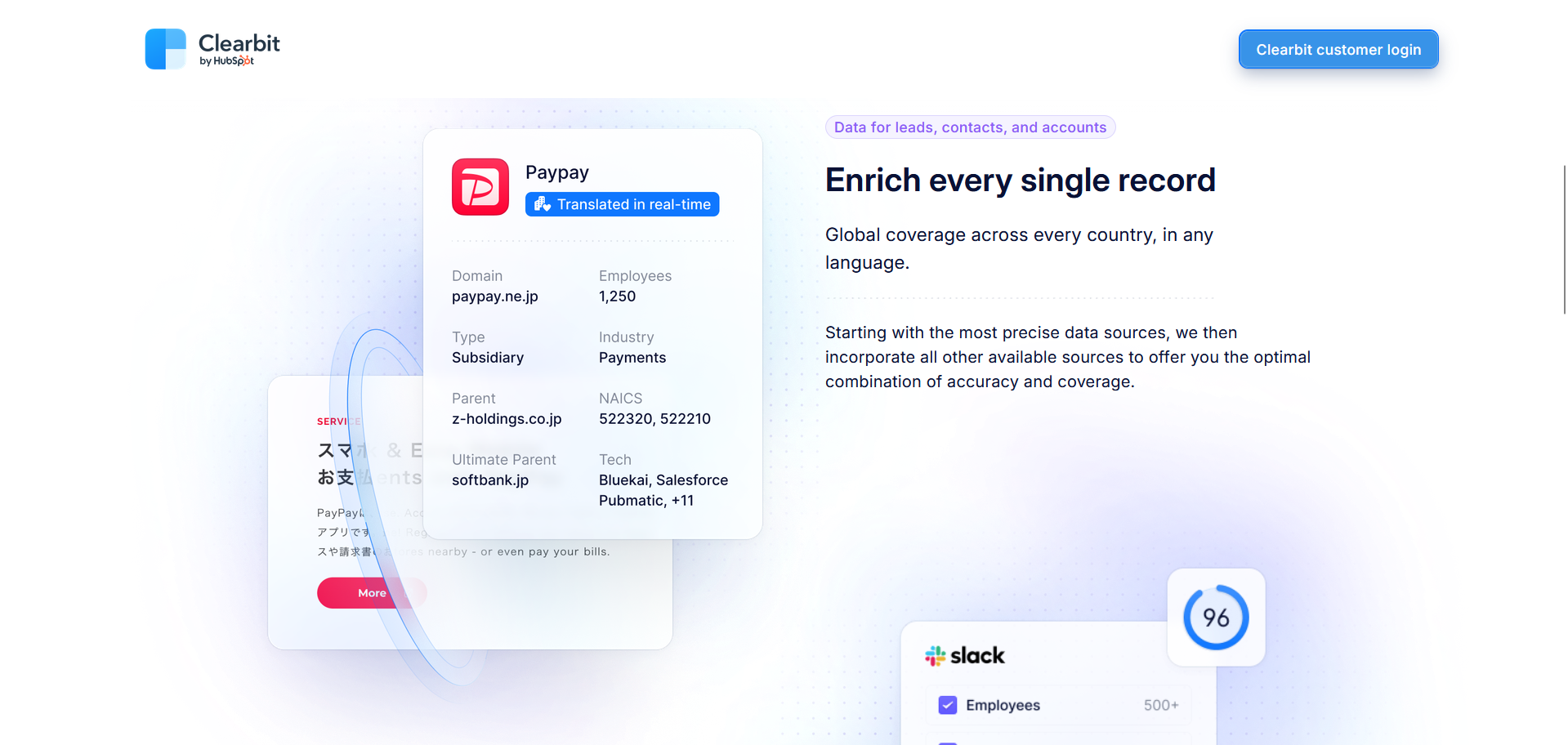
Understanding who visits a company website can significantly improve lead qualification and sales prioritization. Clearbit enriches existing customer data with additional business intelligence, allowing marketing and sales teams to build more complete prospect profiles.
Rather than relying only on information submitted through forms, businesses can automatically enrich lead records with company details, employee counts, industry classifications, and technology usage.
Key Features
Data Enrichment
Automatically enhances lead and customer records with verified business information.
Website Visitor Intelligence
Identifies companies visiting business websites to support proactive sales engagement.
Lead Routing
Automatically directs qualified leads to appropriate sales representatives based on predefined criteria.
Marketing Personalization
Supports customized website experiences and targeted marketing campaigns using enriched customer data.
How It Benefits Organizations
Organizations use Clearbit to:
- Improve lead qualification.
- Enrich CRM records.
- Personalize customer experiences.
- Prioritize sales opportunities.
- Strengthen marketing segmentation.
By improving customer data quality, businesses can make more informed sales and marketing decisions while reducing manual research.
Conclusion
The most effective lead generation strategies are built on visibility, not assumptions. As customer journeys become more complex and marketing channels continue to expand, businesses need technology that connects every interaction to measurable business outcomes.
Selecting the right combination of tools allows organizations to improve lead quality, strengthen collaboration between teams, and make investment decisions backed by reliable data.
Every lead has a story. Discover which ones are driving revenue with DiGGrowth. Contact us at info@diggrowth.com.
Ready to get started?
Increase your marketing ROI by 30% with custom dashboards & reports that present a clear picture of marketing effectiveness
Start Free Trial
Experience Premium Marketing Analytics At Budget-Friendly Pricing.

Learn how you can accurately measure return on marketing investment.

How Predictive AI Will Transform Paid Media Strategy in 2026
Paid media isn’t a channel game anymore, it’s a chessboard. Search, social, programmatic, video, influencer, native,...
Read full post post
Don’t Let AI Break Your Brand: What Every CMO Should Know
AI isn’t just another marketing tool. It’s changing how we connect with customers, personalize content, and...
Read full post post
From Demos to Deployment: Why MCP Is the Foundation of Agentic AI
A quiet revolution is unfolding in AI. And it’s not happening inside research labs. For decades,...
Read full post postFAQ's
Looking beyond lead volume is essential. Executives should evaluate metrics such as customer acquisition cost, pipeline contribution, revenue influenced, sales cycle length, and conversion rates. Platforms that connect marketing activities to revenue outcomes provide a clearer picture of overall business impact.
The priority should be seamless data integration, reporting consistency, and cross-functional visibility. A well-connected technology stack reduces data silos, improves operational efficiency, and enables leadership teams to make decisions based on unified performance insights.
Organizations should assess performance on a quarterly basis or whenever significant changes occur in their marketing strategy, sales process, or customer behavior. Regular evaluations help identify underperforming tools, optimize investments, and ensure the technology stack continues to support business objectives.
Yes. Modern platforms create a shared view of lead quality, customer journeys, and pipeline performance. This allows both teams to align on common metrics, improve handoff processes, and focus their efforts on opportunities with the greatest revenue potential.
Businesses should expect greater emphasis on artificial intelligence, predictive analytics, multi-touch attribution, real-time reporting, and automated decision support. These capabilities help leadership teams respond faster to changing market conditions while improving the efficiency of customer acquisition strategies.