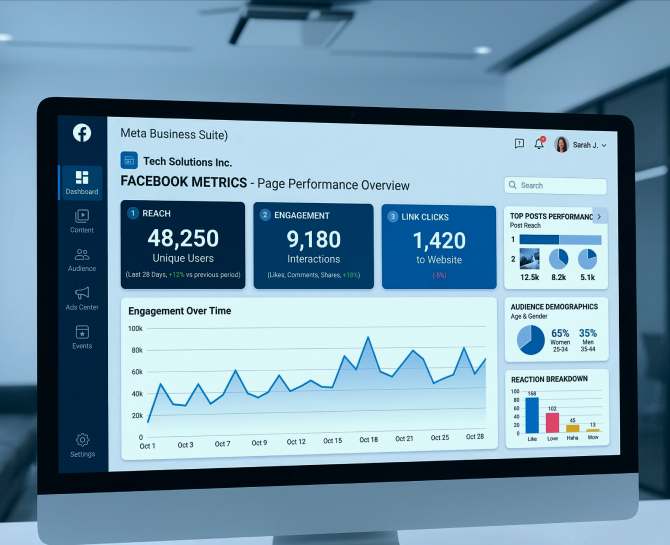
Actionable Facebook Metrics to Optimize Your Social Campaigns
Actionable Facebook metrics show how audiences engage, click, and convert on your campaigns. By tracking reach, engagement, conversions, and ad performance, marketers can refine strategy, improve targeting, and increase ROI with measurable results. The blog focuses on Facebook Metrics that reveal audience behavior, campaign performance, and areas for optimization.
Running a Facebook campaign without tracking the right metrics can cost time, budget, and results. Many marketers focus on likes, shares, and comments, but those numbers rarely reflect actual performance. The metrics that truly matter show how your audience engages, clicks, and converts.
Understanding these metrics allows you to make data-driven decisions. You can identify which posts capture attention, which ads deliver meaningful results, and where your strategy needs adjustment. This insight is essential for optimizing campaigns, improving reach, and increasing return on investment.
By analyzing engagement, reach, click-through rates, and conversions, you gain a clear picture of audience behavior. These numbers highlight opportunities and potential gaps in your campaigns, helping you focus resources where they make the most impact.
Read this blog to uncover actionable Facebook metrics that provide clarity, inform strategy, and help you run campaigns that deliver measurable results.
Key Takeaways
- Metrics are only meaningful when used to make actionable decisions that improve content and campaign performance.
- Understanding audience behavior helps refine targeting, creative, and posting strategy for maximum impact.
- Engagement, reach, and conversion metrics together reveal which campaigns truly drive results and which need adjustment.
- Cost and performance insights ensure that advertising budgets are spent efficiently and campaigns remain profitable.
- Continuous testing and iteration allow marketers to adapt strategies, optimize campaigns, and maintain a competitive edge.
Understanding Facebook Metrics
Facebook metrics are more than just numbers on a dashboard. They reveal how your audience interacts with your content and how your campaigns perform. Understanding them helps you make informed decisions instead of relying on guesswork.
Metrics fall into three main categories: engagement, reach, and conversions. Engagement metrics show responses like likes, comments, shares, and video interactions. Reach metrics reveal how many people see your posts and how often. Conversion metrics track actions that move audiences toward your business goals, such as clicks, sign-ups, or purchases.
Tracking these metrics together provides a complete view of campaign performance. They help spot patterns, identify top-performing content, and highlight areas that need improvement.
Key Engagement Metrics to Monitor
Engagement metrics show how your audience interacts with your content. They go beyond surface-level likes and shares, revealing which posts truly capture attention and drive action. Monitoring these metrics helps you create content that resonates and encourages meaningful interactions.
- Page Likes and Follower Growth: Tracking these metrics over time helps you see if your audience is expanding. A steady increase indicates that your content and campaigns are attracting interest, while stagnation may suggest a need to adjust your strategy.
- Post Engagement Rate: This metric measures likes, comments, and shares relative to your reach. A high engagement rate shows that content is relevant and compelling, while a low rate indicates that posts may need more appealing visuals, timing, or messaging.
- Video Views and Average Watch Time: These metrics reveal how long viewers watch your video content. Short watch times may indicate that your content is not holding attention, while longer watch times suggest effective messaging and storytelling.
- Comments and Shares: Comments provide insight into audience sentiment and discussions, while shares expand your reach and indicate content that people find valuable enough to spread.
Pro Tip : Regularly analyzing engagement metrics allows you to identify trends, optimize content, and deliver posts that genuinely connect with your audience, improving overall campaign performance.
Reach and Impressions Metrics
Reach and impressions measure the visibility of your Facebook content, but each reveals different aspects of audience exposure. Understanding these metrics helps optimize content delivery, ad spend, and overall campaign performance.
Organic Reach vs. Paid Reach
| Metric | Organic Reach | Paid Reach | Key Insights |
|---|---|---|---|
| Audience Exposure | Reaches users naturally without ads | Reaches users through paid promotions | Shows how content performs organically versus with targeted advertising | Purpose | Builds long-term engagement and brand presence | Drives targeted visibility and conversions | Helps determine which approach is more effective for your goals | Cost | Free | Requires budget | Highlights ROI and efficiency of campaigns | Control | Limited to followers and engagement patterns | Full control over targeting, placement, and timing | Guides strategic decisions for optimizing reach | Performance Indicator | Reflects content resonance and organic growth | Reflects ad targeting effectiveness | Comparison reveals opportunities to improve both organic and paid efforts |
Impressions
- Impressions indicate how many times your content appears on screens, including repeated views.
- High impressions with low engagement may indicate that your content is visible but not compelling enough, signaling a need for stronger visuals, messaging, or calls to action.
Frequency
- Frequency tracks how often the same user sees your content.
- Maintaining an optimal frequency ensures your content is memorable without causing fatigue, which can reduce engagement and increase ad costs.
Segmented Reach
- Breaking down reach by demographics, interests, or location highlights which audience groups respond best to your campaigns.
- This insight allows marketers to focus resources on high-performing segments and adjust messaging for underperforming groups.
Conversion-Focused Metrics
Conversion metrics show whether your Facebook campaigns are driving meaningful business results. While engagement and reach measure visibility, conversion metrics track real actions such as clicks, sign-ups, and purchases that move your audience closer to your goals.
Click-Through Rate (CTR)
- What It Measures: The percentage of people who click on links, ads, or calls to action.
- Why It Matters: A high CTR shows your content and messaging resonate. A low CTR indicates that visuals, copy, or placement may need improvement.
Leads And Form Submissions
- What It Measures: The number of users providing information or expressing interest in your product or service.
- Why It Matters: Helps identify campaigns that generate high-quality prospects and highlights areas where the funnel may lose potential customers.
Conversion Rate
- What It Measures: The percentage of users who complete a desired action such as purchasing or signing up.
- Why It Matters: Conversion rate is a key indicator of campaign effectiveness and return on investment.
Cost Per Conversion
- What It Measures: The amount spent to acquire each conversion.
- Why It Matters: Helps optimize budget allocation, ad targeting, and content performance for better efficiency.
Takeaway: Tracking these metrics ensures your campaigns are visible and impactful. They provide clear insights into which strategies generate results and help refine campaigns to maximize return on investment.
Ad Performance Metrics
Ad performance metrics provide a clear view of how effectively your Facebook advertising drives results. These metrics go beyond visibility and engagement to show whether your campaigns are delivering meaningful outcomes. Monitoring them allows marketers to optimize targeting, creative strategy, and budget allocation.
Cost Per Click (CPC)
- Importance: Measures the cost for each click on your ad.
- Why It Matters: A lower CPC indicates that your ad creative and targeting are efficient at driving interest. A higher CPC signals that your messaging or audience may need adjustment. Regularly tracking CPC helps prioritize high-performing ads and allocate budget effectively.
Cost Per Impression (CPM)
- Importance: Measures the cost to display your ad 1,000 times.
- Why It Matters: CPM helps evaluate the efficiency of your ad delivery. High CPM may indicate competition for your audience or low engagement with the ad creative. Tracking CPM ensures that your campaigns reach the right audience without overspending.
Return On Ad Spend (ROAS)
- Importance: Shows the revenue generated for every dollar spent on ads.
- Why It Matters: ROAS is a direct measure of campaign profitability. Monitoring this metric helps you identify which campaigns are driving revenue and which need optimization. It ensures that advertising investments deliver measurable business results.
Ad Relevance Score
- Importance: Measures how well your ad resonates with your target audience based on engagement and feedback.
- Why It Matters: A high relevance score improves ad delivery, lowers costs, and increases engagement. Low scores indicate that creative, messaging, or targeting adjustments are necessary to better connect with your audience.
Click-Through And Conversion Performance
- Importance: Tracks how many users click your ads and complete desired actions, such as sign-ups or purchases.
- Why It Matters: These metrics reveal how effective your ad and landing page are at converting interest into action. They help optimize campaigns for better engagement and higher ROI.
Using Metrics To Optimize Campaigns
Metrics are only valuable when they lead to informed action. Tracking Facebook data without applying insights can waste both time and budget. Understanding how your audience interacts with your content allows you to refine campaigns and improve overall performance.
Focus On Content That Converts
Identify posts, videos, and ads that generate the most engagement, clicks, and conversions. Analyze why these pieces perform well, looking at creative formats, messaging, and visuals. Apply these insights to future campaigns to ensure your content consistently resonates and drives meaningful results.
Prioritize High-Value Audience Segments
Break down reach, engagement, and conversion metrics by demographics, interests, and locations. Concentrate efforts on audience segments that show the highest engagement and conversion rates, while adjusting or reducing efforts on underperforming groups. This targeted approach increases efficiency and improves return on investment.
Optimize Timing And Frequency
Monitor when your audience is most active and schedule posts and ads during peak engagement periods. Track how frequently users see your content to maintain visibility without overwhelming your audience, which can reduce engagement and ad effectiveness.
Allocate Budget Based On Performance
Analyze cost-related metrics such as cost per click, cost per impression, and cost per conversion. Invest more in high-performing campaigns and ads, while minimizing spend on content that does not deliver measurable results. This ensures efficient use of marketing budgets.
Test, Measure, And Iterate Continuously
Experiment with new creative strategies, ad formats, and targeting approaches based on metric insights. Measure results for each change and refine campaigns accordingly. Treat optimization as an ongoing process to consistently improve engagement, conversions, and overall campaign impact.
Conclusion
Tracking and analyzing Facebook metrics is not just a task; it is the difference between guessing and making informed, data-driven decisions. When campaigns are guided by insights, content resonates, audiences engage meaningfully, and resources are invested where they matter most. Leveraging these metrics allows marketers to run smarter campaigns that deliver measurable outcomes, create lasting impact, and continuously evolve with audience behavior.
Reach out at info@diggrowth.com and turn insights into results today.
Ready to get started?
Increase your marketing ROI by 30% with custom dashboards & reports that present a clear picture of marketing effectiveness
Start Free Trial
Experience Premium Marketing Analytics At Budget-Friendly Pricing.

Learn how you can accurately measure return on marketing investment.

How Predictive AI Will Transform Paid Media Strategy in 2026
Paid media isn’t a channel game anymore, it’s a chessboard. Search, social, programmatic, video, influencer, native,...
Read full post post
Don’t Let AI Break Your Brand: What Every CMO Should Know
AI isn’t just another marketing tool. It’s changing how we connect with customers, personalize content, and...
Read full post post
From Demos to Deployment: Why MCP Is the Foundation of Agentic AI
A quiet revolution is unfolding in AI. And it’s not happening inside research labs. For decades,...
Read full post postFAQ's
Not all metrics carry the same business value. Focus on conversion-focused metrics such as click-through rates, lead generation, form submissions, and purchases.
Track cost-related metrics such as cost per click, cost per impression, cost per conversion, and return on ad spend. Comparing these across campaigns identifies high-performing ads and highlights areas where spend can be optimized to deliver better results.
Yes. Engagement metrics combined with reach trends help forecast audience expansion. Tracking follower growth, post shares, and recurring interactions shows which strategies are attracting and retaining a relevant audience over time.
Tie campaigns to measurable objectives, such as lead generation, product inquiries, or sales. Using metrics that track conversions, cost efficiency, and engagement ensures that marketing efforts contribute directly to strategic business outcomes.
Aggregating metrics into actionable dashboards helps identify trends and performance gaps at a glance. Regularly reviewing these insights allows executives to make informed decisions, adjust strategy, and prioritize high-impact campaigns without getting lost in raw data.