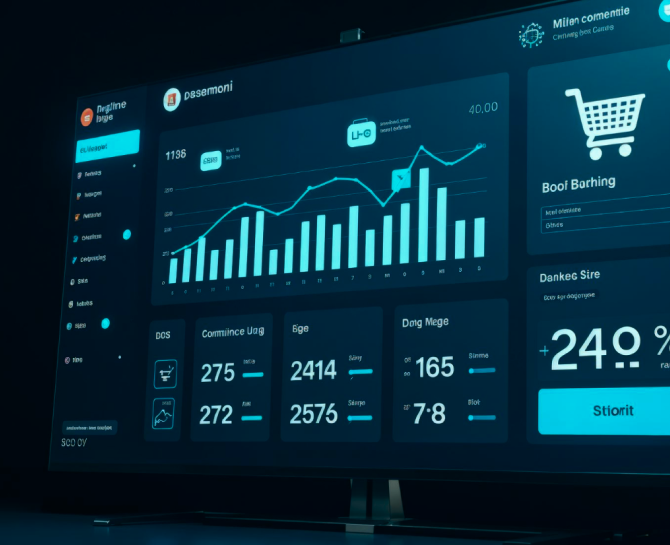
Ecommerce Analytics Dashboards That Transform Data Into Growth
An ecommerce analytics dashboard gives you a unified view of your store’s performance - from traffic and engagement to conversions and revenue. This guide explains how DiGGrowth’s ecommerce analytics dashboard helps you track customer journeys, analyze funnel drop-offs, measure channel attribution, and uncover actionable insights to optimize marketing spend and improve conversion rates.
Driving traffic to your online store is only half the battle. Many ecommerce businesses struggle because they do not clearly understand how visitors move through their site and where they drop off. Ecommerce funnel analysis provides a clear view of each step in the customer journey, from discovering your store to completing a purchase. By analyzing these stages, you can identify friction points, optimize key touchpoints, and shorten the path to purchase. In this guide, you will learn actionable strategies to leverage funnel data, improve conversions, and increase revenue for your online store.
Key Takeaways
- Ecommerce funnel analysis helps you understand how visitors move through your site and identify friction points.
- Tracking micro-conversions and user behavior at each stage highlights opportunities to improve engagement.
- Personalization and cross-channel consistency accelerate the path to purchase and strengthen customer loyalty.
- Using analytics and visualization tools like DiGGrowth delivers actionable insights to optimize every stage of the funnel.
- Avoiding common mistakes such as data silos or overcomplicated dashboards ensures analysis leads to meaningful improvements.
Understanding Ecommerce Funnel Analysis
An ecommerce funnel is a visual representation of the customer journey, showing the steps a visitor takes from first visiting your site to completing a purchase. Understanding this journey is critical because it reveals where potential customers drop off and why conversions may be lower than expected.
Ecommerce funnel analysis involves tracking metrics at each stage of the funnel, including awareness, consideration, conversion, and retention. For example, you can measure how many visitors add products to their cart, start the checkout process, or complete the purchase. By analyzing these behaviors, you can pinpoint bottlenecks, such as a confusing checkout page or slow-loading product pages.
Using funnel analysis, businesses can make data-driven decisions to improve the shopping experience, reduce drop-offs, and guide visitors more efficiently toward purchase. In the next section, we will break down the key stages of the ecommerce funnel and explain what to track at each step.
Key Stages of the Ecommerce Funnel
Understanding each stage of the ecommerce funnel is essential for identifying opportunities to improve conversions. The funnel typically includes four main stages:
Awareness Stage
At this stage, potential customers discover your store through search engines, social media, email campaigns, or paid ads. Key metrics to track include website traffic, click-through rates, and impressions. Optimizing this stage means attracting the right audience and ensuring they land on relevant pages.
Consideration Stage
Visitors are evaluating your products and comparing them with competitors. Metrics such as product page views, time on site, and add-to-cart rates are critical here. Enhancing this stage involves clear product descriptions, high-quality images, reviews, and trust signals that help customers make informed decisions.
Conversion Stage
This stage focuses on turning interested visitors into buyers. Metrics include checkout initiation, payment completion, and conversion rates. To optimize conversions, simplify the checkout process, provide multiple payment options, and offer incentives like discounts or free shipping.
Retention Stage
After the purchase, the goal is to encourage repeat business. Metrics to track include repeat purchase rate, email engagement, and loyalty program participation. Retention strategies include personalized email campaigns, product recommendations, and post-purchase support.
By carefully analyzing each stage, you can identify where customers drop off and implement targeted improvements that shorten the path to purchase.
How Funnel Analysis Reveals Purchase Barriers
Ecommerce funnel analysis provides detailed insights into how customers move through your site and where they encounter obstacles. By breaking down the funnel into stages, you can identify specific points where users drop off and understand the underlying causes.
For instance, if a large number of visitors abandon their carts, funnel analysis can reveal whether it is due to a long checkout process, unexpected shipping fees, or limited payment options. Low engagement on product pages might indicate unclear descriptions, poor-quality images, or lack of social proof such as reviews and testimonials. Similarly, low traffic to key landing pages may suggest ineffective marketing campaigns or poor targeting.
Advanced analytics tools allow you to track micro-conversions, like newsletter sign-ups or add-to-cart actions, which provide early warning signs of friction in the funnel. Session recordings and heatmaps show exactly how users interact with your site, highlighting confusing navigation or distracting elements. By analyzing this data systematically, you can prioritize fixes, streamline the customer journey, and make precise improvements that shorten the path to purchase while increasing overall conversion rates.
Using Funnel Analysis to Shorten the Path to Purchase
Ecommerce funnel analysis is not just about identifying where customers drop off; it is about using that data to actively reduce friction and accelerate conversions. By analyzing each stage of the funnel, you can implement targeted strategies that guide shoppers toward purchase more efficiently.
Optimize Each Funnel Stage
- Awareness Stage:
- Consideration Stage:
- Conversion Stage:
- Retention Stage:
Track which channels drive the highest quality traffic. Focus on SEO, paid ads, and social media campaigns that reach users most likely to convert. Ensure landing pages match ad messaging to keep visitors engaged.
Analyze product page performance. Include detailed descriptions, multiple product images, size guides, and authentic customer reviews. Test different layouts and calls-to-action to see what increases engagement.
Examine checkout behavior. Reduce unnecessary steps, allow guest checkout, and provide multiple payment and shipping options. Highlight trust signals such as security badges and clear return policies to reduce hesitation.
Use post-purchase data to encourage repeat purchases. Personalized emails, loyalty programs, and product recommendations based on previous purchases increase lifetime value and shorten the path for future sales.
Personalize the Shopping Experience
Why Personalization Matters
Personalization helps customers find what they need faster, reduces decision fatigue, and increases the likelihood of completing a purchase. Tailored experiences make shoppers feel understood, which strengthens brand loyalty.
How to Personalize
- Use behavioral data such as browsing history and clicks to recommend products:
- Leverage demographic information to create targeted campaigns for different segments:
- Incorporate purchase history to suggest complementary or repeat products:
Impact on Conversions: Personalized recommendations can dramatically increase engagement and conversion rates. For example, showing related products on the checkout page or sending a targeted email with a discount for an abandoned cart encourages customers to complete the purchase.
Best Practices
- Continuously test different personalization approaches to see what resonates:
- Update recommendations based on the latest user behavior and trends:
- Combine personalization with incentives such as discounts or limited-time offers to accelerate purchase decisions:
Ensure Cross-Channel Consistency
The Role of Consistency
Consistency across marketing channels reduces confusion, builds trust, and creates a seamless customer journey. Misaligned messaging or offers can slow down the purchase process and increase drop-offs.
Channels to Monitor
- Website pages and landing pages
- Email campaigns and automation sequences
- Social media posts and paid ads
- Offline campaigns if applicable (events, retail experiences)
Measuring Effectiveness
- Compare engagement rates and conversion metrics across channels.
- Use attribution analysis to identify which channels most effectively move customers toward purchase.
- Track feedback or complaints related to inconsistent messaging.
Practical Tips for Alignment
- Audit all marketing channels regularly to ensure visuals, messaging, and offers are consistent.
- Maintain a brand style guide for all campaigns to reduce discrepancies.
- Use centralized CRM or analytics tools to coordinate campaigns and track customer interactions across channels.
Tools for Effective Ecommerce Funnel Analysis
Using the right tools is essential for understanding how visitors move through your ecommerce funnel, identifying drop-off points, and implementing data-driven strategies to shorten the path to purchase. Each tool provides unique insights, from traffic and user behavior to conversion metrics and revenue attribution.
- DiGGrowth
- Visualize the complete funnel from awareness to purchase.
- Identify bottlenecks in the checkout process and other key touchpoints.
- Attribute revenue to specific campaigns, channels, and customer segments.
- Access actionable insights to optimize marketing spend and improve conversions.
- Google Analytics 4 (GA4)
- Map the customer journey across devices and sessions.
- Track conversions, cart abandonment, and micro-conversions like newsletter sign-ups.
- Analyze engagement trends to understand which pages or campaigns perform best.
- Hotjar
- See exactly how visitors interact with your site.
- Identify friction points such as confusing navigation or poorly placed buttons.
- Collect feedback directly from users to understand pain points.
- Looker Studio
- Create real-time dashboards tracking KPIs across the funnel.
- Compare performance across channels and campaigns.
- Identify trends and anomalies that signal friction or opportunities for optimization.
- Crazy Egg
- Understand how visitors engage with content and calls-to-action.
- Test different page layouts, headlines, and product placements to increase engagement.
- Optimize the customer journey based on clear behavioral patterns rather than assumptions.
DiGGrowth is a comprehensive analytics and marketing attribution platform specifically designed for ecommerce businesses. It consolidates data from multiple sources, including website traffic, ad campaigns, email engagement, and sales, to provide a unified view of the customer journey. With DiGGrowth, marketers can:
GA4 tracks user interactions with an event-based model, making it ideal for detailed funnel analysis. It allows you to:
Hotjar is a behavioral analytics tool that provides heatmaps, session recordings, and user feedback surveys. This allows you to:
Hotjar is particularly useful for optimizing product pages and checkout flows based on real user behavior.
Looker Studio is a data visualization and dashboarding tool that consolidates data from multiple analytics platforms. With Looker Studio, you can:
It helps marketing and operations teams make quick, data-driven decisions without digging through multiple reports.
Crazy Egg offers visual analytics, including heatmaps, scroll maps, and A/B testing insights. This allows ecommerce teams to:
Pro Tip-
By combining these tools, ecommerce businesses can gain a holistic understanding of the customer journey, identify where potential buyers drop off, and implement precise improvements to shorten the path to purchase. Leveraging analytics, behavioral data, and visualization ensures that every stage of the funnel is optimized for maximum conversions and revenue growth.
Common Mistakes to Avoid in Funnel Analysis
Even with the best tools and strategies, ecommerce businesses can make mistakes that undermine funnel analysis and slow the path to purchase. Avoiding these pitfalls ensures that your insights translate into real improvements.
Ignoring Micro-Conversions
While final purchases are critical, focusing only on them can mask issues earlier in the funnel. Micro-conversions, such as newsletter signups, add-to-cart actions, or product detail views, provide early indicators of engagement and potential friction points. By tracking these smaller actions, you can spot where users lose interest and take proactive steps to guide them toward purchase.
Tip: Set up tracking for all meaningful actions in your funnel and use these insights to optimize product pages, forms, and calls-to-action.
Analyzing Data in Silos
Looking at metrics from a single channel or platform can give an incomplete picture. For example, high traffic from social media may appear promising, but if it does not translate into conversions, focusing solely on that channel can be misleading. Cross-channel analysis is essential for understanding the full customer journey and making data-driven decisions that actually improve the funnel.
Tip: Use unified dashboards or attribution tools like DiGGrowth to consolidate data from all marketing channels and evaluate performance holistically.
Overcomplicating Dashboards
A common mistake is creating dashboards overloaded with metrics that do not drive actionable insights. When dashboards are cluttered, it becomes difficult to identify key trends or areas that need optimization. The goal of funnel analysis is to highlight bottlenecks and opportunities clearly, not overwhelm your team with data.
Tip: Focus on the most impactful KPIs for each stage of the funnel, such as conversion rates, drop-off points, and engagement with micro-conversions. Keep visualizations simple and actionable.
Neglecting Post-Purchase Behavior
Many businesses focus solely on driving the initial purchase and overlook the importance of retention and repeat buying behavior. Ignoring post-purchase metrics like repeat purchase rate, loyalty program engagement, and customer feedback can result in missed opportunities to optimize the funnel for long-term revenue.
Tip: Track post-purchase interactions and use these insights to implement retention strategies, personalized recommendations, and loyalty incentives that encourage repeat purchases and strengthen customer lifetime value.
Conclusion
Effective ecommerce funnel analysis is not just about collecting data; it is about turning insights into decisions that directly impact revenue and customer experience. By understanding each stage of the funnel, leveraging the right tools, and addressing friction points, businesses can create a smoother journey for shoppers, improve conversion rates, and foster long-term customer loyalty. The process becomes more powerful when combined with personalization and cross-channel alignment, ensuring each interaction is purposeful and impactful.
Are you ready to transform your ecommerce performance and achieve your next milestone? Talk to Us!
Just write to us at info@diggrowth.com and we’ll get back to you.
Ready to get started?
Increase your marketing ROI by 30% with custom dashboards & reports that present a clear picture of marketing effectiveness
Start Free Trial
Experience Premium Marketing Analytics At Budget-Friendly Pricing.

Learn how you can accurately measure return on marketing investment.
How Predictive AI Will Transform Paid Media Strategy in 2026
Paid media isn’t a channel game anymore, it’s a chessboard. Search, social, programmatic, video, influencer, native,...
Read full post post
Don’t Let AI Break Your Brand: What Every CMO Should Know
AI isn’t just another marketing tool. It’s changing how we connect with customers, personalize content, and...
Read full post post
From Demos to Deployment: Why MCP Is the Foundation of Agentic AI
A quiet revolution is unfolding in AI. And it’s not happening inside research labs. For decades,...
Read full post postFAQ's
Reviewing your funnel data regularly, ideally weekly or monthly, helps you identify emerging trends, seasonal behavior changes, or sudden drops in conversions. Frequent monitoring ensures you can implement timely improvements and test optimizations before minor issues become major revenue leaks.
Yes. Even small stores gain valuable insights from funnel analysis. It helps pinpoint friction points, understand customer behavior, and optimize marketing spend. By identifying the most effective channels and improving conversion rates, smaller businesses can maximize revenue without increasing traffic significantly.
A/B testing allows you to test different page layouts, call-to-actions, and product presentations. When combined with funnel analysis, it helps validate which changes improve engagement and conversions, providing actionable insights grounded in real user behavior rather than assumptions.
Mobile optimization is crucial because a significant portion of ecommerce traffic comes from smartphones. Slow loading times, complex navigation, or poorly designed checkout processes can cause drop-offs. Funnel analysis helps detect mobile-specific issues and optimize the experience for seamless conversions.
Yes. Funnel analysis tracks post-purchase behavior, repeat purchases, and engagement with loyalty programs or email campaigns. Insights from these metrics allow you to implement personalized offers, product recommendations, or retention-focused messaging, encouraging repeat purchases and increasing customer lifetime value.