
Top 7 Website Visitor Identification Software for 2026
B2B Website visitor identification software is essential for every marketing company and business to have close access and reachability to their customers and visitors, especially with the ever-changing market dynamics. This enables them to turn every inquiry into an opportunity to make better sales and conversions. This blog will help you learn how to make personalized approaches to turn inquiries into leads and eventually into successful conversions with the help of the top 7 website visitor identification software tools enlisted in this blog.
Most B2B websites already attract buyers. The real problem is that almost none of them tell you who those buyers are.
Decision-makers visit, research, compare, and leave without filling out a form. By the time sales teams notice, the intent is gone and the opportunity is cold.
This is exactly where Website Visitor Identification Software changes the game. It helps businesses uncover which companies are visiting their website, what they care about, and how close they are to making a decision. Instead of waiting for leads to raise their hand, teams can spot interest early and act while it still matters.
In this blog, we break down how Website Visitor Identification Software works and highlight seven tools B2B teams use to turn hidden website traffic into real pipeline.
Key Takeaways
- Visitor identification provides an edge and additional efficiency to a business’s marketing efforts.
- It also amplifies the conversion capabilities of a B2B business.
- DiGGrowth, HubSpot, Visitor Queue, Leadfeeder, Lead Forensics, Clearbit, and Albacross offer additional features for analytics, lead enrichment, behavioral tracking, and CRM integration.
What Is Website Visitor Identification Software?
With the escalating prevalence of data security and user-data encryption, it has become challenging for marketing and advertising personnel to fetch individualized information about website visitors. This makes it tough for companies to enforce targeted campaigns, emails, and other data-driven marketing efforts.
In this situation, B2B website visitor tracking and identification software plays a significant role in dealing with this problem With the help of advanced AI and ML implementations, these tools and software help companies acquire crucial information, including the name, email ID, phone number, location, and customer journey of every visitor, with minimal manual work and involvement.
Simply put, they take the anonymity of the website traffic away by providing tractable and useful data about the people clicking on a business’s website. This critical service and information attainability helps the business to understand its intended customers while reaching out to them with personalized approaches and solutions.
Why Do Businesses Need Website Visitor Identification Software?
There are various advantages that a business could leverage by using competent and reliable website visitor identification software. Some of the prominent benefits offered by these tools include:
- Enables cross-device tracking
- Helps focus on rendering a personalized user experience
- Unbound escalation in sales and conversions through visitor information
- Targeted follow-up, email marketing, and engagement efforts
- It helps you stay ahead of the curve
These tools enable a business to conduct cross-device tracking, which has become difficult and obstructed due to amplified privacy and data security structures. You can reach a customer through targeted or personalized approaches across various devices and channels.
According to studies, personalization increases the chances of conversion by 40%. A website visitor identification software makes such figures easily achievable by helping a business make personalized campaigns and marketing strategies to gain the attention and confidence of a targeted customer base.
As a result of the impact and outstanding functionality of visitor identification software, a business can experience an unprecedented increase in its sales and customer base. The accessibility to detailed visitor information and user data helps an organization influence, convince, and convert customers through data-driven and personalized approaches.
As discussed earlier, B2B website visitor identification software offers accessibility to individual user data. This makes it possible for businesses to make follow-up approaches through email, targeted ads, and other mediums. These endeavors focus on retaining customer engagement and leading the customer journey toward successful conversion.
The personalized and targeted approaches made attainable by website visitor tracking software will eventually help you take a competitive advantage and stay ahead of the curve. Elaborate strategies and approaches help boost conversions and transform leads into sales with an unbelievable strike rate.
Pro Tip- Use one of the tools mentioned above to make your website, content, CTAs, and emails more tailored and personalized for the visitors. It will help you increase engagement and conversions significantly.
How Website Visitor Identification Works Behind the Scenes
Website visitor identification does not rely on a single data point or technique. Instead, it works through a combination of behavioral signals, technical identifiers, and privacy-compliant data collection methods that together help businesses understand who is engaging with their website and how.
Rather than identifying individuals outright, modern website visitor identification focuses on recognizing patterns, company-level intent, and engagement signals while operating within evolving data privacy frameworks.
Cookies and Tracking Technologies
Cookies form the foundation of how website visitor behavior is tracked and analyzed. They allow businesses to understand how users interact with a website, what content attracts attention, and how engagement evolves over multiple visits. Rather than identifying individuals directly, cookies capture behavioral signals that help map intent and interest.
How Cookies Track Visitor Activity
Cookies are small data files stored in a user’s browser when they visit a website. These files record interaction-based information such as pages viewed, time spent on specific sections, navigation paths, and return visits. By analyzing these signals, businesses can identify engagement patterns and measure how visitors move through the site.
This data supports key activities such as content optimization, intent analysis, and personalization, helping teams respond more effectively to visitor behavior without relying solely on form submissions.
Types of Cookies Used in Visitor Identification
Different types of cookies serve different tracking purposes and contribute distinct data points to visitor identification efforts:
- Session cookies: Track user activity during a single website visit and expire once the browser is closed. They help understand immediate engagement and navigation behavior.
- Persistent cookies: Remain stored in the browser for a defined period and recognize returning visitors. These cookies enable long-term behavior analysis and intent tracking over multiple sessions.
- Third-party cookies: Historically used for cross-site tracking and advertising. Due to increasing privacy restrictions, their role in visitor identification has diminished significantly, with many browsers limiting or phasing out their use.
Modern visitor identification strategies increasingly rely on first-party cookies to maintain accuracy while aligning with evolving privacy standards.
Privacy, Consent, and Regulatory Compliance
Cookie-based tracking operates at the intersection of data collection and user privacy. Regulations such as GDPR and CCPA require businesses to inform visitors about data usage and obtain explicit consent before deploying non-essential cookies.
Clear consent mechanisms, transparent privacy policies, and responsible data handling practices are essential for maintaining compliance and user trust. When implemented correctly, cookie-based tracking provides valuable behavioral insight while respecting user rights and regulatory boundaries.
IP Address Identification
IP address identification helps businesses understand where website traffic originates and which organizations are visiting their site. In B2B contexts, this method is commonly used to map visitor IP addresses to company domains, enabling account-level visibility rather than individual identification.
By analyzing IP data, businesses can identify visiting companies, geographic regions, and industry segments. This information supports region-specific content delivery, account-based marketing strategies, and prioritization of high-intent accounts based on engagement patterns.
Limitations of IP-Based Identification
While IP address identification provides valuable contextual insight, it is not without limitations. Shared networks, remote work environments, and the widespread use of VPNs can reduce accuracy and obscure true locations or company identities. As a result, IP-based data is most effective when combined with behavioral signals and other identification methods rather than used in isolation.
Pro Tip- Combine IP address identification with other tracking methods like cookies and user identifiers to enhance accuracy and gain deeper insights into visitor behavior, ensuring a more comprehensive understanding of your audience.
What Are The Top 7 B2B Website Visitor Identification Software?
After reviewing the characteristics and benefits of visitor identification software, it is time to select the seven best software programs extensively used by businesses and offering limitless potential and functionalities.
- DiGGrowth
- Visitor identification
- Deanonymization
- Profile and account analytics
- Multi-touch attribution
- Integrations
- Campaign Tracking
- Marketing attribution, etc.
- Salesforce
- Google Ads
- Hubspot
- Marketo
- Facebook Ads, and more.
- Website Visit Tracking
- Email Tracking and Templates
- Call Tracking and CPQ Capabilities
- Robust Analytics for Data-Driven Sales Decisions
- Integration Within the HubSpot CRM Ecosystem
- Factors
- Automatic CRM synchronization
- Detailed visitor insight
- Visitor identification
- User-first website design
- Clearbit
- Leadsquared
- 6Sense
- Rudderstack
- Bing Ads
- Segment, etc.
- Clearbit
- Enrichment through a database with over 250 data sources
- Deanonymization through Reveal
- Automatic contact information integration through Capture/li>
- Marketo
- Segment
- Slack
- Salesforce
- Leadfeeder
- Qualifying high-potential leads according to their web activity.
- Leadfeeder contacts to determine the best individual to connect with from the targeted business’s hierarchy.
- Automatic integration of CRM with other tools and platforms
- Pipedrive
- Zapier
- Slack
- Salesforce
- Lead Forensics
- Visitor identification
- Deep visitor insight
- Mobile App
- Zoho
- Square
- Mailchimp
- Salesforce
- Visitor Queue
- An intuitive user-first design
- Website personalization option
- Lead intelligence with web activity insights
- Slack
- Zapier
- Hubspot
- Salesforce
- Albacross
- Analytics enrichment through measured KPI metrics
- Personalization enrichment through email, web content, and ad campaigns
- Detailed insights into user behavior
- Google Analytics
- Hubspot
- Slack
- Pipedrive
- Personalization: Deliver dynamic content, product recommendations, and tailored offers based on visitor behavior and previous interactions. Personalized experiences have been shown to increase conversion rates by up to 40 percent.
- Segmentation: Divide visitors into actionable segments, such as company size, industry, engagement level, or buyer intent stage, to enable focused campaigns.
- Behavioral Triggers: Use automated triggers to respond to high-value activity, like multiple visits to pricing pages, long time on product content, or downloads of case studies.
- A/B Testing: Test landing pages, messaging, forms, and CTAs using visitor data to identify the most effective elements for driving conversions.
- Optimized CTAs: Dynamically adjust call-to-action text, placement, and design based on user segments or interaction history to maximize engagement.
- Account-Level Insights: Identify companies visiting your site, their size, industry, geographic location, and other firmographic details.
- Intent Signals: Capture specific signals such as pages visited, repeat sessions, downloads, video interactions, or time spent on product pages.
- Decision-Maker Mapping: Determine key contacts within companies, including their role and decision-making influence, to enable targeted outreach.
- Sales Prioritization: Score and rank leads based on engagement level and buying intent to help sales focus on the highest-value opportunities.
- Behavioral Tracking: Link website activity to email opens, clicks, and downloads to create a unified view of the visitor’s journey.
- Personalized Follow-Up: Send context-specific messages to leads based on their browsing activity or engagement patterns.
- Retargeting Opportunities: Identify visitors who engaged with specific pages but did not convert, and re-engage them with targeted campaigns.
- Performance Measurement: Understand which email interactions are most effective in driving conversions and refine messaging strategies accordingly.
- Automated Lead Scoring: Prioritize leads by combining behavioral insights with firmographic data for smarter outreach.
- Actionable Workflows: Automatically trigger follow-ups, personalized campaigns, or sales notifications when high-intent visitors engage.
- Unified Visibility: Give marketing and sales teams a single source of truth for each prospect, ensuring no opportunity is missed.
- Performance Analytics: Track how website interactions contribute to pipeline, revenue, and campaign ROI.
- Cross-Platform Integration: Tools like Salesforce, HubSpot, and Marketo allow seamless syncing of visitor insights with existing workflows.
DiGGrowth is one of the leading website visitor identification software out there that helps marketers with their marketing analytics and attribution operations. It also streamlines the website monitoring functions for B2B companies and helps them discover, reach, and convert the companies or visitors into successful leads and customers. Moreover, DiGGrowth also keeps track of account-level website behavior and customer journey.
Features offered by DiGGrowth-
It can be effortlessly integrated with other analytical tools and software. Such as,
HubSpot
Integrating HubSpot into your website visitor identification strategy can significantly enhance your marketing and sales efforts. Here are some key features of HubSpot’s capabilities:
Key Features
By leveraging HubSpot’s suite of tools, businesses can gain deeper insights into their website visitors, tailor their marketing approaches, and ultimately drive more effective engagement and conversions.
It is an AI-based account and website visitor identification software that efficiently helps businesses identify potential customers or businesses that they could successfully onboard as customers. It successfully monitors the efficiency of website content in bringing leads and conversions. It also helps identify the campaigns that are bringing in qualified leads.
Features offered by Factors-
Factors can be integrated with the following tools and platforms:
Clearbit is a prominent B2B interaction platform that helps B2B companies utilize their CRM data, identify, understand, and have personalized interactions with their prospect customers.
Features offered by Clearbit:
It can be used in integration with the following platforms:
Leadfeeder is a prominent website visitor identification software that helps B2B businesses identify and connect with visitors or businesses visiting their websites. It also helps the targeted customers connect with the deciding members of the targeted companies.
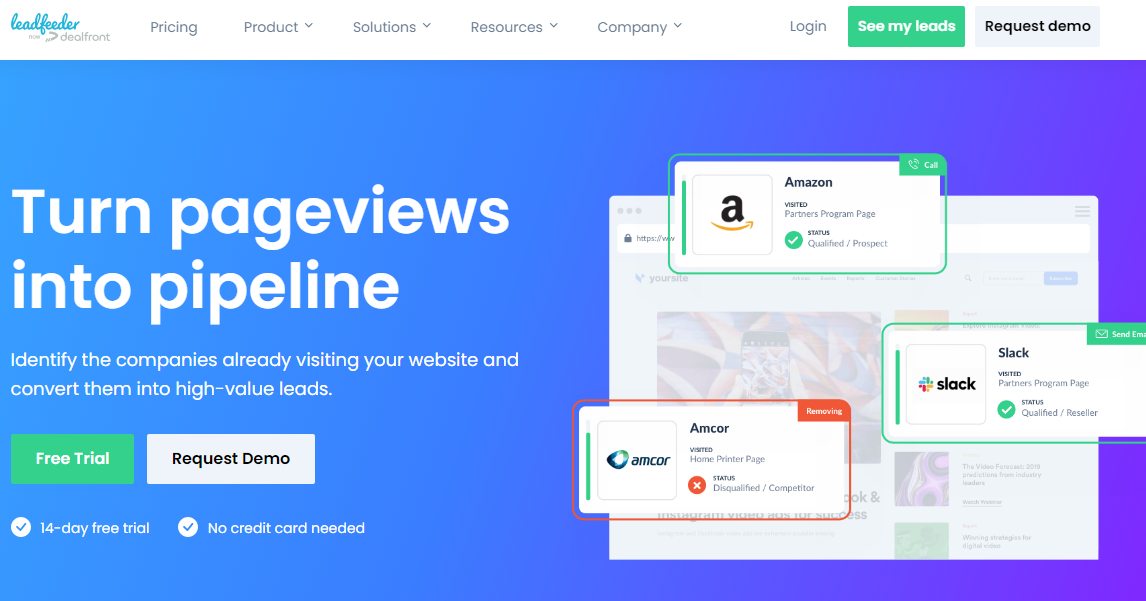
Features offered by Leadfeeder:
Leadfeeder accessibly integrates with the following tools and software:
Lead Forensics is another leading visitor identification software, greatly loved by businesses and marketers. It helps businesses identify and learn about website visitors. Moreover, it helps in understanding and analyzing prospective customers’ web-behavior.
Features offered by Lead Forensics include:
It seamlessly integrates with the following software:
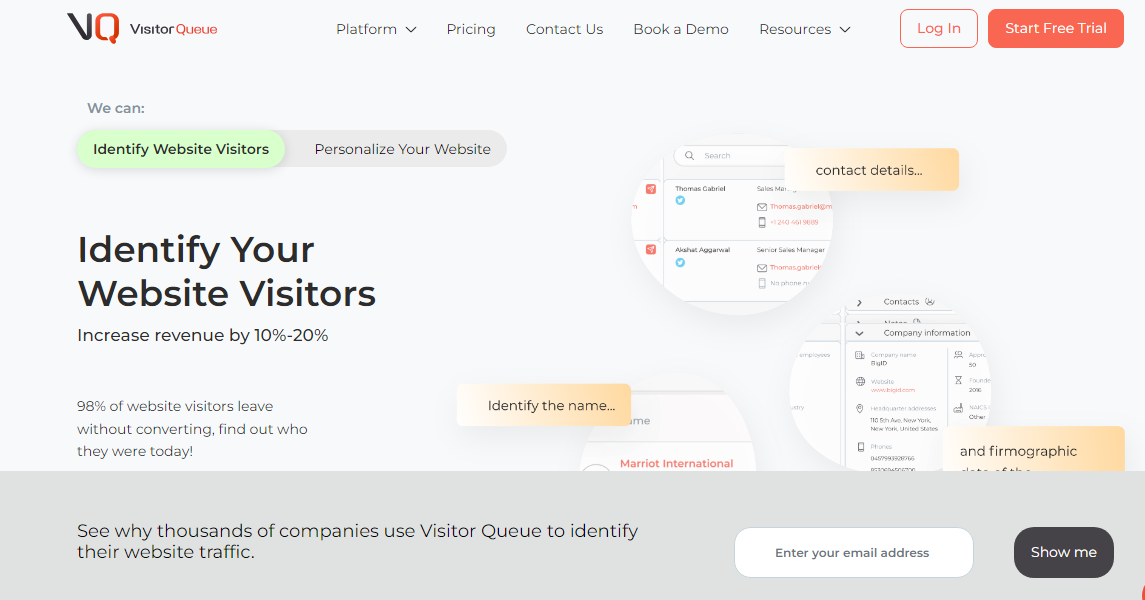
Visitor Queue is a popular tool that helps identify website visitors in real-time. It also allows businesses to customize their websites to give visitors and customers a personalized user experience.
It can be integrated with the following platforms:
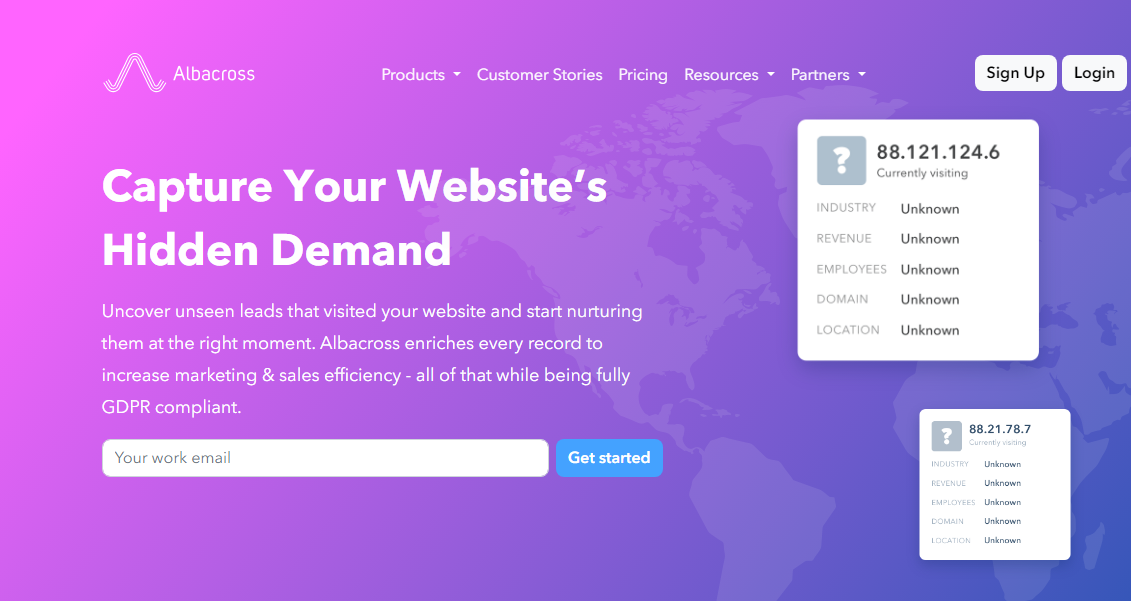
Albacross is also a premium website visitor identification software that enables B2B businesses to identify anonymous website visitors and get valuable insights and information about them. These insights help businesses make personalized data-driven approaches and efforts, leading to successful lead conversion.
Features offered by Ablacross:
It can be integrated with the following platforms:
DiGGrowth and all the other platforms are equally efficient for extending personalized approaches to connect with website visitors.
| Software | Key Features | Integrations / Platforms | Strength |
|---|---|---|---|
| DiGGrowth | Visitor ID, Deanonymization, Account Analytics, Multi-touch Attribution | Salesforce, HubSpot, Google Ads, LinkedIn, Marketo | Comprehensive account-level insights |
| HubSpot | Website Visit Tracking, Email Tracking, Call Tracking, Analytics | HubSpot CRM | Deep CRM integration; strong email & sales alignment |
| Factors | Visitor ID, CRM Sync, Visitor Insights, User-First Design | Clearbit, Leadsquared, 6Sense, Rudderstack | AI-driven lead and campaign efficiency |
| Clearbit | Data Enrichment (250+ sources), Deanonymization, Auto Contact Capture | Salesforce, Marketo, Segment, Slack | Rich prospect data for personalization |
| Leadfeeder | Lead Qualification, Decision-Maker ID, CRM Integration | Salesforce, Pipedrive, Zapier, Slack | Identify high-potential leads quickly |
| Lead Forensics | Visitor ID, Deep Insights, Mobile App | Salesforce, Zoho, Mailchimp, Square | Web-behavior analysis with mobile access |
| Visitor Queue | Real-Time Visitor ID, Website Personalization, Lead Intelligence | HubSpot, Salesforce, Slack, Zapier | Real-time tracking with personalization |
| Albacross | Analytics Enrichment, Personalization, Visitor Insights | Google Analytics, HubSpot, Slack, Pipedrive | Data-driven personalization for conversion |
How These Tools Boost Conversions & Leads
Website Visitor Identification Software is not just about knowing who visits your site, it’s about turning that hidden traffic into actionable revenue . The top tools on the market help B2B teams identify, prioritize, and engage high-intent prospects faster than ever.
Conversion Rate Optimization (CRO)
Effective CRO is built on knowing your visitor. These tools help marketing and sales teams design experiences that resonate with real buying intent rather than generic website traffic.
Lead Enrichment
Website visitor identification software adds layers of intelligence to raw website traffic, enabling more precise targeting and outreach:
With these insights, sales and marketing teams can create tailored campaigns, deliver content relevant to the buyer’s journey, and reduce wasted effort on low-potential leads.
Email-Based Insights
Email campaigns, when combined with visitor identification, become a conversion powerhouse:
By connecting web behavior to email activity, businesses can create a continuous, personalized conversation with prospects, boosting engagement and pipeline growth.
Integration With CRMs
Visitor identification software integrates with CRMs and marketing automation tools to ensure data drives action:
Integrating visitor identification with CRMs allows companies to close the loop between anonymous web visits, lead generation, and revenue impact, creating measurable business outcomes.
Pro Tip : Continuously monitor and analyze visitor data to iteratively refine your CRO strategies. By regularly evaluating user behavior and testing different approaches, you can uncover new opportunities for optimization and consistently improve conversion rates over time.
Conclusion!
This blog helps you expand the scope of your understanding and capability for identifying the website visitors who can be converted into valuable leads and conversions. You can choose any of the given visitor identification tools according to your unique business requirements and adaptability.
Website visitor identification software has become an indispensable tool in modern businesses looking to understand and leverage user behavior for enhanced engagement, lead generation, and conversion optimization. By recognizing the digital footprints of your visitors, companies can sharpen their marketing strategies and drive growth with data-driven insights.
The digital marketing landscape is ever-changing, and so must our tools and techniques. Integrating website visitor identification software into your growth strategy is smart and necessary in an increasingly digital world. Equipping your business with these solutions allows for a deeper connection with your audience, fostering opportunities for conversion and beyond.
Still confused? Use DiGGrowth as your ideal visitor identification software. Talk to Us!
Write to us at info@diggrowth.com and we’ll get back to you.
Citations
https://www.factors.ai/
https://clearbit.com/
https://www.leadfeeder.com/
https://www.leadforensics.com/
https://www.visitorqueue.com/
https://albacross.com/
Ready to get started?
Increase your marketing ROI by 30% with custom dashboards & reports that present a clear picture of marketing effectiveness
Start Free Trial
Experience Premium Marketing Analytics At Budget-Friendly Pricing.

Learn how you can accurately measure return on marketing investment.

How Predictive AI Will Transform Paid Media Strategy in 2026
Paid media isn’t a channel game anymore, it’s...
Read full post post
Don’t Let AI Break Your Brand: What Every CMO Should Know
AI isn’t just another marketing tool. It’s changing...
Read full post post
From Demos to Deployment: Why MCP Is the Foundation of Agentic AI
A quiet revolution is unfolding in AI. And...
Read full post postFAQ's
Implement tools like Google Analytics to track visitors' demographics, behavior, and interests.
Use forms, surveys, cookies, and tracking pixels to gather information such as email addresses, preferences, and browsing habits.
Optimize for search engines, create engaging content, utilize social media, advertise through PPC campaigns, and collaborate with influencers to drive traffic.
Employ IP tracking, cookies, and user identifiers to gather insights on anonymous visitors' behavior and preferences. Additionally, offer incentives for visitors to provide their contact information for future engagement.
An SEO dashboard is a centralized tool that tracks and visualizes key SEO metrics such as organic traffic, keyword rankings, backlinks, and technical SEO performance. It helps marketers monitor search visibility and optimize their strategies effectively.
An SEO dashboard provides real-time insights into website performance, enabling data-driven decisions. It consolidates multiple data sources into a single view, improving efficiency and tracking progress toward SEO goals. Identifying opportunities and issues, helps businesses enhance their search presence.
Selecting the right SEO dashboard depends on its ability to track rankings, traffic, backlinks, and site health. The tool should integrate seamlessly with platforms like Google Analytics and Search Console while offering customization and automated reporting. Popular choices include DiGGrowth, Google Looker Studio, SEMrush, Ahrefs, and Moz Pro.
SEO dashboards connect with Google Analytics and Search Console for keyword insights and traffic data. They integrate with CRM systems like HubSpot and Salesforce to track SEO-driven leads, while marketing automation tools like Marketo and Mailchimp align SEO efforts with content marketing. Additionally, they help compare organic and paid search performance by linking with PPC platforms such as Google Ads.