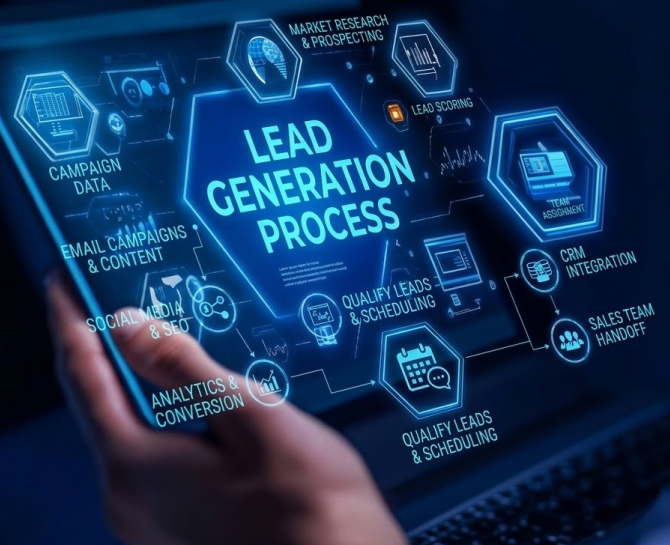
Lead Generation Guide: Step-by-Step Process to Generate High-Intent Leads
Lead generation is more than collecting contacts. The focus today is on high-intent leads, prospects who are ready to take action and drive real business growth. This guide shows a step-by-step process to target, capture, and nurture these valuable leads.
Most businesses do not struggle to generate leads. They struggle to generate the right leads.
You might already be getting traffic. Your forms might be filling up. Your campaigns may even look successful on paper. But when it comes to actual conversions, things fall apart.
Why?
Because not all leads are created equal.
A long list of contacts means very little if those people are not ready to buy, explore, or even engage. Chasing volume often feels productive, but it rarely drives real growth. In fact, it drains time, budget, and team effort.
High-intent leads change that equation.
These are the people actively searching for solutions. They ask better questions. They move faster. And they convert with far less friction.
The shift is simple, but not always easy: stop focusing on how many leads you generate, and start focusing on who you attract.
That is where a structured approach makes the difference.
If you have been attracting the wrong audience or seeing low conversion rates despite consistent effort, it is time to rethink your strategy. Read this blog to understand how to generate leads that actually move your business forward.
Let us dive in.
Key Takeaways
- High-intent leads focus your time and resources on prospects ready to engage and convert.
- Understanding your ideal customer profile ensures every campaign resonates with the right audience.
- A clear value proposition acts as a filter, attracting leads who see immediate relevance in your solution.
- Lead magnets and landing pages that solve real problems make engagement effortless and natural.
What Is Lead Generation And Why High-Intent Leads Matter
Lead generation is often described as the process of attracting potential customers and collecting their details. That definition is correct, but it misses something important.
Not every lead has the same value.
Some people interact with your brand out of curiosity. Others are already trying to solve a problem and are actively looking for the right solution. Treating both groups the same is where most strategies lose momentum.
Low-Intent vs High-Intent Leads
| Type | Behavior | Business Impact |
|---|---|---|
| Low-Intent Leads | Explore content casually, sign up without urgency, delay decisions | Lower conversions, longer follow-ups |
| High-Intent Leads | Compare options, request demos, show clear interest | Higher conversions, faster decisions |
Low-intent leads can still be useful, especially for long-term nurturing. But if your pipeline is filled only with early-stage prospects, results tend to slow down.
High-intent leads are different.
They already understand their need. They are evaluating solutions. They are closer to taking action. This makes every interaction more meaningful and more likely to convert.
Why Focusing On High-Intent Leads Changes Everything
- Improve conversion rates by engaging prospects who are ready to act.
- Reduce wasted effort on unqualified audiences.
- Accelerate the journey from first interaction to purchase.
- Support better coordination between marketing and sales.
Here is a simple way to look at it.
Convincing someone to care takes time. Helping someone who already cares takes precision.
That is why a strong lead generation strategy does not just aim to attract attention. It focuses on attracting the right attention.
Understanding Your Ideal Customer Profile (ICP)
Knowing your audience is foundational, but truly high-intent lead generation requires precision. Your Ideal Customer Profile (ICP) is more than demographics or job titles. It is a clear picture of the people most likely to engage, act, and convert.
A well-defined ICP ensures that every effort in campaigns, content, and outreach resonates with the right audience at the right time.
Key Elements of a High-Impact ICP
Instead of broad categories, focus on the indicators that signal genuine interest and readiness:
- Behavior Patterns: The type of content they consume, the pages they revisit, and how quickly they respond to emails.
- Problem Urgency: Signs that indicate an immediate need for a solution rather than casual research.
- Decision-Making Authority: Understanding who can take action ensures your leads are meaningful.
- Engagement Signals: Scheduling a call, downloading detailed resources, or asking specific questions often indicates high intent.
ICP vs Buyer Persona
| Aspect | Ideal Customer Profile (ICP) | Buyer Persona |
|---|---|---|
| Focus | Specific profile most likely to engage and convert | Audience motivations, preferences, and challenges |
| Purpose | Guides targeting and lead qualification | Guides messaging and content creation |
| Scope | Emphasizes actionable characteristics and readiness | Provides context and deeper understanding of the individual |
| Use | Helps prioritize high-intent leads | Helps craft tailored communications and campaigns |
Why a Focused ICP Matters
- Ensures messaging aligns with audience needs and intent.
- Reduces time spent on broad, less engaged audiences.
- Increases conversion efficiency and shortens sales cycles.
- Guides campaigns, content creation, and outreach strategies with clarity.
Pro Tip : Centering your lead generation strategy on a behavior-driven ICP makes every interaction purposeful. You attract leads that are more likely to engage, which makes the process more efficient and results-driven.
Step 1: Build a Strong Value Proposition
A strong value proposition is the foundation of attracting high-intent leads. It is the clear reason why someone should choose your solution over others. Without it, even the best campaigns struggle to capture attention.
Your value proposition is more than a catchy statement. It is a promise that communicates relevance, clarity, and tangible benefit to your ideal audience.
Key Components of an Effective Value Proposition
- Clarity: Explain your offering in simple terms. Avoid jargon that confuses or dilutes your message.
- Relevance: Highlight how your solution addresses a pressing problem or need for your audience.
- Differentiation: Show why your solution stands out from competitors. What makes you unique?
- Specific Benefit: Focus on measurable outcomes or results that matter to the customer.
Step 2: Choose the Right Lead Generation Channels
Selecting the right channels is crucial for reaching high-intent leads efficiently. Not every platform will deliver the same results, and spreading your efforts too thin can reduce impact. The goal is to focus on channels where your ideal audience is actively looking for solutions.
Organic Channels
Organic strategies build authority and attract leads over time.
- Content Marketing: Create blogs, guides, or case studies that answer pressing questions. High-intent leads often search for solutions, not just information.
- Search Engine Optimization (SEO): Optimize content for keywords your audience actually searches for, focusing on intent rather than volume.
- Social Media Presence: Share valuable insights, participate in industry conversations, and position your brand as a trusted resource.
Paid Channels
Paid campaigns allow precise targeting and faster results.
- Search Ads (PPC): Target keywords that indicate strong intent, such as “best software for [problem].”
- Social Media Ads: Use platforms like LinkedIn for B2B or Instagram for B2C to reach audiences based on behavior and interests.
- Display and Retargeting Ads: Remind engaged prospects about your solution and encourage them to return.
Referral and Partnership Channels
Collaborating with complementary businesses or industry influencers can introduce your brand to qualified leads.
- Partner with companies offering non-competing solutions.
- Encourage referrals through incentive programs.
- Leverage guest posting or webinars to showcase expertise.
Step 3: Create High-Intent Lead Magnets
A lead magnet is a resource you offer in exchange for contact information. For high-intent leads, it must provide clear value and solve a specific problem. The right lead magnet attracts people who are not just curious but ready to engage.
Types of Effective Lead Magnets
- Ebooks and Guides: Offer in-depth insights or step-by-step solutions tailored to your audience’s needs.
- Templates and Checklists: Provide practical tools that save time and simplify complex tasks.
- Webinars and Workshops: Host live sessions that demonstrate expertise and allow direct engagement.
- Case Studies: Show real results achieved by clients or customers similar to your target audience.
- Free Trials or Samples: Let prospects experience the value of your product firsthand.
Tips for Creating High-Intent Lead Magnets
- Focus on solving a pressing problem rather than general information.
- Keep the format actionable and easy to implement.
- Align the offer with your value proposition and ICP.
- Include clear calls-to-action that guide leads to the next step.
Step 4: Design Conversion-Focused Landing Pages
A landing page is more than a place to collect email addresses. It is where high-intent leads decide whether to take the next step. Every element on the page should guide them toward action, making the experience clear, relevant, and compelling.
Key Elements of a High-Converting Landing Page
- Clear Headline: Instantly communicates the value or solution you are offering.
- Concise Copy: Keep messaging focused on benefits and relevance to the visitor’s needs.
- Strong Call-to-Action (CTA): Use precise language that tells the lead exactly what to do next.
- Social Proof: Include testimonials, reviews, or case studies to build credibility.
- Visual Hierarchy: Make important information and CTAs stand out for easy scanning.
- Minimal Distractions: Avoid unnecessary links or elements that can divert attention.
Best Practices for Forms
- Only ask for essential information to reduce friction.
- Use progressive profiling for longer forms, collecting more data over time.
- Ensure forms are mobile-friendly and easy to complete.
Step 5: Capture and Qualify Leads Effectively
Capturing leads is only the first step. To generate high-intent leads, you need a process to identify which contacts are ready to engage and prioritize them for follow-up. This ensures your efforts focus on prospects most likely to convert.
Methods to Capture Leads
- Forms: Use clear, concise forms on landing pages and content offers. Only request information that is necessary.
- Chatbots: Engage visitors in real-time, answer questions, and capture contact information efficiently.
- Popups and Slide-ins: Offer valuable resources without being intrusive, timed to the visitor’s behavior.
Lead Qualification Techniques
- Lead Scoring: Assign points based on actions, such as downloading resources, visiting pricing pages, or attending webinars.
- Behavior Tracking: Monitor engagement patterns to identify which leads show genuine interest.
- Segmentation: Divide leads based on intent, stage in the buying journey, and relevance to your ICP.
Step 6: Nurture Leads With Targeted Content
Capturing high-intent leads is just the beginning. Nurturing them with relevant, targeted content ensures they move smoothly through the buying journey. The goal is to build trust, demonstrate value, and guide them toward a decision.
Why Nurturing Matters
Even high-intent leads need guidance. They might be evaluating multiple solutions, seeking validation, or comparing options. Targeted content keeps your brand top of mind and positions you as the solution they need.
Content Strategies for Lead Nurturing
- Email Sequences: Deliver personalized content based on lead behavior and stage in the buyer journey.
- Educational Content: Share insights, tips, or tutorials that help leads solve specific problems.
- Case Studies and Success Stories: Highlight real-world results to reinforce credibility and trust.
- Interactive Tools: Quizzes, calculators, or assessments engage leads while providing useful information.
Example: Nurturing Content by Buyer Stage
| Buyer Stage | Content Type | Purpose |
|---|---|---|
| Awareness | Blog posts, infographics | Educate and introduce your brand |
| Consideration | Webinars, guides, case studies | Build trust and demonstrate expertise |
| Decision | Free trial, demos, detailed product sheets | Encourage final action and conversion |
Pro Tip : By delivering the right content at the right time, you keep leads engaged and reduce the likelihood of them dropping off. Nurturing is not about pushing sales messages but about creating value that aligns with their intent and needs.
Step 7: Align Sales and Marketing Teams
A high-intent lead generation strategy succeeds when marketing and sales work together seamlessly. Leads move faster and convert better when both teams share goals, definitions, and processes.
Why Alignment Matters
- Shared Definitions: Clearly define what qualifies as a marketing-qualified lead (MQL) versus a sales-qualified lead (SQL).
- Consistent Messaging: Ensure that leads receive a consistent experience from first touch to final conversation.
- Faster Handoffs: Smooth transfer from marketing to sales reduces delays and increases engagement.
- Feedback Loop: Sales teams can provide insights on lead quality, helping marketing refine targeting and content.
Practical Steps for Alignment
- Hold regular meetings to review lead quality and pipeline status.
- Use shared CRM tools to track lead behavior and engagement.
- Develop clear lead scoring and qualification criteria that both teams understand.
- Establish joint KPIs to measure the effectiveness of campaigns and follow-up.
When teams are aligned, high-intent leads are handled promptly, nurtured appropriately, and more likely to convert, turning your lead generation efforts into measurable growth.
Step 8: Track, Measure, and Optimize Performance
Lead generation is not a set-and-forget process. Tracking results and optimizing continuously ensures that your campaigns attract the right leads efficiently.
Key Metrics to Monitor
- Conversion Rate: Percentage of leads who take the desired action.
- Cost Per Lead (CPL): How much you spend to acquire each qualified lead.
- Lead Quality Score: Measures engagement, intent, and fit against your ICP.
- Return on Investment (ROI): Determines whether campaigns generate profitable results.
Optimization Strategies
- A/B Testing: Experiment with landing pages, headlines, CTAs, and lead magnets to see what drives better results.
- Analyze Behavior: Track which content and channels generate high-intent leads and double down on them.
- Refine ICP and Targeting: Use insights from campaigns to adjust audience profiles for better alignment.
- Iterate Quickly: Implement changes based on data to continuously improve lead quality and conversion rates.
Measuring performance and optimizing based on real insights ensures that your lead generation strategy becomes smarter, more efficient, and more effective over time.
Conclusion
Leads are everywhere. But the ones that truly move your business forward are the ones who are ready to act. The difference comes from precision, focus, and understanding the signals that show intent.
When your approach matches your audience’s needs, every touchpoint becomes meaningful. A strong value proposition, well-crafted lead magnets, and strategic nurturing do more than collect contacts. They create relationships that convert.
Think about the leads you want most. Where are they spending time? What problems keep them awake at night? The answers to these questions guide every decision and every campaign.
Your next step is simple. Reach out to DiGGrowth and turn insights into action. Connect with us at info@diggrowth.com and start attracting the leads that are ready to engage today.
Ready to get started?
Increase your marketing ROI by 30% with custom dashboards & reports that present a clear picture of marketing effectiveness
Start Free Trial
Experience Premium Marketing Analytics At Budget-Friendly Pricing.

Learn how you can accurately measure return on marketing investment.

How Predictive AI Will Transform Paid Media Strategy in 2026
Paid media isn’t a channel game anymore, it’s a chessboard. Search, social, programmatic, video, influencer, native,...
Read full post post
Don’t Let AI Break Your Brand: What Every CMO Should Know
AI isn’t just another marketing tool. It’s changing how we connect with customers, personalize content, and...
Read full post post
From Demos to Deployment: Why MCP Is the Foundation of Agentic AI
A quiet revolution is unfolding in AI. And it’s not happening inside research labs. For decades,...
Read full post postFAQ's
A high-intent lead is someone who shows clear interest in your solution and is ready to take action. They are actively researching, comparing options, or seeking a solution to a specific problem.
Look for engagement signals such as revisiting key pages, downloading advanced resources, signing up for webinars, or interacting with targeted campaigns. Combining these behaviors with your Ideal Customer Profile helps pinpoint high-intent leads.
Resources that solve immediate problems or provide actionable value perform best. Examples include ebooks, case studies, templates, webinars, and free trials or demos. The key is relevance to the lead’s needs.
Alignment starts with shared definitions of lead quality, clear lead scoring, consistent messaging, and smooth handoffs. Regular communication and a feedback loop between teams ensure high-intent leads are nurtured efficiently.
Focus on conversion rates, lead quality scores, cost per lead, and engagement patterns. Tracking these metrics helps identify which campaigns attract high-intent leads and which strategies need optimization.