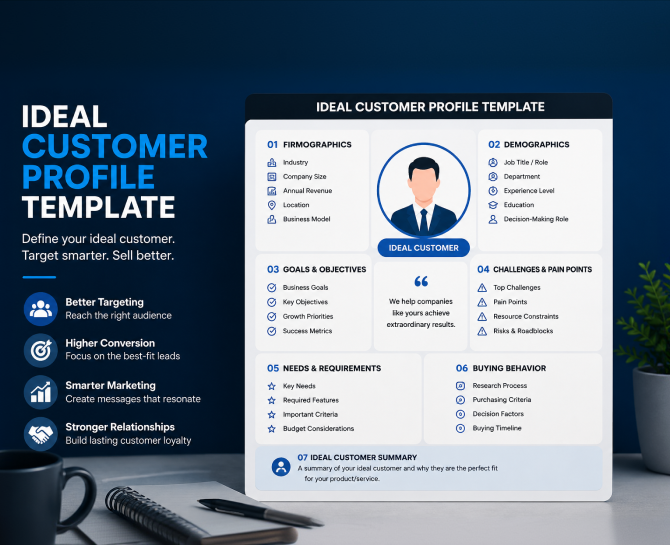
Ideal Customer Profile Template: Free Framework to Define and Document Your Best-Fit Customers
Stop relying on guesswork to identify your best customers. Use this free ideal customer profile template to document company characteristics, buying criteria, business goals, and decision-making roles. Learn how to create an ICP that improves account qualification, supports revenue growth, and keeps sales and marketing aligned.
Most companies do not have a lead generation problem.
They have a targeting problem.
Sales teams spend months chasing accounts that never convert. Marketing teams celebrate growing lead volumes, only to discover that many of those prospects were never a good fit in the first place.
The numbers tell a similar story:
Salesforce found that 86% of business buyers are more likely to purchase from companies that understand their goals.
Businesses that use a clearly defined ideal customer profile have reported win rates that are up to 68% higher than those that do not.
An ideal customer profile template gives revenue teams a practical way to identify which companies deserve attention and which do not. Instead of relying on assumptions, every team works from the same definition of a high-value customer.
What Is an Ideal Customer Profile (ICP)?
An ideal customer profile (ICP) is a clear description of the type of organization your business is best positioned to serve. It is built using characteristics shared by your most successful customers, enabling sales and marketing teams to focus on accounts with the highest potential for long-term value.
Unlike a buyer persona, which describes an individual decision-maker, an ICP identifies the company itself. It creates a consistent standard for qualifying accounts, prioritizing outreach, and aligning revenue teams around the same target customer.
| Ideal Customer Profile | Buyer Persona |
|---|---|
| Focuses on the ideal company | Focuses on an individual within the company |
| Supports strategic account selection | Supports strategic account selection |
| Defines which organizations to target | Defines how to engage decision-makers |
| Built using business characteristics | Built using individual roles, goals, and challenges |
Why Businesses Need Both
An ideal customer profile helps teams identify the right companies to pursue, while buyer personas shape conversations with the people involved in the purchase. Using both creates a more focused go-to-market strategy by improving account selection and stakeholder engagement.
Why You Need an Ideal Customer Profile Template
An ideal customer profile template turns customer insights into a repeatable framework. Instead of relying on different assumptions across departments, every team evaluates opportunities using the same qualification criteria. That consistency improves decision-making throughout the revenue cycle.
Creating Consistency Across Revenue Teams
Sales, marketing, and customer success often define a “qualified customer” differently. An ideal customer profile template establishes a shared benchmark, making account selection, campaign targeting, and customer engagement more consistent across teams.
Improving Lead Qualification and Sales Efficiency
A documented ICP helps teams identify high-fit accounts earlier, reducing time spent on low-value opportunities and allowing sales to focus on prospects with stronger conversion potential.
Supporting Better Marketing Investment Decisions
Marketing performs better when campaigns are built around the right audience. An ideal customer profile template enables teams to allocate budget toward channels, industries, and accounts that are more likely to generate qualified pipeline and long-term revenue, rather than simply increasing lead volume.
What to Include in an Ideal Customer Profile Template
An effective ideal customer profile template answers the questions revenue teams ask before pursuing a new account. Instead of relying on assumptions, each section adds evidence that helps determine whether a company is the right fit.
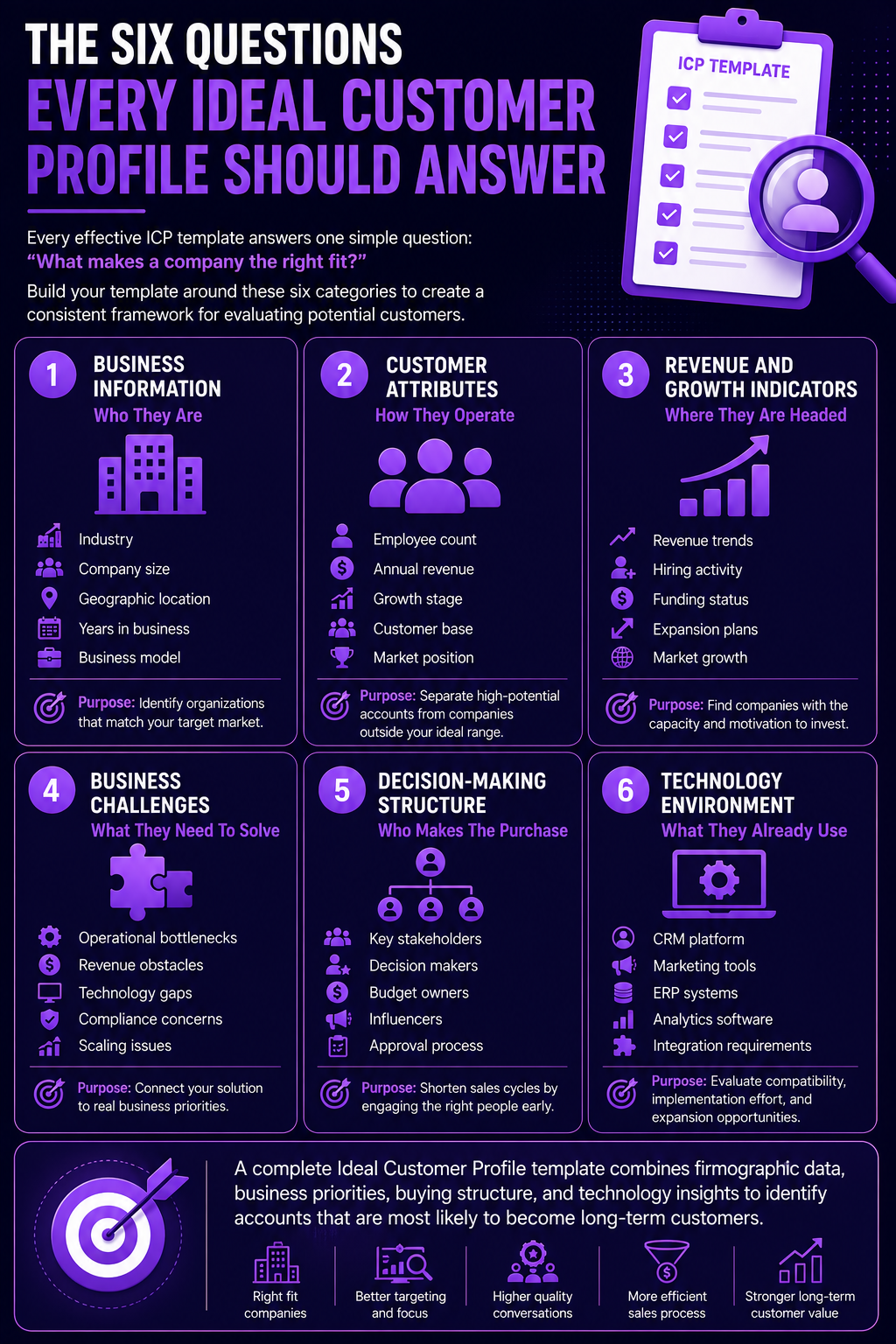
Firmographics: Defining Company-Level Customer Attributes
The first step in narrowing your market is understanding what the right company looks like. Firmographics provide that foundation by describing measurable business characteristics that distinguish high-fit accounts from the broader market. Instead of evaluating every organization equally, revenue teams can prioritize companies that closely match their ideal customer profile.
Industry and Market Segment
Companies in the same industry often face similar regulations, competitive pressures, and business priorities. Defining the industries and market segments you serve best prevents your ICP from becoming too broad and keeps prospecting focused.
Company Size and Revenue
Business needs evolve as companies grow. Factors such as workforce size and annual revenue offer valuable context about purchasing capacity, operational complexity, and the type of solution an organization is likely to require.
Geographic Presence
The markets a company operates in can influence everything from compliance obligations to expansion priorities. Including geographic scope in your ICP helps identify organizations that align with your go-to-market strategy.
Growth Stage and Business Model
A fast-growing startup and a well-established enterprise may share an industry but have very different priorities. Capturing a company’s growth stage and business model adds another layer of context, making it easier to recognize accounts that fit your long-term customer strategy.
Core Firmographic Fields for an ICP Template
| Field | Why It Matters | Example |
|---|---|---|
| Industry | Determines market fit | SaaS |
| Employee Size | Indicates operational complexity | 500–2,000 |
| Annual Revenue | Measures buying capacity | $100M+ |
| Region | Supports market prioritization | North America |
| Growth Stage | Predicts future opportunity | Scaling Enterprise |
Technographics: Mapping Your Ideal Customer’s Tech Stack
A company’s technology stack often reveals how it operates, scales, and evaluates new solutions. Understanding technographics helps revenue teams identify organizations that are more likely to integrate, adopt, and realize value from your product.
Technology data also provides context beyond company size or industry. Two businesses with similar revenue may have entirely different levels of digital maturity, making their buying priorities very different.
Existing Business Systems
The platforms a company already uses can indicate how your solution fits into its current ecosystem. Identifying core business systems early reduces the risk of targeting accounts with limited compatibility.
Software Maturity
Organizations at different stages of digital adoption have different requirements. Some look for foundational capabilities, while others seek specialized solutions that complement an established technology stack.
Integration Requirements
Enterprise buyers rarely evaluate a product in isolation. Compatibility with existing applications, data sources, and workflows often plays a significant role in the purchasing process, making integration requirements an important part of an ICP.
Technology Adoption Patterns
The pace at which a company adopts new technology can influence sales cycles and implementation expectations. Recognizing these patterns helps revenue teams prioritize accounts that are more likely to move forward with confidence.
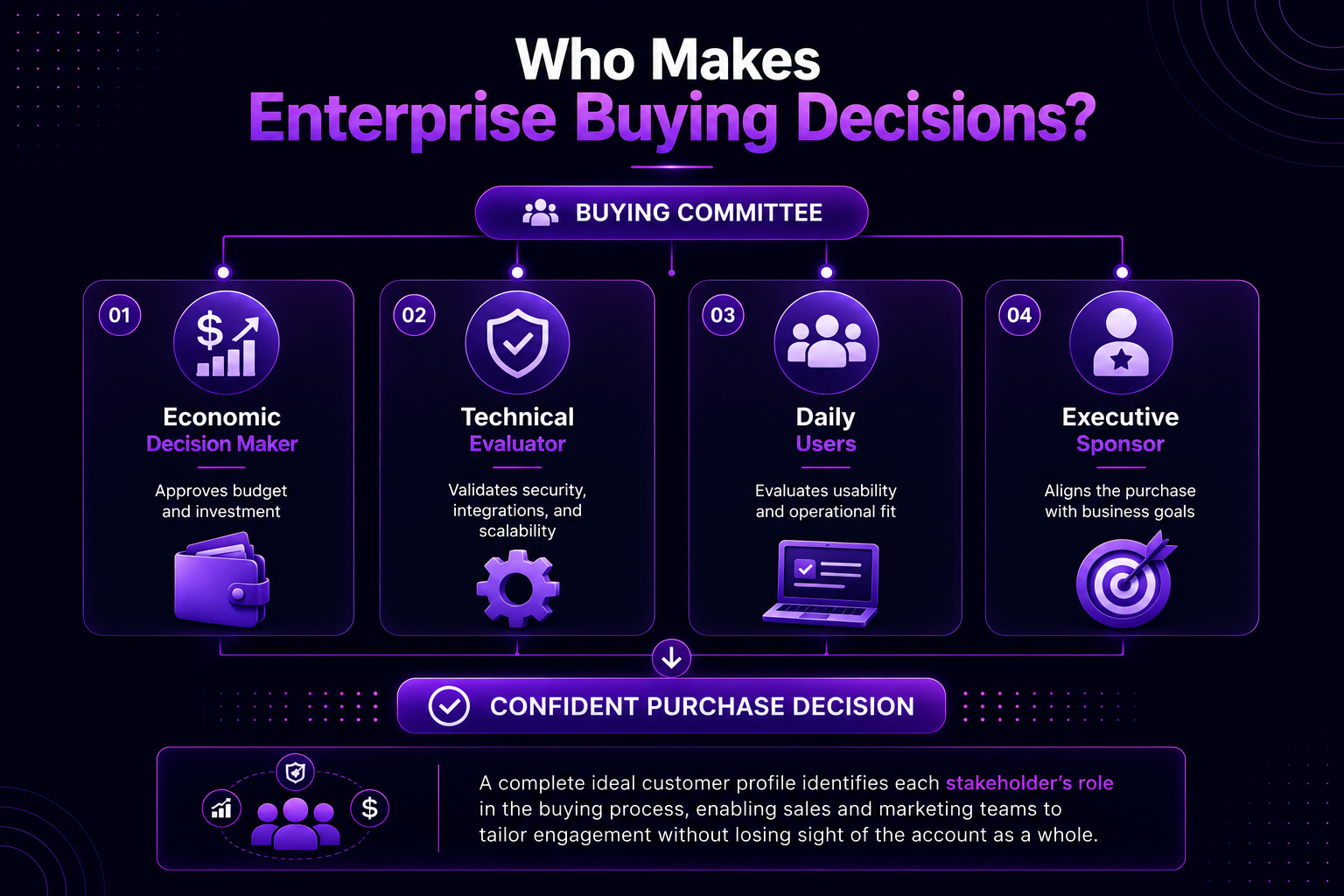
Identifying the Buying Committee in Your ICP Template
Winning an enterprise account rarely depends on convincing one person. Different stakeholders evaluate the same purchase through different business priorities. Mapping the buying committee within your ideal customer profile helps revenue teams prepare for complex buying journeys and engage the right people at the right time.
How to Fill Out Your Ideal Customer Profile Template: Step-by-Step
An Ideal Customer Profile is only as accurate as the research behind it. Filling out the template should never rely on assumptions about who might buy your product. Instead, combine customer data, internal expertise, and direct customer feedback to identify the characteristics shared by your most successful accounts.
Use the following process to complete each section of your ICP template.
Step 1: Collect Data From Your Best Customers
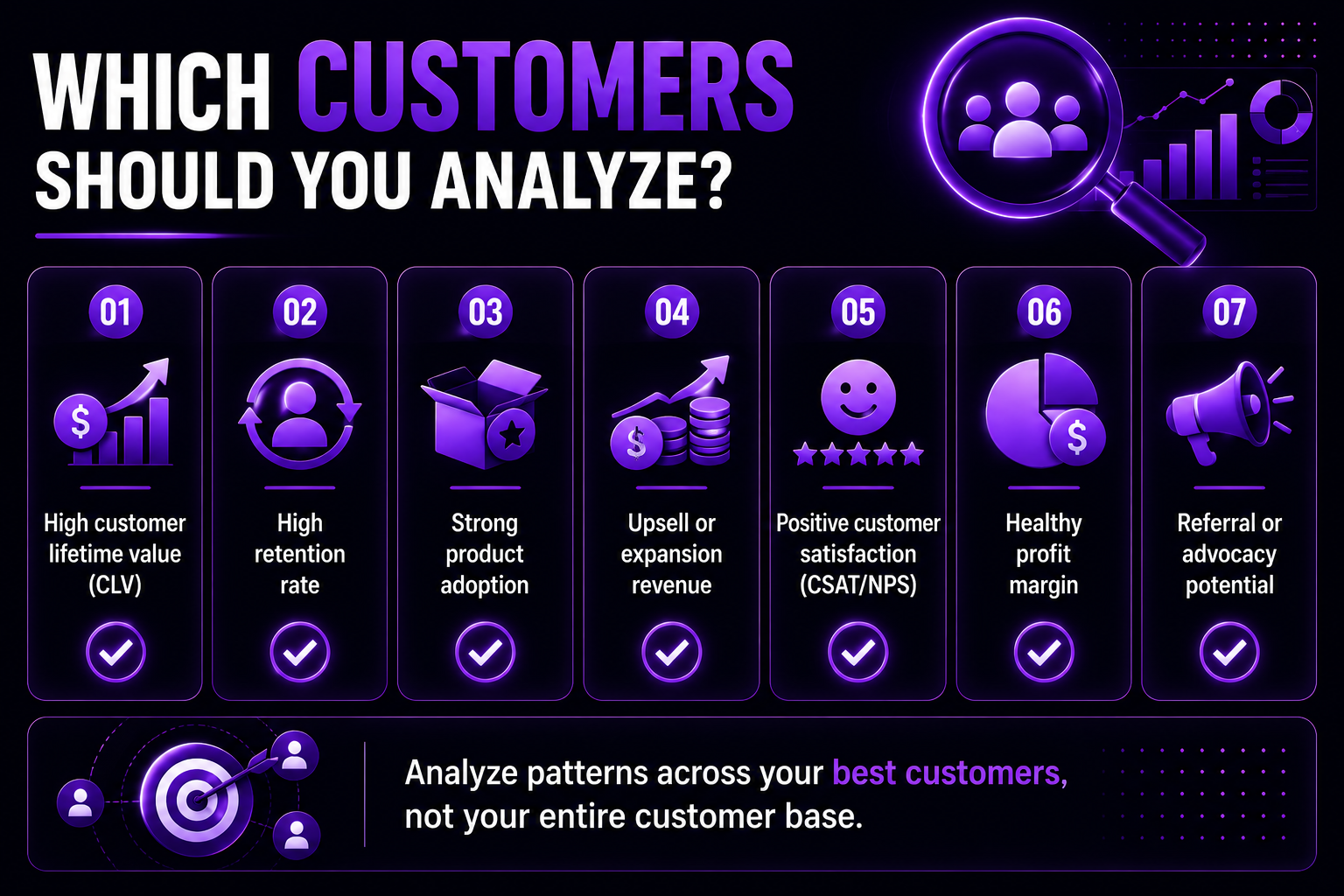
Before writing anything in your template, identify customers that consistently create value for your business. Revenue alone does not tell the full story. A customer who renews every year, expands their contract, and actively uses your product often represents a better ICP than one with a large one-time purchase.
Look for customers that share several of these characteristics:
- Generate high lifetime value.
- Renew consistently.
- Expand through upsells or cross-sells.
- Adopt your product successfully.
- Require minimal support.
- Act as references or advocates.
Once you have your shortlist, gather information from your CRM, product analytics, customer success platform, billing system, and sales records.
Step 2: Interview Internal Teams
Your CRM explains what happened. Your teams explain why it happened.
People working directly with customers often recognize buying patterns long before they appear in reports. Speak with stakeholders across departments to uncover context and perspectives that customer data alone may not reveal.
Speak with:
- Sales representatives
- Customer success managers
- Account executives
- Product specialists
- Support teams
Ask each team the same core questions to identify recurring themes.
Internal Interview Questions
| Team | Questions to Asks |
|---|---|
| Sales | Which companies close the fastest? What objections appear repeatedly? Which customers become long-term accounts? |
| Customer Success | Which customers see results quickest? What behaviors predict successful adoption? |
| Support | Which customers require the least support? What issues appear most often? |
| Product | Which features deliver the greatest value to specific customer segments? |
Pro Tip: Do not interview only your highest-performing sales representative. Include average performers and customer-facing teams as well. Their combined experiences often reveal patterns that individual success stories overlook.
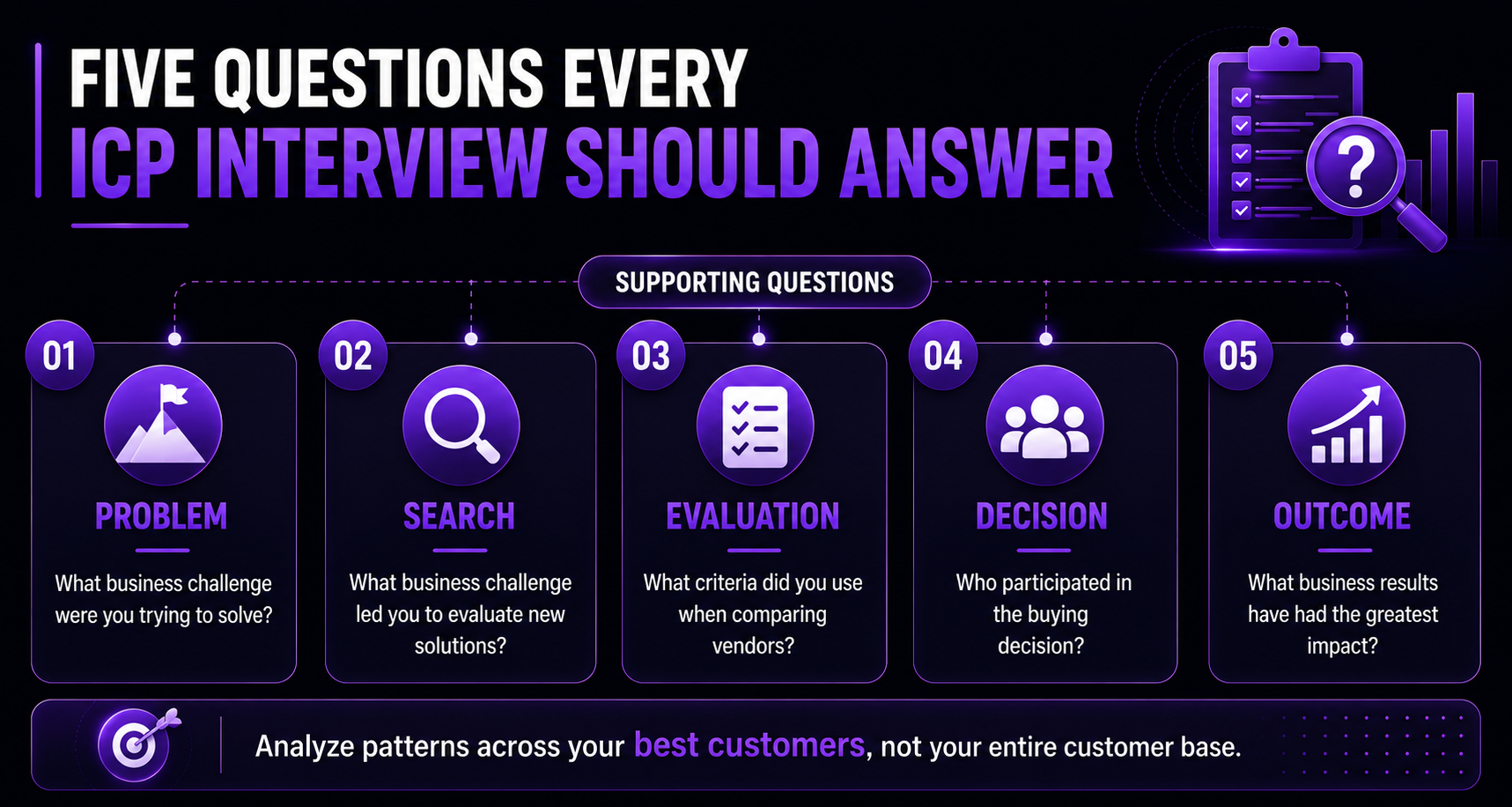
Step 3: Interview Your Best Customers
Data reveals customer behavior. Interviews reveal customer motivations.
Speaking directly with successful customers uncovers the reasons behind their purchase decisions, evaluation process, and long-term satisfaction. These insights strengthen every section of your ICP template.
Choose customers who have renewed, expanded, or achieved measurable success after implementation.
Step 4: Identify Shared Characteristics
After collecting quantitative and qualitative insights, begin identifying characteristics that appear repeatedly across successful customers.
Focus on patterns rather than exceptions. If only one customer matches a particular attribute, it should not influence your ICP.
Complete your template:
Firmographic Information
- Industry
- Company size
- Annual revenue
- Employee count
- Geographic location
- Growth stage
Operational Characteristics
- Technology stack
- Existing software
- Team structure
- Compliance requirements
- Digital maturity
Business Objectives
- Revenue growth
- Operational efficiency
- Cost reduction
- Customer experience improvements
- Automation initiatives
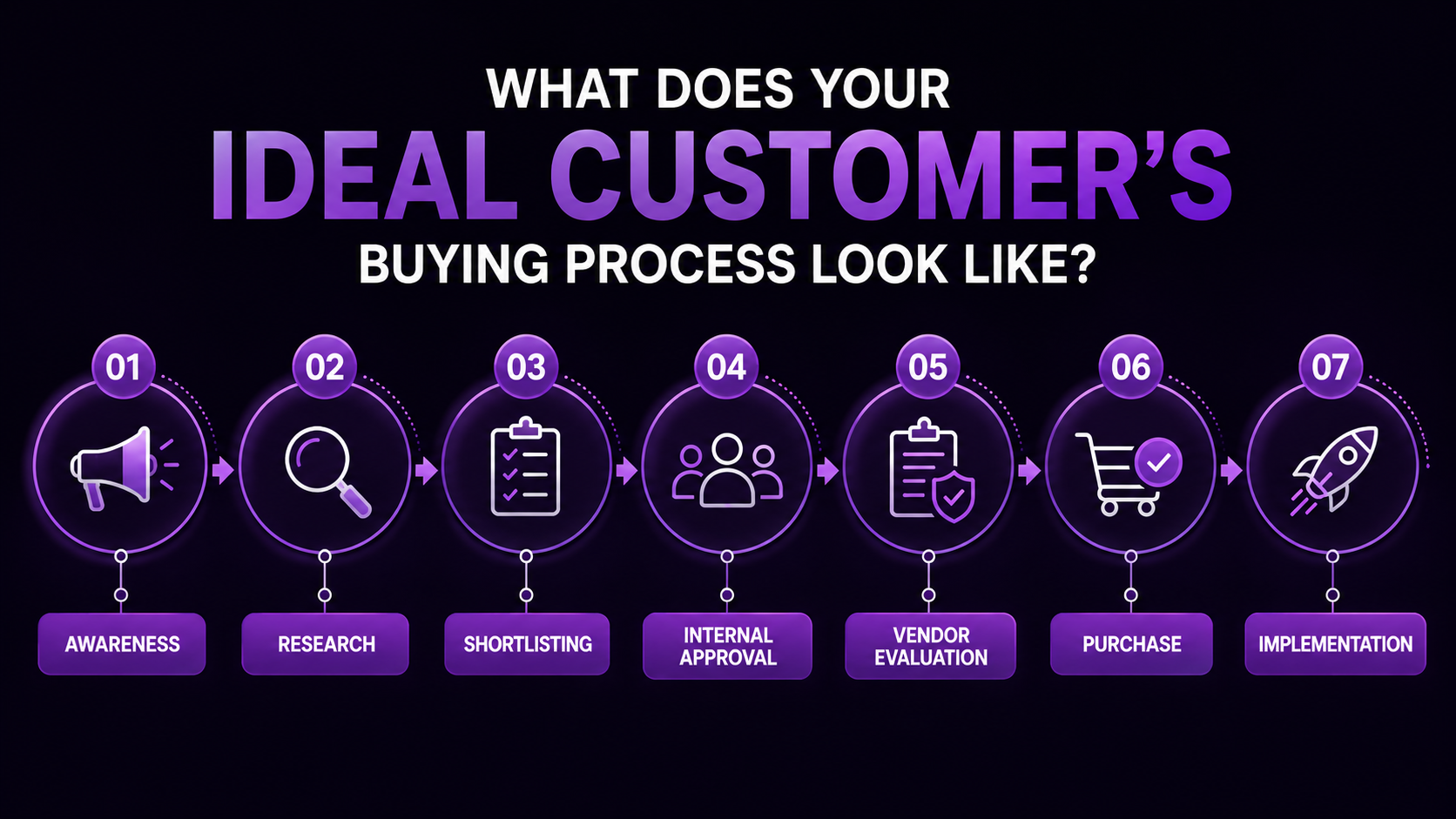
Step 5: Document Buying Behavior
Your ICP should explain not only who your customers are but also how they make purchasing decisions.
Capture buying behaviors that consistently appear across your best accounts.
Include:
- Common business pain points
- Purchase triggers
- Budget ownership
- Decision-making process
- Buying timeline
- Success metrics
- Purchase barriers
Step 6: Validate Your ICP Across Departments
Different departments interact with customers in different ways, making validation an essential step.
Use a collaborative workshop to review every section of the ICP and challenge unsupported assumptions.
Validation Checklist
- Sales agrees these companies close consistently.
- Customer success confirms long-term retention.
- Product meets their core requirements.
- Leadership agrees these customers align with business strategy.
If multiple teams disagree about a characteristic, investigate further before including it in your profile.
Step 7: Review and Update Your Template Regularly
Customer expectations change. Markets evolve. Your products and services also grow over time. An Ideal Customer Profile should reflect those changes instead of remaining static.
Schedule regular reviews to compare your current ICP against recent customer wins, identify emerging trends, and remove characteristics that no longer represent your highest-value accounts.
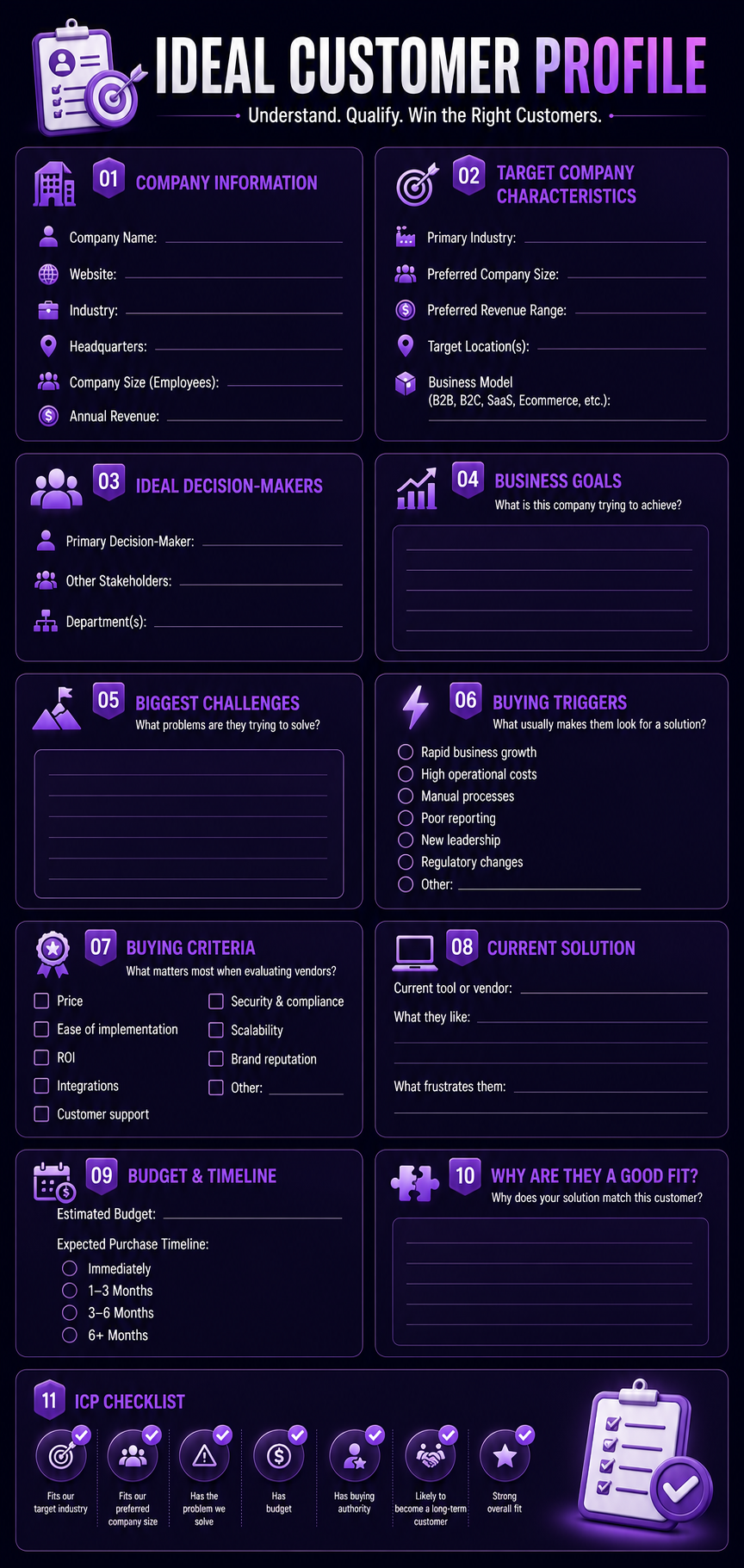
Free Ideal Customer Profile (ICP) Template
Use the template below as a starting point for documenting your ideal customer profile. Customize each section based on your business model, sales process, and the characteristics of your highest-value customers.
Ideal Customer Profile Examples Built from the Template
The same template can be adapted across industries and business models. The examples below illustrate how different organizations can define their ideal customer based on business objectives, operational needs, and buying behavior.
Example 1: B2B SaaS Company
| Section | Example |
|---|---|
| Industry | Software as a Service (SaaS) |
| Company Size | 500–2,000 employees |
| Annual Revenue | $100M–$500M |
| Growth Stage | Scaling Enterprise |
| Primary Business Goal | Improve operational efficiency through automation |
| Key Business Challenge | Disconnected workflows across departments |
| Technology Environment | Salesforce, HubSpot, Slack, Microsoft Azure |
| Primary Decision-Maker | VP of Operations | Buying Trigger | Rapid business expansion requiring scalable processes |
Example 2: Manufacturing Company
| Section | Example |
|---|---|
| Industry | Industrial Manufacturing |
| Company Size | 1,000–5,000 employees |
| Annual Revenue | $250M+ |
| Growth Stage | Mature Enterprise |
| Primary Business Goal | Improve operational efficiency while lowering production costs. |
| Key Business Challenge | Legacy systems limiting visibility across operations |
| Technology Environment | SAP ERP, Microsoft Dynamics 365, Power BI |
| Primary Decision-Maker | COO | Buying Trigger | Digital transformation initiatives across multiple facilities |
Pro Tip: These examples are starting points rather than fixed profiles. The most effective ideal customer profile reflects the characteristics consistently shared by your highest-value customers and should evolve as your business and market change.
Common Mistakes to Avoid When Using an ICP Template
Even a well-designed ideal customer profile template can produce poor results if it is built on assumptions or left unchanged over time. Avoid these common mistakes to keep your ICP relevant and actionable.
Mistake #1: Defining Your ICP Around Aspirational Customers
Many businesses build their ICP around companies they want to win instead of customers that consistently generate long-term value. Base your profile on existing customer data, not ambition.
Mistake #2: Building an ICP That Lacks Focus
Trying to appeal to every industry, company size, or market often weakens targeting. A focused ICP improves account qualification and helps revenue teams prioritize opportunities with greater confidence.
Mistake #3: Ignoring Input From Customer-Facing Teams
Sales, marketing, and customer success each have a different perspective on customer fit. Building an ICP without their insights can leave important qualification criteria out of the template.
Mistake #4: Treating the ICP as a One-Time Project
Customer expectations, markets, and business priorities evolve over time. Review your ICP regularly to ensure it continues to reflect the characteristics of your best-fit customers.
Mistake #5: Measuring Success by Lead Volume Alone
A higher number of leads does not always translate into better business outcomes. A strong ICP should increase the percentage of qualified opportunities, improve conversion rates, and support long-term customer growth.
Conclusion
An ideal customer profile template does more than organize customer information. It gives revenue teams a consistent framework for identifying high-value accounts, improving qualification, and making better go-to-market decisions. When every team works from the same definition of an ideal customer, sales efforts become more focused, marketing investments become more effective, and customer acquisition becomes more predictable.
An ICP should evolve with your business and customers. Review it regularly, refine it using customer data, and adapt it as your business evolves. The more accurately your template reflects your best-fit customers, the more valuable it becomes as a guide for sustainable growth.
Need help building a data-backed ideal customer profile or refining your revenue strategy? Reach out to the DiGGrowth team at info@diggrowth.com.
Ready to get started?
Increase your marketing ROI by 30% with custom dashboards & reports that present a clear picture of marketing effectiveness
Start Free Trial
Experience Premium Marketing Analytics At Budget-Friendly Pricing.

Learn how you can accurately measure return on marketing investment.

How Predictive AI Will Transform Paid Media Strategy in 2026
Paid media isn’t a channel game anymore, it’s a chessboard. Search, social, programmatic, video, influencer, native,...
Read full post post
Don’t Let AI Break Your Brand: What Every CMO Should Know
AI isn’t just another marketing tool. It’s changing how we connect with customers, personalize content, and...
Read full post post
From Demos to Deployment: Why MCP Is the Foundation of Agentic AI
A quiet revolution is unfolding in AI. And it’s not happening inside research labs. For decades,...
Read full post postFAQ's
An ideal customer profile template is a structured framework used to document the characteristics of the companies that are the best fit for your business. It helps revenue teams define, evaluate, and qualify target accounts using consistent criteria, making sales and marketing efforts more focused.
A comprehensive ICP template typically includes company information, industry, business size, revenue range, growth stage, business goals, key challenges, technology environment, decision-making structure, buying criteria, and qualification indicators. The exact fields should reflect the needs of your business and target market.
Begin by analyzing your highest-value customers to identify recurring patterns. Gather insights from customer data, sales conversations, and revenue teams, then document the characteristics that consistently define successful accounts. Review and update the template regularly as your customer base and market evolve.
An ICP template defines the type of company your business should target, while a buyer persona template focuses on the individuals involved in the purchasing decision. The ICP identifies the right companies to target, while buyer personas guide conversations with the people involved in buying decisions.
The most valuable customer attributes are those that consistently appear across your best customers. These often include industry, company size, revenue, growth stage, business priorities, technology environment, purchasing behavior, and the complexity of the buying process. Rather than including every possible characteristic, focus on the attributes that most strongly predict long-term customer success.