
How to Use Marketing KPIs to Make a Real Impact
Marketing KPIs show whether campaigns are driving real results, not just activity. Tracking, analyzing, and acting on the right metrics helps improve decisions and business outcomes. Read this blog to see how to use KPIs effectively.
Most marketing efforts look busy on the surface. Campaigns are running, content is going out, numbers are coming in. But when it is time to answer a simple question, what is actually working, the clarity is often missing.
That is where marketing KPIs start to matter. Not as numbers you report, but as signals you act on.
Many teams track dozens of metrics and still struggle to make confident decisions. High impressions feel good. More clicks look promising. But do they move the business forward? That is the real question.
Marketing KPIs bring focus. They help you cut through noise, challenge assumptions, and understand what is driving real outcomes. When used right, they do not just measure performance. They shape it.
If your strategy feels scattered or results feel inconsistent, it is often not a creativity problem. It is a measurement problem. Fix that, and the rest starts to align.
Let’s dive in.
Key Takeaways
- Choosing fewer, high-impact KPIs aligned with business goals creates clarity and focus.
- Regular tracking and accurate measurement turn raw data into decisions that drive results.
- Analyzing patterns, segmenting data, and translating insights into adjustments improves campaign performance.
- Continuous review and iteration keep your KPIs relevant and your marketing strategy evolving.
Understanding Marketing KPIs
Posting more content, running more ads, or increasing website traffic can feel productive. But without the right marketing KPIs, these efforts can lead you in the wrong direction.
Marketing KPIs are not just metrics. They are specific indicators that show whether your marketing is contributing to real business outcomes. The key is relevance. If a metric does not connect to growth, revenue, or meaningful engagement, it is just noise.
There is also an important distinction many overlook.
- Leading KPIs: Show early signals of performance. Example: click-through rate, website visits.
- Lagging KPIs: Reflect final outcomes. Example: conversions, revenue, customer acquisition cost.
Both matter, but they serve different purposes. Leading KPIs help you adjust quickly. Lagging KPIs confirm whether those adjustments worked.
| Type | What It Tells You | Example |
|---|---|---|
| Leading KPIs | Are you on the right track | Email open rate |
| Lagging KPIs | Did you achieve the goal | Sales generated |
The real impact comes when you connect the two. If your leading KPIs improve but your lagging ones do not, something is broken in the journey.
This is where many strategies fall apart. Teams celebrate early wins but miss the bigger picture. Understanding marketing KPIs means looking beyond surface-level success and focusing on what actually drives results.
Choosing The Right Marketing KPIs For Your Business
Not all marketing KPIs deserve your attention. That is the hard truth.
Tracking everything might feel safe, but it often creates confusion. When every metric looks important, nothing really is. The goal is not to measure more. It is to measure what matters.
Align KPIs With Business Goals
Start with one simple question. What does success look like for your business right now?
If the goal is growth, your marketing KPIs should reflect acquisition and reach. If the focus is profitability, efficiency metrics should take priority. Without this alignment, even detailed reports can lead to poor decisions.
Here is a quick reference:
| Business Goal | Relevant Marketing KPIs |
|---|---|
| Brand Awareness | Impressions, reach, website traffic |
| Lead Generation | Cost per lead, conversion rate |
| Sales Growth | Revenue, customer acquisition cost |
| Customer Retention | Repeat purchase rate, customer lifetime value |
Focus On Impact Over Vanity Metrics
Not all high numbers mean success. Some metrics look impressive but do not contribute to real outcomes.
- Tracking metrics that do not influence revenue or growth.
- Prioritizing quantity over quality in traffic or leads.
- Ignoring conversion-focused marketing KPIs.
A spike in traffic means little if it does not convert. The impact is what matters.
Choose Fewer, More Meaningful KPIs
More data does not always lead to better decisions. In many cases, it slows teams down.
Instead of tracking everything:
- Selecting a small set of high-impact marketing KPIs.
- Reviewing them consistently across campaigns.
- Using them to guide decisions and not just reporting.
Clarity comes from focus. When your team knows exactly which numbers matter, execution becomes sharper.
Adapt KPIs As Your Strategy Evolves
What works today may not work tomorrow. As your business grows, your priorities shift. Your marketing KPIs should reflect that change.
- Updating KPIs based on current business goals.
- Testing new metrics when entering new channels.
- Dropping KPIs that no longer provide value.
If your strategy evolves but your KPIs do not, you will start measuring the wrong things. And that leads to the wrong decisions.
Measuring And Tracking Marketing KPIs Effectively
Choosing the right marketing KPIs is only half the job. The real challenge is tracking them in a way that actually helps you make decisions.
Many teams collect data but struggle to use it. Numbers sit in dashboards, reports get shared, but actions do not follow.
Use The Right Tools For Clarity
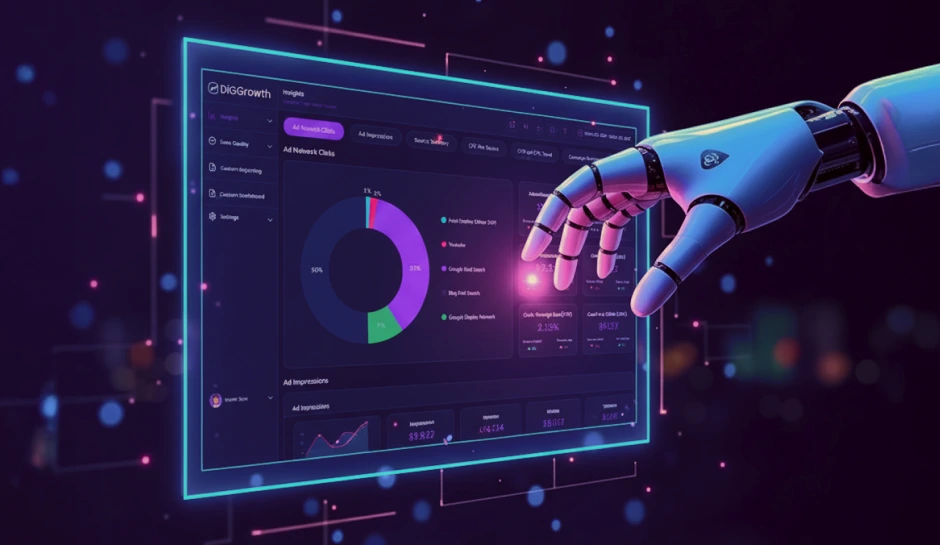
- DiGGrowth: Tracks marketing KPIs across channels in real time. It highlights trends, identifies high-performing campaigns, and provides actionable insights for growth.
- Google Analytics: Monitors website traffic, user behavior, and conversion paths. Helps understand how visitors interact with your site and which channels drive results.
- HubSpot: Combines CRM, marketing automation, and analytics. Tracks leads, email campaigns, and conversions in one integrated dashboard.
- SEMrush: Focuses on SEO and digital marketing KPIs. Monitors keyword rankings, backlink performance, and competitor strategies to improve organic reach.
- Tableau: Visualizes complex KPI data through interactive dashboards. Helps teams interpret trends quickly and make data-driven decisions.
- Sprout Social: Tracks social media KPIs like engagement, reach, and follower growth. Offers reporting tools to measure social campaigns effectively.
Pro Tip : Using the right tools ensures your marketing KPIs are not just numbers. They become insights that guide your next move.
Set Benchmarks And Targets
A KPI without a target is just a number. Benchmarks give your data meaning and allow you to evaluate performance objectively. Without them, you cannot tell if your campaigns are succeeding or falling short.
- Compare With Past Performance: Look at historical data from previous campaigns or months. This helps you understand trends, seasonal shifts, and realistic expectations for current efforts.
- Set Realistic Goals: Use industry standards and competitor performance as references. Align targets with your marketing objectives, whether it is lead generation, conversions, or engagement.
- Adjust As Priorities Change: Marketing goals evolve over time. For example, a campaign aimed at awareness will have different KPI targets than one focused on driving sales. Updating benchmarks ensures your KPIs remain relevant and actionable.
Track Consistently And Act Quickly
Collecting KPI data is not enough. The value comes from regular tracking and immediate action. Inconsistent monitoring can cause missed opportunities or delayed responses to underperforming campaigns.
- Review Dashboards Regularly: Weekly or monthly reviews help you detect early trends and identify problems before they escalate.
- Ensure Data Accuracy: Cross-check data across tools like DiGGrowth, HubSpot, and Google Analytics. Inaccurate numbers lead to poor decisions and wasted resources.
- Use Insights To Make Adjustments: If a campaign underperforms, identify which KPIs indicate the issue and take corrective steps immediately. Whether it is reallocating budget, tweaking messaging, or adjusting targeting, acting fast preserves momentum and maximizes results.
Analyzing KPI Data for Actionable Insights
The real impact comes from analyzing it in a way that informs decisions and drives results. Raw numbers alone rarely tell the full story.
Identify Patterns and Trends
Looking at individual data points can be misleading. Focus on trends over time to understand what is truly working.
- Track changes in KPIs across weeks or months.
- Compare performance between different channels or campaigns.
- Spot consistent patterns that indicate strengths or weaknesses.
For example, a slight drop in website traffic may not be alarming, but if it continues over multiple weeks, it signals a potential problem in messaging or targeting.
Segment Data for Deeper Insights
Not all traffic or leads are equal. Segmenting your data reveals which audiences or campaigns are most valuable.
- Break down KPIs by demographics, regions, or customer types.
- Compare organic versus paid channels to see which drives better ROI.
- Analyze engagement by content type to identify what resonates most.
Segmented data allows you to allocate budget and effort to the areas that deliver the highest impact.
Translate KPIs Into Decisions
KPIs are only useful when they guide action. Once trends and patterns are identified, use them to make informed changes.
- Adjust ad spend toward high-performing campaigns.
- Refine messaging for underperforming audiences.
- Test variations of landing pages, emails, or offers based on data insights.
Even small adjustments based on KPI analysis can compound into significant improvements over time.
Avoid Common Pitfalls
Many marketers analyze data but fail to act effectively. Avoid these mistakes:
- Focusing on vanity metrics that do not influence outcomes.
- Waiting too long to respond to negative trends.
- Ignoring underperforming channels instead of testing improvements.
The goal is simple: let your KPI data tell you what to do next, not just what happened.
Using KPIs To Drive Business Growth
Tracking and analyzing marketing KPIs is not an end in itself. The real value comes when you use them to make decisions that push your business forward.
Optimize Campaign Performance
Marketing KPIs highlight what works and what does not. By acting on this data, you can improve results without increasing spend.
- Increase budget on campaigns delivering high conversions.
- Pause or tweak underperforming campaigns.
- Adjust targeting or messaging based on audience behavior.
For example, if email open rates are high but click-throughs are low, the issue may be in the content or call-to-action. Fixing it can improve conversions significantly.
Allocate Resources More Effectively
KPIs help you decide where to invest time and money. Not all channels or tactics deliver equal value.
- Focus resources on high-performing channels.
- Reduce waste on low-impact initiatives.
- Use data to justify budget decisions to stakeholders.
This approach ensures that every marketing dollar contributes to measurable business growth.
Measure ROI and Business Impact
Marketing KPIs connect activity to outcomes. They help you understand how campaigns influence revenue, customer acquisition, and retention.
- Track cost per acquisition versus revenue generated.
- Identify which campaigns contribute most to long-term customer value.
- Compare KPIs across channels to understand overall impact.
By linking KPIs to business goals, you transform marketing from a cost center into a growth engine.
Continuous Improvement And KPI Optimization
Marketing KPIs are not set-and-forget metrics. The market changes, customer behavior shifts, and campaigns evolve. Continuous improvement ensures your KPIs stay relevant and actionable.
Regularly Review And Update KPIs
Old KPIs can mislead your strategy if they no longer reflect business priorities.
- Schedule periodic reviews to evaluate whether each KPI still aligns with your goals.
- Drop metrics that do not influence decisions.
- Introduce new KPIs when launching new campaigns or channels.
This keeps your measurement framework fresh and focused on real impact.
Test, Learn, And Iterate
Data-driven marketing is a cycle, not a single step. Use your KPIs to experiment and refine campaigns.
- Run A/B tests on messaging, creative, or targeting.
- Track KPI changes to determine what drives results.
- Adjust strategies based on evidence, not assumptions.
Small, consistent iterations can lead to significant long-term improvements.
Encourage A Data-Driven Culture
The best results come when teams use KPIs to guide decisions at every level.
- Share insights regularly with marketing and sales teams.
- Make KPI tracking part of daily or weekly routines.
- Reward decisions backed by data rather than intuition alone.
When KPIs become a tool for learning and improvement, your marketing strategy evolves continuously, delivering stronger results over time.
Conclusion
Marketing KPIs are powerful, but only when they move beyond reporting. They become decision-making tools that shape campaigns, guide budgets, and influence real growth. When you focus on the right KPIs, track them consistently, and act on insights quickly, your marketing shifts from guesswork to strategy.
DiGGrowth makes this process simpler, connecting your data across channels, highlighting what matters, and helping you turn numbers into results. The difference between running campaigns and driving real impact is how effectively you use your KPIs—and how fast you act on them.
Ready to see your marketing KPIs work for you? Take control of your data and make smarter, faster decisions with DiGGrowth. Reach out today at info@diggrowth.com and start turning insights into growth.
Ready to get started?
Increase your marketing ROI by 30% with custom dashboards & reports that present a clear picture of marketing effectiveness
Start Free Trial
Experience Premium Marketing Analytics At Budget-Friendly Pricing.

Learn how you can accurately measure return on marketing investment.
How Predictive AI Will Transform Paid Media Strategy in 2026
Paid media isn’t a channel game anymore, it’s a chessboard. Search, social, programmatic, video, influencer, native,...
Read full post post
Don’t Let AI Break Your Brand: What Every CMO Should Know
AI isn’t just another marketing tool. It’s changing how we connect with customers, personalize content, and...
Read full post post
From Demos to Deployment: Why MCP Is the Foundation of Agentic AI
A quiet revolution is unfolding in AI. And it’s not happening inside research labs. For decades,...
Read full post postFAQ's
Marketing KPIs are measurable indicators that show whether your marketing efforts are achieving business goals. They help you focus on strategies that drive real results, not just activity.
Start by aligning KPIs with your current business goals. Focus on a small set of high-impact metrics that reflect outcomes like growth, conversions, revenue, or customer retention. Avoid tracking metrics that do not influence decisions.
Consistent tracking is key. Review dashboards weekly or monthly to detect trends early and take action quickly. Avoid occasional checks, as delays can reduce the effectiveness of your campaigns.
KPIs highlight what works and what does not. By analyzing trends, segmenting data, and adjusting campaigns based on insights, you can optimize budgets, targeting, and messaging for better results.
DiGGrowth tracks KPIs across channels in real time, identifies high-performing campaigns, and provides actionable insights. It simplifies data analysis so you can make informed decisions faster and drive measurable growth.