
6 Conversion Tracking Software for Marketers
Learn about the top 6 conversion tracking software tools that empower businesses to closely monitor the entire customer journey, from the first touchpoint to final purchase. These platforms provide detailed insights into user behavior, attribution models, and engagement patterns, enabling marketers to pinpoint exactly which channels, campaigns, and content are driving the most valuable conversions. Whether you're focused on e-commerce, lead generation, or B2B sales, the right conversion tracking tool can be a game-changer for accelerating growth and maximizing results.
In the digital age, conversion tracking software is the compass that guides marketers through the ever-changing landscape of online advertising. It monitors the actions of users once they interact with your marketing campaign.
Conversion tracking software is instrumental to data-driven decision-making, enabling marketers to dissect and analyze every campaign and web page element with accuracy and precision. With insights from conversion data, you can optimize your campaigns, allocate your budget more effectively, and ultimately enhance your return on investment (ROI). The ability to pivot and adapt based on reliable data is not just a luxury; it’s necessary for those striving to stay competitive in a dynamic digital marketplace. To aid in this pursuit, we present the top 6 conversion tracking software that every marketer should consider incorporating into their strategic arsenal.
The Importance of Conversion Tracking Software in Digital Marketing
Understanding the impact of your marketing efforts is crucial in the fast-paced digital economy. Without a clear view of what actions lead to conversions, marketers are navigating blind. Conversion tracking software stands as a cornerstone in unveiling the effectiveness of online campaigns and enables businesses to make data-driven decisions.
Enhancing Campaign Performance Using Actionable Insights
By meticulously analyzing conversion data, businesses can leverage and identify which aspects of their campaigns resonate with their audience. Conversion tracking software provides actionable insights that help marketers optimize advertising expenditure, refine messaging, and boost overall campaign performance. This continuous loop of feedback and adjustments is key to achieving a high ROI.
Aligning Marketing Strategies with Business Goals
At its core, conversion tracking software ensures marketing activities align with overarching business goals. Whether the objective is to increase sales, generate leads, or drive another desirable action, conversion tracking tools empower marketers to measure success accurately and steer their strategies in the right direction. This strategic alignment not only enhances effectiveness but also contributes to the sustainable growth of the business.
6 Essential Conversion Tracking Software For Marketers
Understanding the effectiveness of marketing campaigns is pivotal for businesses looking to maximize their return on investment. Conversion tracking software is crucial for this purpose. Below, we provide an overview of seven indispensable tools that can revolutionize how marketers track and analyze conversions. Each tool offers unique features to cater to various aspects of conversion tracking, from website analytics to customer relationship management, ensuring a comprehensive view of your marketing campaign’s performance. Let’s explore how these conversion tracking software integrate seamlessly with your marketing efforts, providing real-time data and actionable insights.
- DiGGrowth
- It allows marketers to get clarity over their marketing effectiveness.
- It provides focused insights across platforms and channels.
- It renders access to clean data, integrated siloed platforms, and state-of-the-art marketing analytics.
- Google Analytics
- Google Analytics analyzes social media performance and optimizes campaigns for better engagement and conversion.
- It uses audience segmentation to deliver targeted messaging and offers.
- Adobe Analytics
- Adobe Analytics enables conversion tracking by capturing and analyzing user interactions across multiple channels, including websites, mobile apps, and social media platforms.
- It provides detailed insights into conversion paths, identifying key touchpoints and optimizing marketing strategies to improve conversion rates and drive business growth.
- HubSpot
- Hubspot provides comprehensive tracking of website visits, email engagement, form submissions, and sales conversions, offering detailed insights into the effectiveness of marketing campaigns and lead-generation efforts.
- It offers customizable reporting dashboards and analytics tools that enable businesses to measure conversion rates, identify top-performing channels, and optimize their marketing strategies to maximize conversions and drive revenue growth.
- Kissmetrics
- Kissmetrics tracks user behavior across multiple platforms, providing detailed insights into customer journeys, including interactions with websites, mobile apps, and marketing campaigns.
- It offers robust analytics capabilities to measure key conversion metrics such as user engagement, retention rates, and revenue attribution, empowering businesses to optimize their marketing strategies and drive higher conversion rates.
- Mixpanel
- Mixpanel offers real-time tracking of user interactions across digital platforms, providing insights into user behavior and engagement to optimize conversion rates.
- It enables businesses to measure key conversion metrics such as user retention, conversion rates, and revenue attribution, empowering data-driven decision-making to improve marketing strategies and product offerings.
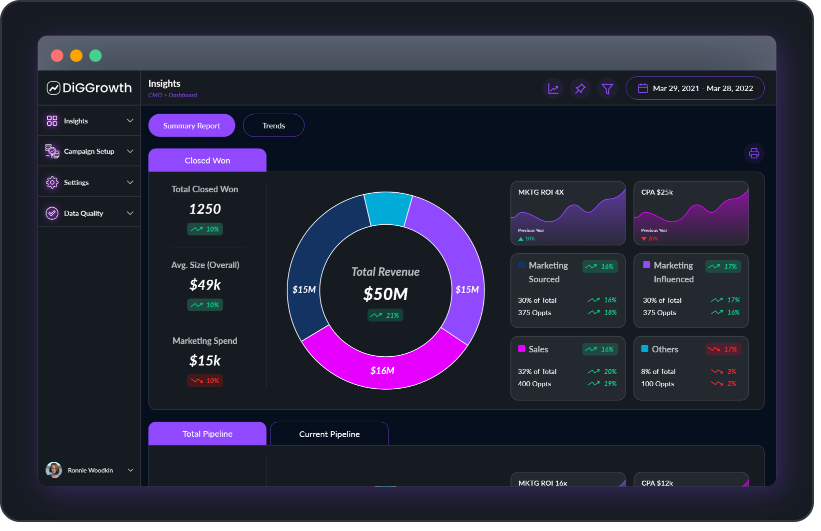
DiGGrowth is a top-performing and comprehensive conversion tracking software that takes care of all the steps and operations under this process. It offers unparalleled analytics and attribution capabilities that make it excessively convenient for marketers to monitor the customer journey, highlight yielding touchpoints, identify the loopholes, fill the gaps, and create the most compelling marketing strategy.
Custom CMO Dashboard for Tracking Conversions and Customer Journey Analytics
DiGGrowth consolidates data across all platforms, including advertising platforms, CRMs, website analytics, and marketing automation platforms.
As a conversion tracking software, DiGGrowth streamlines campaign tracking, data integration, and marketing analytics for a flawless conversion tracking experience, customer behavior analysis, and reliable outcomes.
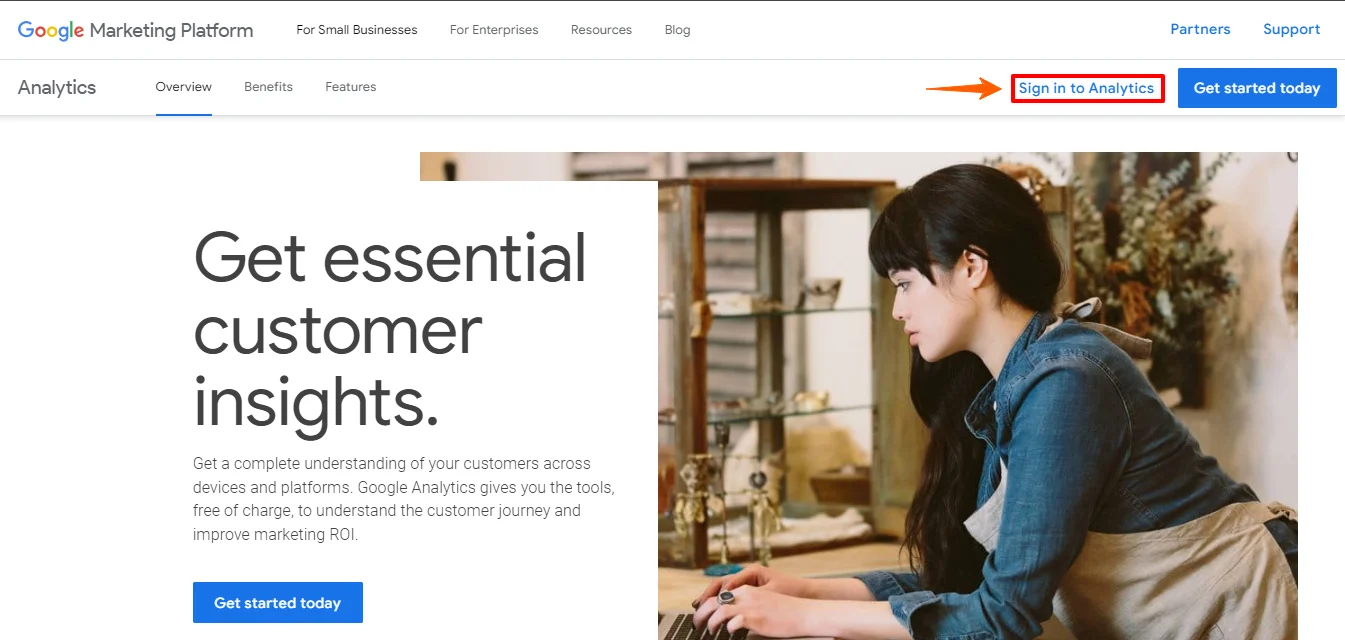
As one of the most versatile and widely used analytics tools globally, Google Analytics provides a wealth of information for marketers aiming to track conversions and understand customer behavior.
Tracking Conversions and Customer Behavior on Your Website
Embracing Google Analytics is pivotal to developing a data-driven strategy that attracts and retains customers.
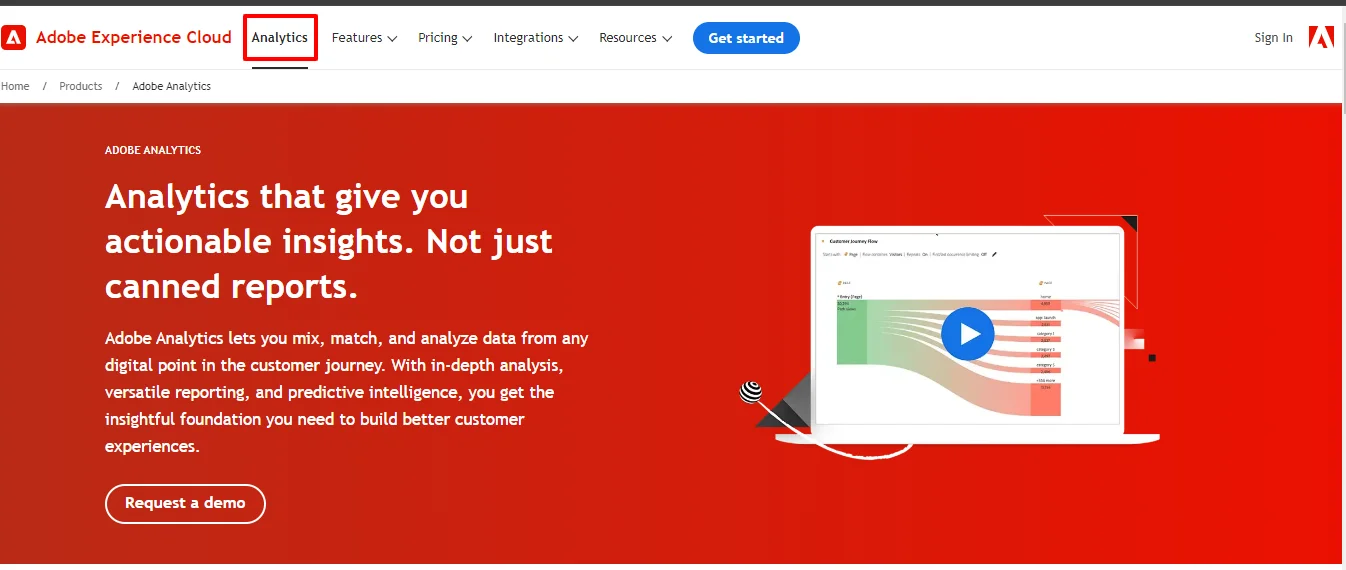
By monitoring key metrics like click-through rates, conversion rates, and revenue attribution, Adobe Analytics helps businesses understand the effectiveness of their marketing campaigns and make data-driven decisions to improve conversion rates and overall performance.
/ol>
Tracking User Interactions and Offering Detailed Insights
Adobe Analytics makes conversion tracking comprehensive and accessible for marketing professionals.
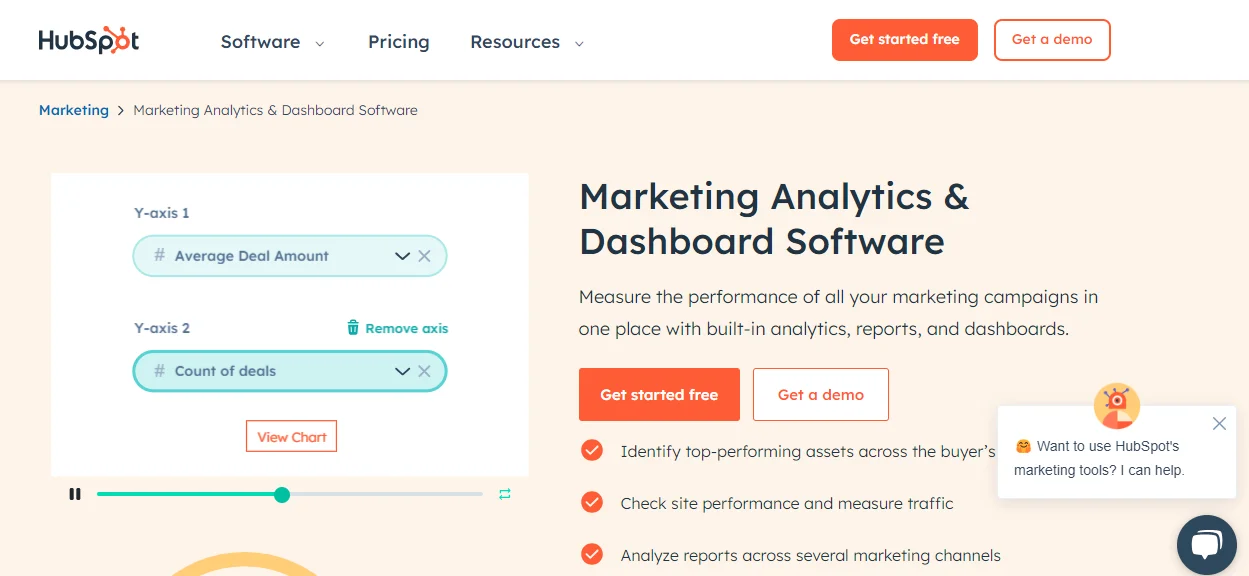
HubSpot is a versatile conversion tracking software that helps businesses monitor and optimize their marketing efforts. It offers a range of tools for tracking leads, analyzing customer interactions, and measuring conversion rates across various channels.
Customizable Reporting Tools and Dashboards
Hubspot is a reliable tool for keeping track of the customer journey and identifying the touchpoints that lead to successful conversion.
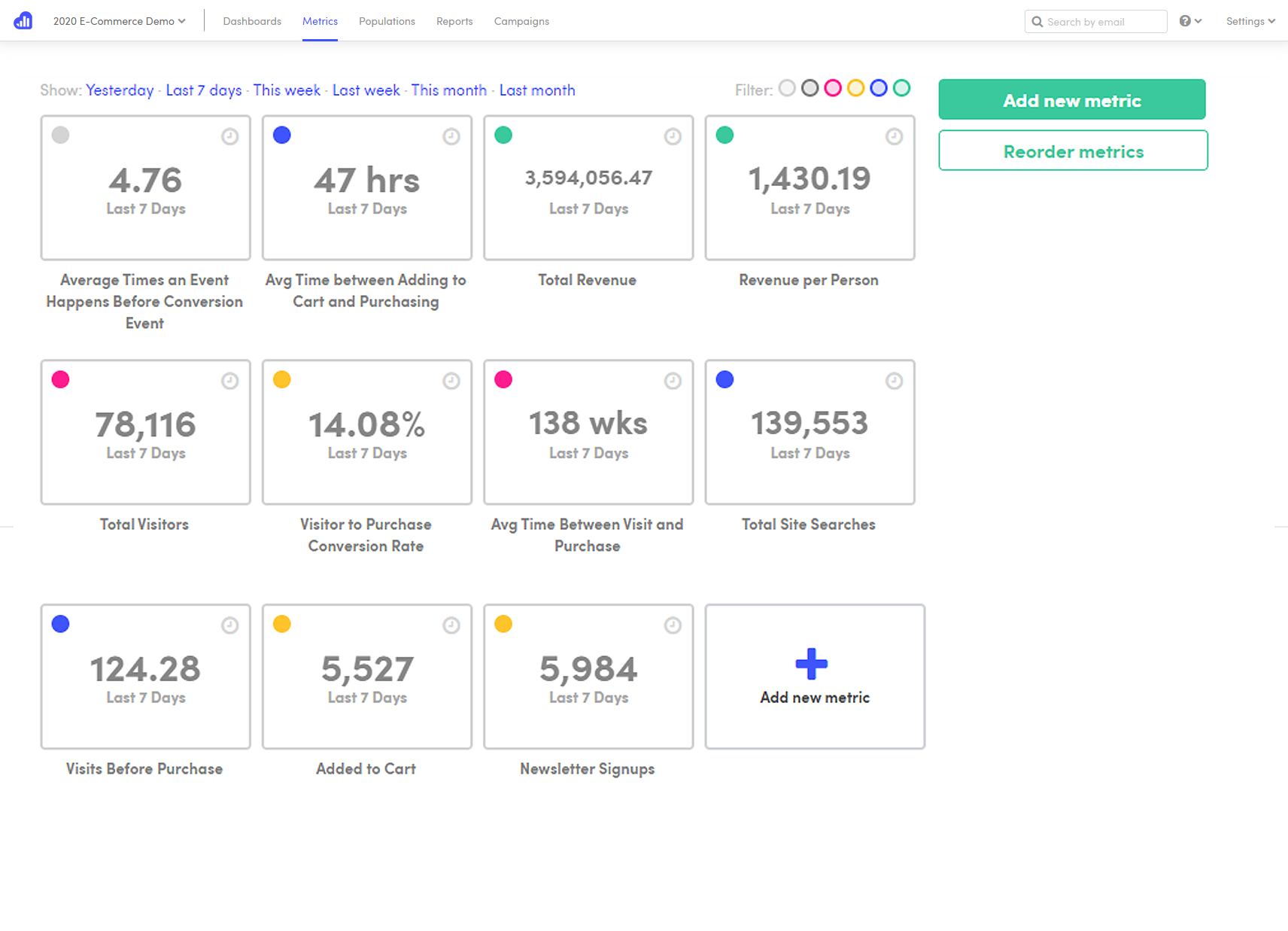
Kissmetrics is a conversion tracking software designed to provide in-depth insights into customer behavior and optimize conversion rates. It tracks individual user interactions across various touchpoints, such as websites and mobile apps, to create detailed customer profiles and analyze conversion pathways.
Monitoring Individual User Interactions to Optimize Conversion Rates
Marketers use Kissmetrics to measure the effectiveness of their marketing endeavors while keeping an eye on the conversion rates.
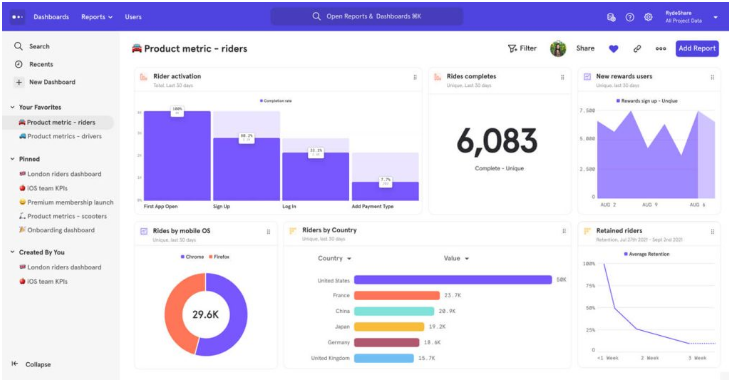
Mixpanel tracks user interactions in real time, allowing businesses to analyze how users engage with their websites, mobile apps, and other digital products. It helps businesses measure key conversion metrics to optimize marketing strategies and product offerings to drive higher conversions and business growth.
Tracking User-Interactions and Conversions in Real-Time
Mixpanel is a reliable conversion tracking software that lets marketers track conversions and customer interactions.
Comparison Of Major Conversion Tracking Tools And Their Ideal Use Cases
| Tool | Best Suited For | Ideal Use Case |
|---|---|---|
| DiGGrowth | Growth and performance marketers, leadership teams | End-to-end conversion tracking with revenue attribution and executive dashboards. |
| Google Analytics | Small to mid-sized businesses | Tracking website conversions, user behavior, and basic funnel performance. |
| Adobe Analytics | Large enterprises with complex data needs | Multi-channel conversion analysis with deep segmentation and attribution modeling. |
| HubSpot | Inbound and B2B marketing teams | Tracking leads, nurturing journeys, and sales conversions within a CRM-driven funnel. |
| Kissmetrics | SaaS and subscription businesses | Monitoring user behavior, retention, and conversion paths at the individual level. |
| Mixpanel | Product-led growth teams | Tracking in-app and product interactions to optimize user engagement and conversions. |
Comparison Of Server-Side Vs Client-Side Conversion Tracking
As privacy regulations evolve and browser restrictions increase, understanding the difference between server-side and client-side conversion tracking has become essential for modern marketers. Both approaches collect conversion data, but they differ significantly in accuracy, reliability, and control.
What Is Client-Side Conversion Tracking
Client-side conversion tracking records user actions directly from the browser using tracking pixels, cookies, or JavaScript tags. The data is sent from the user’s device to analytics or advertising platforms.
Key Characteristics Of Client-Side Tracking
- Relies on browser-based cookies and scripts.
- Tracks conversions through pixels and JavaScript tags.
- Depends on user device and browser permissions.
- Faces limitations due to ad blockers and cookie restrictions.
Client-side tracking is widely adopted due to ease of implementation but often suffers from data loss and reduced accuracy.
What Is Server-Side Conversion Tracking
Server-side conversion tracking sends conversion data directly from the server to analytics and advertising platforms instead of relying on the user’s browser.
Key Characteristics Of Server-Side Tracking
- Sends data directly from servers to platforms.
- Reduces dependency on browser cookies.
- Improves data accuracy and reliability.
- Enhances control over data privacy and security.
Server-side tracking is increasingly preferred for businesses prioritizing data quality, compliance, and long-term scalability.
Server-Side Vs Client-Side Conversion Tracking Comparison
| Tracking Aspect | Client-Side Conversion Tracking | Server-Side Conversion Tracking |
|---|---|---|
| Data Collection Method | Browser-based tracking scripts. | Server-to-server data transfer. |
| Data Accuracy | Prone to data loss and blocking. | More reliable and consistent. |
| Privacy Compliance | Limited control over user data. | Greater control and compliance. |
| Impact Of Ad Blockers | High impact. | Minimal impact. |
| Implementation Complexity | Easier to implement. | Requires technical setup. |
| Scalability | Limited for complex ecosystems. | Scales well across platforms. |
Which Conversion Tracking Approach Should Marketers Choose
The choice between server-side and client-side conversion tracking depends on business size, data requirements, and compliance needs.
- Use client-side tracking for simple campaigns and quick deployment.
- Use server-side tracking for advanced attribution and higher data accuracy.
- Use a hybrid approach to balance ease of use and data reliability.
Many modern conversion tracking software platforms support both methods to deliver a more complete view of conversions.
Full-Funnel Conversion Tracking For Revenue Attribution
Full-funnel conversion tracking for revenue attribution enables marketers to connect every customer interaction with measurable business outcomes. Instead of focusing only on isolated conversions, this approach tracks the complete journey, ensuring that early engagement activities are accurately linked to revenue generation.
By capturing data across awareness, consideration, and conversion stages, full-funnel conversion tracking for revenue attribution provides a unified view of marketing performance. It helps marketers understand which channels, campaigns, and touchpoints influence revenue, not just clicks or leads.
This approach improves attribution accuracy by including first-touch, mid-funnel, and final interactions in performance evaluation. It supports smarter budget allocation, more reliable ROI measurement, and stronger alignment between marketing efforts and business objectives.
Mastering Multi-Touch Attribution in Marketing
A true insight into the complexity of customer behavior demands an advanced analytical approach. Multi-Touch Attribution (MTA) stands at the forefront, providing marketers with a comprehensive view of the customer’s journey. MTA allows a deeper understanding of how different marketing efforts contribute to conversions by meticulously mapping each touchpoint a customer encounters.
Mapping the Customer’s Journey
In the dynamic digital marketing landscape, a customer’s path to purchase is rarely linear. Multi-Touch Attribution acknowledges every pivotal interaction the potential customer has with the brand, whether it’s an engaging social media post, a click on a paid search ad, or an email newsletter that tips the scales toward a purchase decision. By illuminating these interactions, MTA empowers marketers to craft more personalized and effective customer journeys.
Assigning Credit Where It’s Due
One of the fundamental challenges in conversion tracking is assigning credit appropriately across myriad marketing channels. Multi-Touch Attribution rises to this challenge by:
- Analyzing the impact of each channel involved in the conversion process.
- Providing a fair and quantifiable distribution of credit to each touchpoint, be it the initial ad exposure or the last click before purchase.
- Using sophisticated models such as linear, time-decay, or position-based attribution to reflect the true value of every marketing effort.
Marketers equipped with MTA can optimize their ad spend, tailoring their strategies to prioritize the channels that are proven performers in leading to conversions.
Cross-Device and Cross-Platform Tracking: A Marketer’s Panorama
Recognizing customer paths across multiple devices and platforms in the evolving digital landscape is pivotal for robust conversion tracking. By crafting seamless transitions from smartphones to laptops and beyond, marketers unlock a comprehensive view of user behaviors, preferences, and patterns.
Understanding User Interactions Across Various Devices and Platforms
Contemporary consumers often switch between devices, starting a journey on a mobile phone, continuing on a tablet, and concluding on a desktop. This behavior necessitates a tracking system that follows these interactions without losing the thread. Cross-device and cross-platform tracking tools harness advanced algorithms to stitch together these fragmented journeys, ensuring no touchpoint is ignored.
Creating a Consistent Marketing Message Across All Touchpoints
To achieve the true essence of omnichannel marketing, ensuring a uniform message that resonates throughout every user interaction is non-negotiable. Cross-device and cross-platform tracking not only aids in understanding where the users come from but also how they behave differently on each platform, empowering marketers to tailor their strategies accordingly.
- Identify unique user experiences on various devices and platforms.
- Harmonize your marketing strategies to deliver a cohesive brand message.
- Optimize conversion paths based on comprehensive data insights.
Adopting cross-device and cross-platform tracking consolidates your analytical approach, enabling an authentic dialogue with data that informs strategic decisions and drives conversions in a multi-device world.
Conclusion- Maximize Your Marketing Success with Effective Conversion Tracking Software
Harnessing the power of the conversion tracking software we’ve discussed, marketers can gain invaluable insights into customer behavior, optimize their campaigns, and ultimately drive better business outcomes. Each tool contributes a puzzle to the complete picture of customer engagement from DiGGrowth to Facebook Pixels. Incorporating these tools requires a strategic approach and a commitment to continuous learning and adaptation. The digital landscape is ever-evolving, and so should your tracking strategies. By staying ahead of the curve and embracing the synergy between different tracking methodologies-such as cross-device and cross-platform tracking-you ensure that every click, conversation, and conversion counts towards your business objectives. Refine your campaigns based on data-driven decisions. Maximize ROI by understanding and acting on conversion insights. Build a robust, data-centric foundation for all your marketing efforts.
Also See
Leap forward in mastering your conversions and elevate your marketing strategy. Lead with confidence, drive with data, and grow with purpose.
Need expert assistance with conversion tracking?
Make DiGGrowth your ultimate resort conversion tracking software that optimally caters to your analytics and attribution needs. Talk to Us!
Email us at info@diggrowth.com to learn more.
Citations
https://analytics.google.com/analytics/web/provision/?pli=1#/provision
https://business.adobe.com/products/analytics/adobe-analytics.html
https://www.hubspot.com/
https://www.kissmetrics.io/
https://mixpanel.com/
https://en-gb.facebook.com/business/tools/meta-pixel
Ready to get started?
Increase your marketing ROI by 30% with custom dashboards & reports that present a clear picture of marketing effectiveness
Start Free Trial
Experience Premium Marketing Analytics At Budget-Friendly Pricing.

Learn how you can accurately measure return on marketing investment.

How Predictive AI Will Transform Paid Media Strategy in 2026
Paid media isn’t a channel game anymore, it’s...
Read full post post
Don’t Let AI Break Your Brand: What Every CMO Should Know
AI isn’t just another marketing tool. It’s changing...
Read full post post
From Demos to Deployment: Why MCP Is the Foundation of Agentic AI
A quiet revolution is unfolding in AI. And...
Read full post postFAQ's
Conversion tracking tools are software solutions or services designed to monitor and measure specific actions or events that lead to desired website or digital platform outcomes, such as purchases, sign-ups, or downloads.
The best way to track conversion rates is by using analytics tools like DiGGrowth, which allow you to measure the ratio of conversions to total visitors or interactions on your website or digital platform.
There isn't a universally "best" conversion tool as it depends on specific needs and goals. However, popular options include DiGGrowth, Google Analytics, HubSpot, and Adobe Analytics, each offering robust features for tracking and optimizing conversions.
The key performance indicator (KPI) for conversion rate is the percentage of visitors or users who complete a desired action, such as making a purchase, signing up, or downloading a resource, relative to the total number of visitors or users on a website or digital platform.