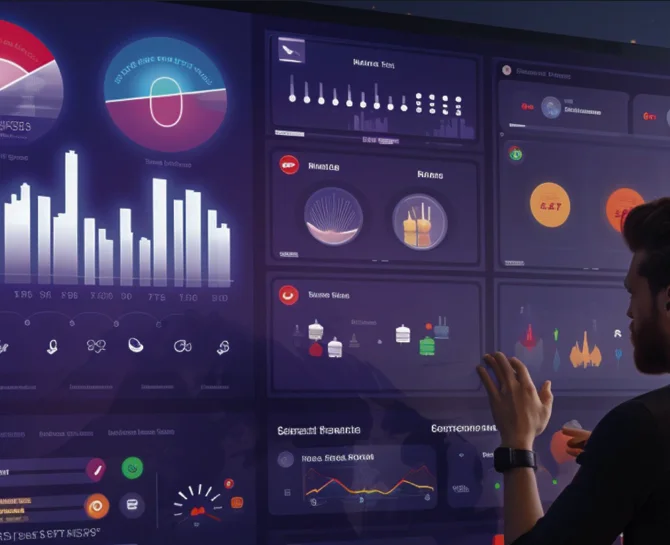
Outsmart the Competition: The Ultimate Guide to Marketing Intelligence Software
Marketing Intelligence Software provides marketers with invaluable insights into customer behavior, market trends, and competitor activities. This empowers them to optimize campaigns, target the right audience, and gain a competitive edge. With data-driven decisions, marketers achieve business goals efficiently and with precision. Read on.
Marketing intelligence software offers a powerful solution. This technology empowers businesses to understand the marketing landscape by leveraging data aggregation and analysis. Imagine having real-time insights into customer preferences, competitor activities, and emerging industry trends – all at your fingertips. This newfound knowledge fuels informed decision-making, allowing you to optimize campaigns, target the right audience, and achieve a significant competitive advantage.
Success hinges on understanding your audience and making strategic marketing decisions. Traditionally, gathering customer insights relied on intuition and fragmented data sources. However, this approach often leads to missed opportunities and misaligned campaigns.
This blog will delve into this essential software’s key features and benefits, equipping you to make data-driven marketing decisions and illuminating your path to success.
Key Takeaways
- Marketing intelligence software empowers businesses with actionable insights for effective decision-making and optimized campaign management.
- Understanding customer segmentation and predicting market trends are essential functions of marketing intelligence software.
- Embracing data-driven approaches allows companies to adapt swiftly to market dynamics and maintain relevance.
- Businesses must leverage all available tools to understand market needs, empower their marketing teams, and track campaign success.
- The intelligence revolution allows businesses to achieve their marketing objectives through data-driven strategies.
The Intersection of Data Analysis, Reporting, and Intelligence
Marketing intelligence software has revolutionized businesses’ understanding and use of data to gain a competitive advantage. This transformative tool resides at the pivotal crossroads where data analysis, reporting, and intelligence merge to guide informed decision-making processes.
The Importance of Data in Marketing Intelligence
Data is the lifeblood of marketing intelligence, informing strategies, tactics, and future trajectories. With an ocean of available data, the key to success lies in collecting it and effectively harnessing its power to draw actionable insights. Marketing intelligence software simplifies this complex process, enabling organizations to navigate through the noise and focus on the signals that matter.
Tools Used for Analyzing and Reporting Data
When dissecting vast volumes of data, professionals turn to various robust tools within marketing intelligence software. These tools provide advanced data analysis features, custom reports, interactive dashboards, and visualizations to make sense of trends, patterns, and anomalies that may otherwise go unnoticed.
- Data mining and extraction tools for gathering information
- Statistical analysis tools for identifying trends and correlations
- Reporting modules for compiling data into digestible formats
- Interactive dashboards for real-time data monitoring
Customer Segmentation and CRM Integration: Strategic Tools in Marketing Intelligence
Customer segmentation in marketing intelligence divides customers based on demographics, behavior, and purchasing patterns, enhancing marketing strategies’ precision and effectiveness.
Integrating Customer Relationship Management (CRM) with marketing intelligence software provides a comprehensive understanding of customer data across touchpoints, optimizing marketing campaigns, sales efforts, and customer service interactions.
Marketing intelligence software tracks segmented data, allowing real-time campaign adjustments and accurate consumer behavior predictions. This leads to targeted messaging, personalized content, and improved customer experiences, driving loyalty and revenue.
- Targeted Messaging
- Dynamic Content Personalization
- Predictive Consumer Behavior
The Competitive Edge: Competitive Intelligence and Market Trends
Competitive intelligence is a cornerstone of marketing intelligence software, providing businesses with critical insights into their competitive landscape. Understanding competitors’ strengths, weaknesses, strategies, and moves enables companies to make informed decisions that can shape their market positioning and strategic direction.
How Intelligence Software Aids in Staying Ahead of Competition
Staying ahead of the curve in today’s fast-paced markets is non-negotiable. Marketing intelligence software enables businesses to maintain this competitive advantage by offering real-time data analysis, insights into competitor marketing strategies, and an in-depth understanding of evolving market trends. By leveraging these tools, companies can adapt to market shifts swiftly and strategically, ensuring they are not left behind.
- Tracking competitor’s online presence and digital marketing strategies
- Analyzing market share fluctuations and identifying emerging players
- Understanding customer sentiment and feedback on competitor products
- Anticipating new market entries and identifying potential threats
Equipped with this knowledge, marketing intelligence software is more than just a technological advancement—it’s a primary vehicle driving businesses towards sustained growth and market leadership.
Predictive Analytics: Shaping the Future of Marketing
Predictive analytics has revolutionized how businesses approach marketing by empowering them with data-driven insights. It transcends traditional analytics by not just describing past behaviors, but by forecasting future actions, enabling marketers to be more proactive in their strategies.
The Concept of Predictive Analytics in Marketing Intelligence
At its core, predictive analytics harnesses various statistical techniques, including data mining, machine learning, and big data analytics to predict likely future outcomes based on historical data. In the context of marketing intelligence, this means using consumer behavior patterns to anticipate future trends and buying behaviors. By understanding what your customers will likely do next, businesses can create more effective marketing campaigns that resonate with their target audience.
Tools that Provide Predictive Insights for Smarter Marketing Strategies
Several sophisticated marketing intelligence software tools offer predictive analytics to aid marketers in decision-making. These tools analyze large data sets, interpret consumer behavior, and offer actionable insights to optimize marketing efforts significantly. The algorithms behind these tools constantly learn, improving their predictions’ accuracy over time.
- Customer Relationship Management (CRM) systems with integrated AI that predict customer churn and help in personalizing offers.
- Demand forecasting tools that anticipate market changes and customer needs.
- Lead scoring platforms that rank prospective customers based on their likelihood to convert.
- Price optimization software that recommends the best pricing strategies based on current market data.
Pro Tip- To leverage predictive analytics effectively, integrate AI-driven CRM systems that predict customer churn and offer personalized offers. Additionally, utilize demand forecasting tools to anticipate market shifts and lead scoring platforms to prioritize high-converting prospects.
Comprehensive Campaign Management through Marketing Intelligence
As the digital marketing landscape continues to evolve at a breakneck pace, the role of marketing intelligence software has become pivotal in orchestrating successful marketing campaigns. This sophisticated technology bridges the gap between data collection and actionable strategy, allowing businesses to execute campaigns with precision and insight.
Exploring Campaign Management Features of Marketing Intelligence Software
The right marketing intelligence tool arms your team with robust campaign management features tailored to bolster your marketing efforts. It facilitates a streamlined workflow by integrating:
- Automated task scheduling and alerts,
- Customizable dashboards for real-time campaign monitoring,
- A/B testing environments to determine the best-performing strategies,
- Cross-channel marketing initiatives coordination, and
- Advanced reporting tools for in-depth campaign analytics.
These features are designed to deliver efficiency, enhance engagement, and drive up performance on your marketing channels.
How Data and Insights from the Software Drive Campaign ROI
Marketing intelligence software transcends the capabilities of traditional marketing tools by empowering businesses with deep data and insights. It allows marketers to:
- Identify trends:
- Optimize budget allocation:
- Improve targeting:
- Measure performance:
Leveraging predictive analytics to anticipate market movements and consumer behavior.
Insights-driven campaign spending will likely yield high returns.
Detailed customer segmentation to reach the right audience with relevant messages.
Comprehensive analytics to track campaign success and iterate for improved results.
With such data at your disposal, marketing intelligence software ensures a direct path to maximizing the return on investment for your campaigns, allowing you to demonstrate the value of your marketing efforts in clear financial terms.
Social Media Analytics and Sentiment Analysis
Social media intelligence has become pivotal for crafting successful marketing strategies in today’s digital-driven marketplace. Understanding how consumers interact with your brand on social platforms offers invaluable insights beyond traditional metrics.
Sentiment analysis takes this one step further by not just counting likes and shares, but by analyzing the mood and emotions behind social conversations. This sophisticated aspect of marketing intelligence software enables brands to gauge public perception, monitor brand health, and rapidly respond to customer feedback.
The Growing Relevance of Social Media Intelligence in Marketing
The potency of social media platforms can’t be overstated, with millions of potential customers discussing products, services, and brands daily. Marketing intelligence tools specializing in social media analytics are crucial for tapping into these discussions. They provide detailed reports on engagement rates, follower growth, and more, helping marketers fine-tune their strategies in the ever-evolving social media landscape.
SEO and SEM Tools for Targeted Online Visibility
Marketing intelligence software is essential in carving out a prominent space for your brand in the digital landscape. By leveraging the combined power of SEO (Search Engine Optimization) and SEM (Search Engine Marketing) tools, businesses can ensure their online content reaches the right audience at the right time. But integrating these tools with marketing intelligence platforms transforms this process into an exact science rather than a hit-or-miss effort.
How SEO and SEM Tools Integrate with Marketing Intelligence
Combining SEO and SEM with marketing intelligence provides a multi-layered approach to online visibility. Marketing intelligence software analyzes vast data pools, including search trends, keyword effectiveness, and competitor insights. This analysis informs the SEO and SEM strategies, guiding decision-makers on where to focus their efforts for maximum impact. Whether optimizing for the most searched keywords, understanding the competitive landscape, or identifying gaps in the market, marketing intelligence turns data into actionable insights.
Ways to Optimize Your Site Presence Through Intelligent Data
With the right marketing intelligence software, the power to optimize your site for a prime online presence is at your fingertips. Here’s how:
- Conduct keyword research to understand what potential customers are searching for and tailor your content around those terms.
- Analyze search engine results pages to identify trends and adapt your SEO strategies accordingly.
- Utilize intelligent data for on-page optimization, ensuring each web page is meticulously crafted to satisfy search engines and appeal to users.
- Evaluating the cost-effectiveness and potential ROI provided by your marketing intelligence platform can help you make informed decisions about organic and paid search campaigns.
- Continuously monitor performance metrics to refine your techniques, utilizing real-time data to stay ahead of the curve.
By integrating SEO and SEM with cutting-edge marketing intelligence, you unlock the potential to not just participate in the market, but to influence its direction and claim a leading position in your industry.
Strategic Advantage with Automated Marketing Insights
Marketing intelligence software has revolutionized business strategy, delivering potent advantages through automation. Automated marketing insights are a cornerstone for dynamic decision-making processes in a digital age where data is king. Let’s delve into the significance of this technology and its indelible impact on marketing strategy.
The Significance of Automation in Providing Timely Marketing Insights
Speed and accuracy are critical in the fast-paced realm of marketing. Automated insights generated by marketing intelligence software aid businesses stay ahead by promptly analyzing vast amounts of data. This automation ensures that strategic insights are accurate and delivered in real-time, allowing companies to make informed decisions immediately.
How Automation Aids Marketers in Decision-Making Processes
Integrating automation into marketing intelligence tools transforms decision-making from a guessing game into a science. These advanced software systems empower marketers with:
- Detailed performance metrics that pinpoint successful initiatives and areas for improvement.
- Insight into customer behaviors, preferences, and trends that inform more personalized marketing efforts.
- Competitive analysis that uncovers gaps in the market, offering opportunities to capitalize on.
Such comprehensive insights fortify marketing strategies, ensuring that every decision is backed by data-driven intelligence, ultimately enhancing the precision and effectiveness of marketing campaigns.
Lead Generation and Scoring Powered by Marketing Intelligence Software
Lead generation and scoring are paramount in business development. Today’s marketing intelligence software elevates these tasks by harnessing the power of data analytics and algorithm-driven insights. By implementing sophisticated software, organizations can pinpoint potential customers and engage them more effectively.
Tactics for Using Marketing Intelligence Software in Lead Generation
Marketing intelligence software offers a plethora of tactics to enhance lead generation. It does more than gather leads; it offers insights into which channels perform best, identifies patterns in customer behavior, and optimizes marketing efforts to current trends. Here’s how it gives an edge to businesses striving to expand their reach.
- Identifying your Ideal Customer Profile (ICP):
- Cross-Channel Tracking:
- Content Optimization:
- Automated Outreach:
By analyzing historical data, businesses can define the attributes of their most valuable customers and target similar prospects.
Intelligent software tracks potential leads across various platforms, providing a clear picture of interactions and preferences.
By understanding what content resonates with your audience, the software can recommend adjustments to drive engagement.
Tailored messaging can be automated to reach prospects at the right time with the right message, increasing the likelihood of conversion.
The Role of Lead Scoring in Qualifying and Prioritizing Leads
Lead scoring is an integral feature of marketing intelligence software, enabling businesses to qualify and prioritize leads based on their likelihood to convert. This efficient methodology categorizes prospects using a point system, assigning points based on their interaction with your brand’s touchpoints.
- Behavioral Scoring:
- Demographic Scoring:
- Engagement Level:
- Predictive Lead Scoring:
Points are allocated for actions taken by leads, such as downloading a whitepaper or opening an email indicating interest.
Prospects are scored based on how closely they match the ideal customer profile in demographics and firmographics.
Regular interaction with a brand’s assets or responding promptly to communications scores higher, signaling readiness to buy.
Advanced algorithms predict future customer behavior by analyzing customer data, vastly streamlining the sales process.
Measuring Marketing Success: ROI Measurement Tools
Understanding the return on investment (ROI) from marketing efforts is essential for determining their efficacy and guiding strategic decisions. The dynamic landscape of marketing requires sophisticated marketing intelligence software that provides insight and actionable data on campaign performance. This software integrates various ROI measurement tools, empowering businesses to quantify success and make informed marketing investments.
Tools Within Marketing Intelligence Software Used to Measure ROI
The arsenal of ROI measurement tools in marketing intelligence software is extensive, offering diverse metrics and analytics. These tools enable marketers to dive deep into data, tracking everything from conversion rates and customer acquisition costs to more nuanced indicators like customer lifetime value and brand equity. Utilizing these tools ensures that businesses are not just collecting data, but are also interpreting it through the lens of financial returns.
- Conversion Tracking
- Cost-Per-Acquisition (CPA) Analysis
- Customer Lifetime Value (CLV) Metrics
- Attribution Modeling
Case Studies: DiGGrowth’s Impact on a Renowned Skincare Brand’s ROI Using Marketing Intelligence Insights
The skincare industry is fiercely competitive, requiring brands to stay ahead with strategic marketing approaches. One such renowned skincare brand approached DiGGrowth seeking to elevate its ROI through data-driven insights.
Challenges Faced:
The brand struggled to optimize its marketing efforts, facing challenges in maximizing lead conversion, enhancing customer spend, and improving checkout conversion rates.
DiGGrowth’s Approach:
Analyzing and Implementing Attribution Modeling:
- DiGGrowth conducted a comprehensive analysis of the brand’s marketing channels.
- Leveraging advanced attribution modeling techniques, they optimized the brand’s ad spend allocation to maximize ROI.
Utilizing Customer Segmentation and CLV Metrics:
- Recognizing the importance of understanding the brand’s customer base, DiGGrowth employed customer segmentation and CLV metrics.
- This approach enabled tailored email marketing strategies, personalized to individual customer preferences.
Enhancing User Experience through Conversion Tracking:
- DiGGrowth conducted in-depth conversion tracking analysis to identify areas for improvement on the brand’s e-commerce platform.
- By refining the user experience, they aimed to boost checkout conversion rates.
Result:
- 25% increase in lead conversion, coupled with a remarkable 40% reduction in costs.
- 60% surge in the brand’s average customer spend, showcasing the power of personalized communication.
- An impressive increase of over 30% in checkout conversion rates, indicating a significant improvement in user experience.
Outcome:
Through DiGGrowth’s strategic implementation of marketing intelligence insights, the skincare brand experienced a substantial uplift in ROI. The synergy of attribution modeling, customer segmentation, and conversion tracking optimized marketing efforts and enhanced the brand’s overall customer experience.
Conclusion:
DiGGrowth’s partnership with the skincare brand exemplifies the transformative power of marketing intelligence in driving tangible business outcomes. By leveraging data-driven insights, businesses can survive and thrive in the competitive landscape, ultimately achieving amplified success and market leadership.
Conclusion
Marketing intelligence’s future is essential for businesses striving to thrive in today’s digital landscape. The shift towards data-driven approaches represents a fundamental change in how companies operate and succeed. By embracing marketing intelligence software, businesses can unlock actionable insights, adapt to market changes, and precisely achieve their marketing objectives. It’s time to embark on the journey toward a data-driven future, where every piece of data becomes a stepping stone toward success. Start embracing the transformative power of marketing intelligence software today and pave the way for your business and customers to flourish.
For further inquiries and to start your journey towards enhanced marketing intelligence,
contact us at info@diggrowth.com.
Ready to get started?
Increase your marketing ROI by 30% with custom dashboards & reports that present a clear picture of marketing effectiveness
Start Free Trial
Experience Premium Marketing Analytics At Budget-Friendly Pricing.

Learn how you can accurately measure return on marketing investment.
How Predictive AI Will Transform Paid Media Strategy in 2026
Paid media isn’t a channel game anymore, it’s a chessboard. Search, social, programmatic, video, influencer, native,...
Read full post post
Don’t Let AI Break Your Brand: What Every CMO Should Know
AI isn’t just another marketing tool. It’s changing how we connect with customers, personalize content, and...
Read full post post
From Demos to Deployment: Why MCP Is the Foundation of Agentic AI
A quiet revolution is unfolding in AI. And it’s not happening inside research labs. For decades,...
Read full post postFAQ's
Predictive analytics involves using historical data and statistical techniques to forecast future trends and behaviors. Unlike traditional analytics, which focuses on analyzing past data to understand historical patterns, predictive analytics aims to anticipate future outcomes based on existing data patterns and trends.
Businesses can use predictive analytics to gain valuable insights into customer behavior, preferences, and purchasing patterns. By understanding these insights, businesses can develop more targeted marketing campaigns, personalize offers, optimize pricing strategies, and forecast market trends, ultimately leading to improved ROI and competitive advantage.
There are several tools available for implementing predictive analytics in marketing intelligence, including AI-driven CRM systems, demand forecasting tools, and lead scoring platforms. These tools utilize advanced algorithms and machine learning techniques to analyze large datasets, identify patterns, and predict future outcomes, enabling businesses to make data-driven decisions and optimize their marketing strategies effectively.